History of Phono EQ Curves in a Nutshell — A 3-Part Overview
The History of Phono EQ Curves: In a Nutshell
This section offers a condensed technical history of phono EQ curves, divided into three parts.
Each part is a standalone page built around one central question. We recommend reading them in order, but you can start with whichever part interests you most.
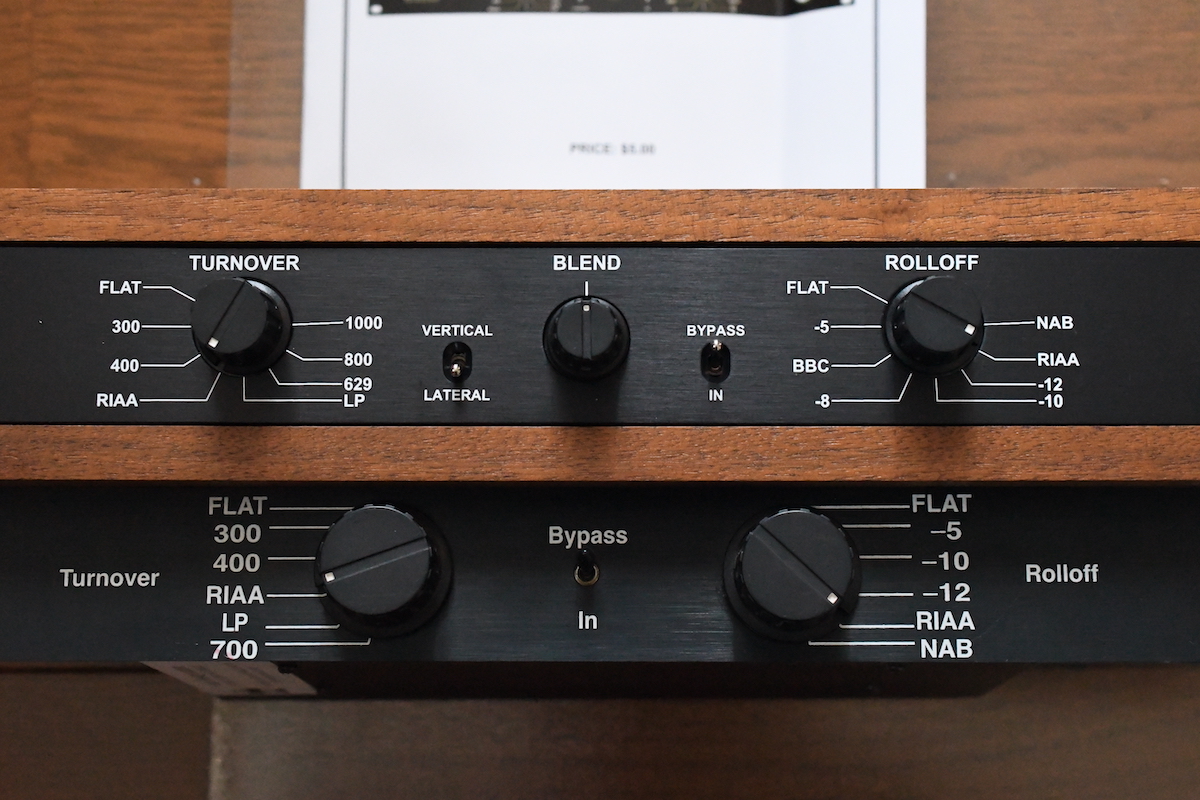
Esoteric Sound Re-Equalizer (bottom), bought in 2006
Part 1: Why wasn't there a unified standard from the start?
Period: 1925–1942 (from the birth of electrical recording to the first broadcast standard)
The moment electrical recording was invented, the concept of EQ curves was born with it. But why didn't the industry settle on a single standard from the very beginning? The answer involves a tangle of factors—from technical constraints to industry structure. In 1942, the first standard (NAB) was established for broadcast use, but consumer records remained a free-for-all.
Estimated reading time: approx. 8 minutes
Part 2: How did unification finally happen?
Period: 1942–1954 (from wartime collaboration among engineers to the first unified standard for consumer records)
In 1948, Columbia introduced the LP. RCA Victor countered with the 45 rpm disc, igniting the "Battle of the Speeds." The proliferation of curves only got worse. Yet by 1954, three organizations independently reached the same conclusion. We trace the path from wartime cooperation to the birth of a unified standard.
Estimated reading time: approx. 7 minutes
Part 3: What does this history mean for playing records today?
Period: 1954–present (post-RIAA: the transition period, stereo LPs, and today)
The years between the RIAA standard (1954) and the general release of stereo LPs in the US (1958) were a transitional period. Pre-RIAA pressings remained in circulation, and studios switched over at different times. But with the arrival of stereo LPs in 1958, RIAA-based recording and playback was effectively complete in the US (Europe's transition may have lagged somewhat). Finally, we consider what this entire history means for playing records today.
Estimated reading time: approx. 5 minutes
← Back to History of EQ Curves
Revision History
- April 8, 2026: Initial publication