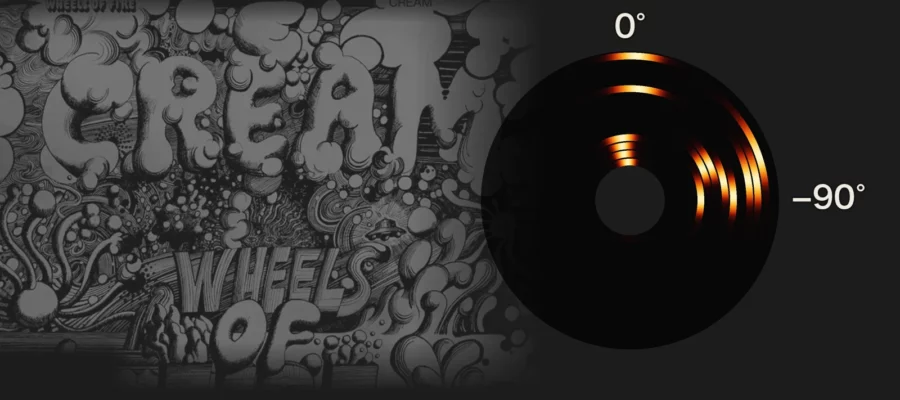
The cover art of Cream's Wheels of Fire, dimmed, beside a dark disc of concentric rings, one for each release of "White Room" measured, from period LPs at the center to the 2026 box set at the edge; each ring glows at its left–right phase difference, near 0 or −90 degrees.

Where Did the 90 Degrees Go? Haeco-CSG in Cream’s Wheels of Fire, from the 1968 LPs to the 2026 De-CSG

Cream’s Wheels of Fire came out in a 2026 Super Deluxe Edition billed as including a version without CSG. So how did CSG survive in the CDs, SACDs, and downloads that came before? I measured nine digital releases and five period LPs. Two questions came out of it, and I could answer only one.
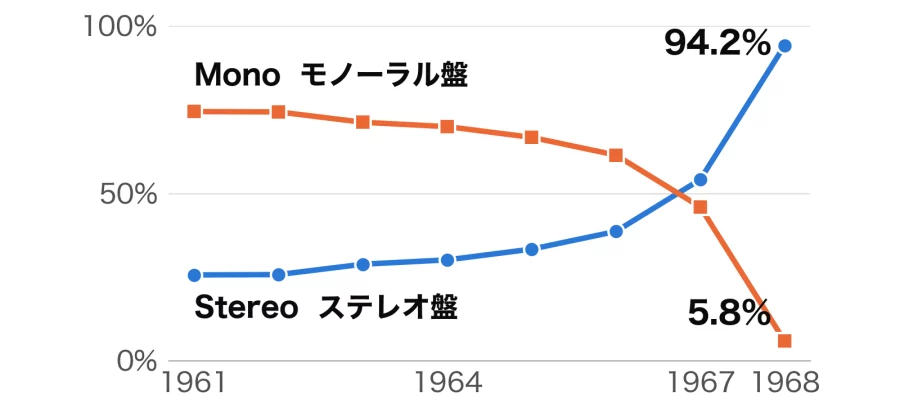
Line chart: the shares of stereo and mono LPs sold in the US, 1961–1968. Stereo rises from 25.6% to 94.2% as mono falls to 5.8%.

Why Did the Parallel Run of Mono and Stereo LPs End? (1967–68)

LP のモノーラル盤とステレオ盤の並走はなぜ終わったのか。米国でステレオ盤の枚数比は、1966年に 38.6%、1968年には 94.2%。1967〜68年の Billboard から、モノーラル盤の値上げ、「今のモノーラル機でステレオ盤をかけてよい」という CBS の宣言、各社の製造停止の順にたどります。

Columbia Standard Level (CSL) promotional 45rpm record

Things I learned on Phono EQ curves, Pt. 20

1953 NARTB / 1954 改訂 AES / 1954 RIAA の規格が出揃ったあと、米国の各レーベルはどのように RIAA カーブによるカッティングへと移行していったのか、その変遷をさまざまな資料をたどって追ってみました。同時に、過去〜現在の再生カーブ調査探求の系譜についても調べてみました。

Pultec EQP-1 program equalizer front panel

Things I learned on Phono EQ curves, Pt. 17

1948年〜1953年、標準規格(1953年NARTB規格、1954年改訂AES再生カーブ、1954年RIAA標準録音再生特性)が策定されるまでの時期に、録音特性の観点から米国の各レーベルはどのような状況だったか、さまざまな資料から調査してみました。

Philco M-15 and RCA Victor J-3 45rpm record changer

Things I learned on Phono EQ curves, Pt.14

1948年 Columbia LP レコードの登場後、他レーベルも追従、さらに RCA Victor の45回転盤も登場、いわゆる「回転数競争」の時代、どのレーベルがどちらの陣営につこうとしていたか、当時の状況を時系列で追ってみました。