This article is presented in Japanese and English on the same page.
Buying the Neighbours
前の記事 (Pt. 1)の終わりに書いたとおり、ビートルズ (The Beatles) の Please Please Me (PMC 1202) の番号の両隣にあたる PMC 1201 と PMC 1203 を探してみることにしました。 1963年の Parlophone が出していた LP のなかで、あの盤はどんな位置にあったのか。その手がかりを、まずは現物から得ようと思ったのです。
As I wrote at the end of the previous article (Pt. 1), I decided to look for PMC 1201 and PMC 1203, the catalogue numbers on either side of Please Please Me (PMC 1202) by the Beatles. Where did that record stand among the LPs Parlophone was putting out in 1963? I wanted to start looking for clues in the actual records.
Discogs や eBay で、2枚のジャケット写真やレーベル写真をいろいろ見ているうちに、気づいたことが2つありました。
While looking through sleeve and label photos of the two records on Discogs and eBay, I noticed two things.
まず値段です。 Please Please Me より圧倒的に流通量が少ないはずなのに、2枚とも圧倒的に廉価で売られています。 2026年10月の時点で、Discogs での Please Please Me の金文字 (gold) のモノ盤は、直近30件の取引で盤質 G〜VG が £150〜350、VG+ が £675〜1,900 という感じでした。隣の2枚はというと、取引そのものが PMC 1201 で全3件、PMC 1203 で全8件と少なく、どれも20ユーロ前後かそれ以下です。
First, the prices. Both records must be far scarcer than Please Please Me, yet both sell for far less. As of October 2026, the last 30 Discogs sales of the mono Please Please Me with the gold-print label (the “Gold Parlophone”) ran at about £150 to £350 for copies graded G to VG, and £675 to £1,900 for VG+. The two neighbours, by contrast, have hardly been traded at all, 3 sales in total for PMC 1201 and 8 for PMC 1203, and every one of them went for around 20 euros or less.
そしてレーベルの色です。写真を見るかぎり、PMC 1201 は金文字しかなさそうで、PMC 1203 は黄文字 (yellow) しかなさそうでした。 Please Please Me は金文字のあとに黄文字も出ているのに、PMC 1201 は金文字だけ。ということは(爆発的に大ヒットした PMC 1202 と比べるのは酷ですが)、そんなに売れてなかったということかな、と思いました。
Second, the colour of the label. As far as I could tell from the photos, PMC 1201 exists only with gold print and PMC 1203 only with yellow print. Please Please Me came out with gold print first and then with yellow, but PMC 1201 only ever had gold. I took that to mean it had not sold very well (although it is hardly fair to compare anything with PMC 1202, which was an explosive hit).
で、PMC 1201 と 1203 をオンラインで探し、実際に買ってみました。届いた盤はいずれも非常にコンディションが良好でした。
So I searched online for PMC 1201 and 1203 and actually bought them. Both records arrived in very good condition.
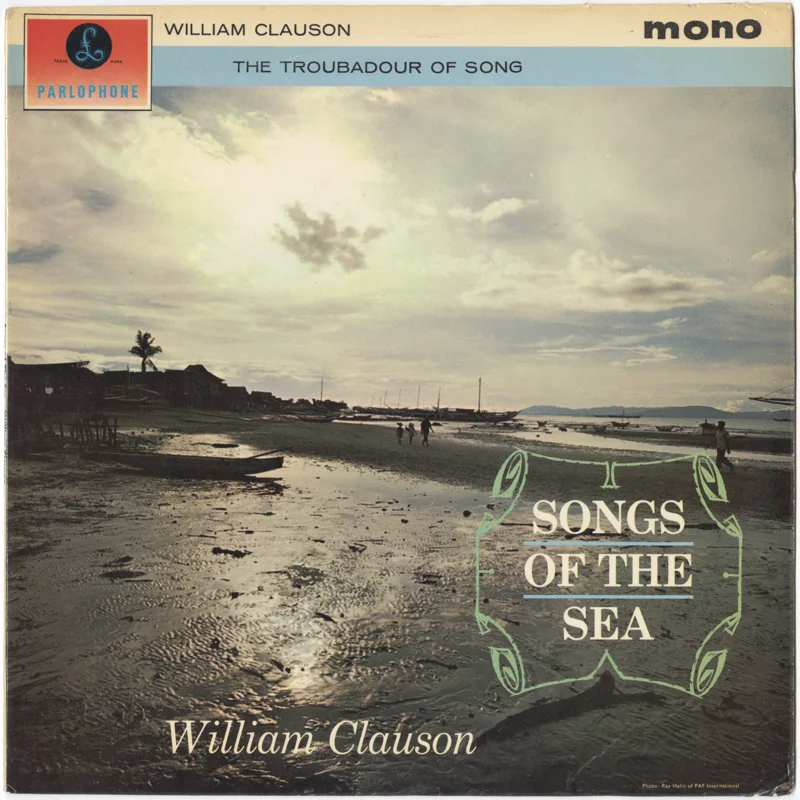
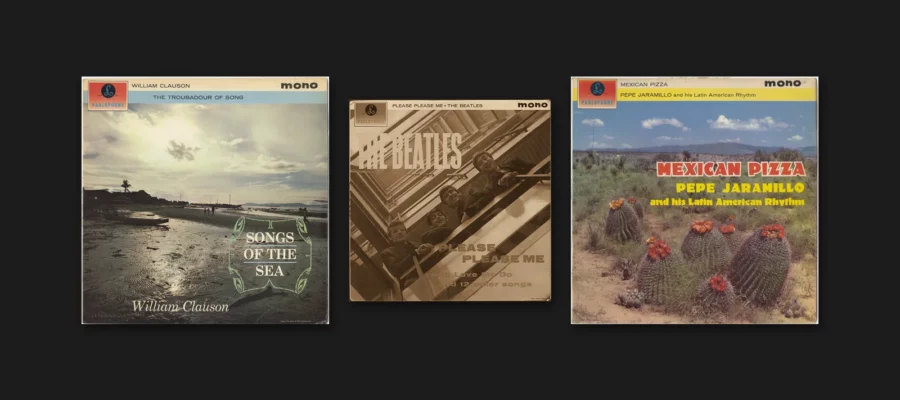
Front cover of PMC 1201, Songs Of The Sea (William Clauson)
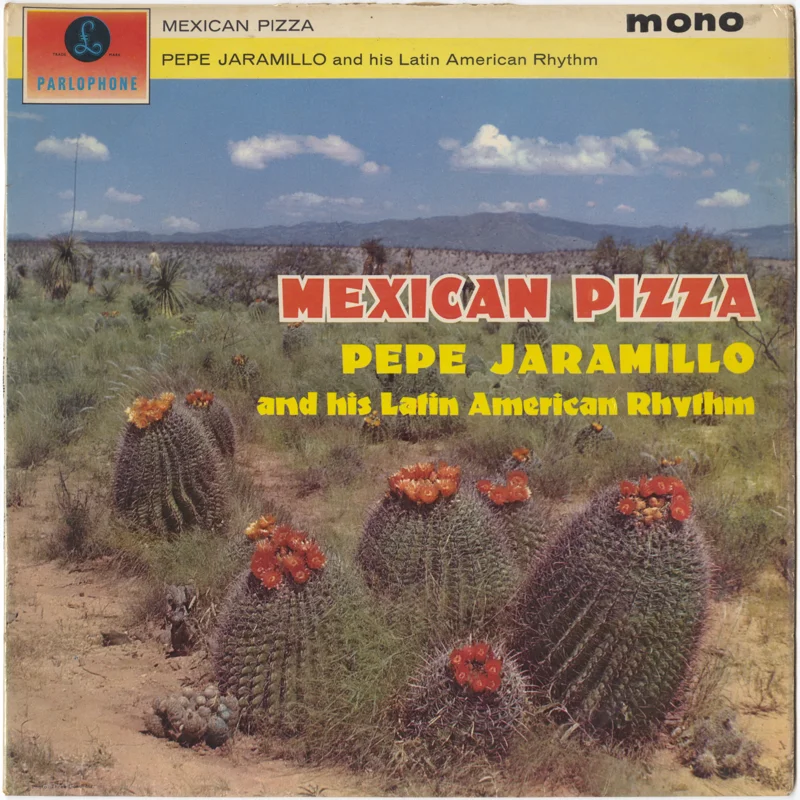
Front cover of PMC 1203, Mexican Pizza (Pepe Jaramillo)
PMC 1201 は ウィリアム・クラウソン (William Clauson) の Songs Of The Sea、PMC 1203 は ペペ・ハラミヨ(ハラミジョ)(Pepe Jaramillo) の Mexican Pizza。カタログ番号が1つ違うだけで、とてつもなく値段が違ったわけで、なんだか不思議です。
PMC 1201 is Songs Of The Sea by William Clauson, and PMC 1203 is Mexican Pizza by Pepe Jaramillo. The catalogue numbers differ by just one, yet the prices differ enormously, and it makes me wonder why.
同時に、当たり前のことですが、見た目はいずれも1963年の Parlophone の LP そのものです。手に取ってみると、当時の英国のレコード店で、どれも同じように並べられていた、その感覚を追体験した気持ちになりました。
At the same time, obviously enough, both of them look just like any other Parlophone LP from 1963. Holding them in my hands, I felt as if I were reliving the way all these records once sat side by side, treated alike, in a British record shop of the day.
例えば、EMI の月刊新譜紙 Record Mail の1964年1月号11頁にある「TOP LPs」の一覧に Mexican Pizza (PMC 1203) が載っていて、同じ一覧には Please Please Me (PMC 1202) と With The Beatles (PMC 1206) も並んでいます。他にも、Record Mirror 誌の1963年12月21日号24頁には、クリスマス向け広告として英 EMI グループの各種 LP が並んでおり、ここでも With The Beatles (PMC 1206) と Mexican Pizza (PMC 1203) が掲載されています。
For example, the “TOP LPs” list on page 11 of the January 1964 issue of Record Mail, EMI’s monthly new-release paper, includes Mexican Pizza (PMC 1203), and the same list also carries Please Please Me (PMC 1202) and With The Beatles (PMC 1206). Another example is page 24 of the 21 December 1963 issue of Record Mirror, where a Christmas advertisement lists various LPs from the British EMI group, and here too With The Beatles (PMC 1206) and Mexican Pizza (PMC 1203) appear.
当時のレコード店で、これらの LP が並べてディスプレイされていたかは分かりませんが、少なくとも同時期に店舗に並んでいたことは間違いなさそうです。
I don’t know whether the shops displayed these LPs next to each other, but at the very least it seems certain that they were in the shops at the same time.
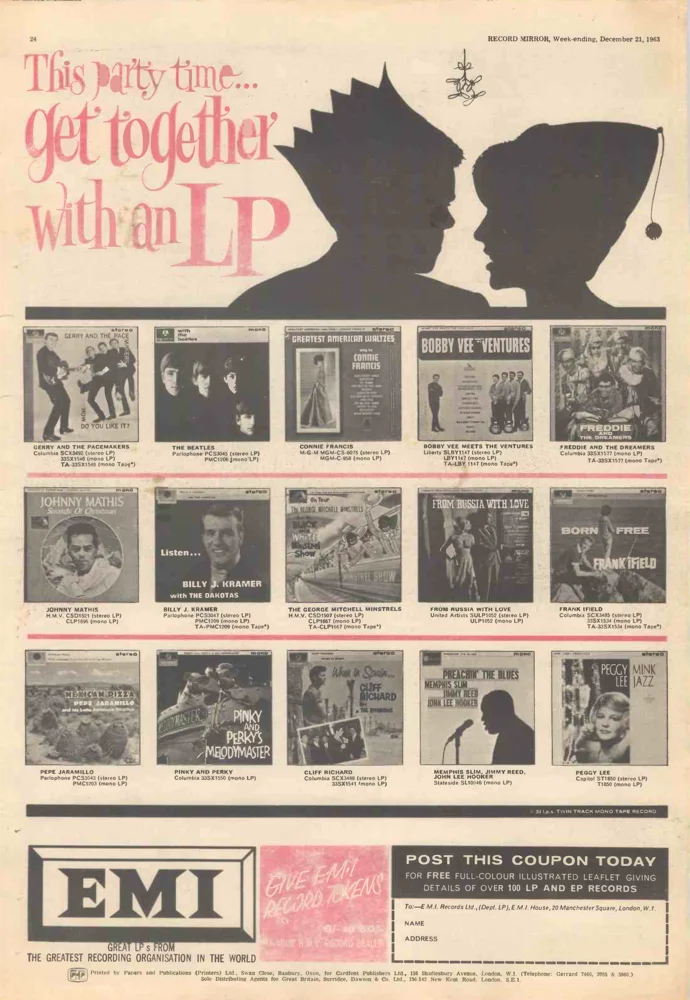
Record Mirror, 21 December 1963, page 24. EMI’s Christmas LP advertisement (15 LPs, including Mexican Pizza and With The Beatles)
では、手元に来たこの2枚を、じっくり眺めてみることにしましょう。
Now, let me take a good long look at the two records that have arrived.
変更履歴 / Revision History
- 2026年10月27日: 初版公開
- 27 October 2026: Initial publication
Reading the Vinyl
この2枚は、いつごろ工場を出た盤なのでしょうか。番号が Please Please Me (PMC 1202) の両隣だからといって、世に出た時期まで隣り合っているとは限りません。当時の英国の業界誌をいろいろあたってみましたが、私が調べた限りにおいて、PMC 1201 の発売を伝える記事は見つかりませんでした。番号がひとつ違うだけで、こうも手がかりが無くなってしまうものなのですね。
So when did these two records leave the factory? Their catalogue numbers sit on either side of Please Please Me (PMC 1202), but that does not mean they came out at the same time. I went through the British trade papers of the time, but as far as I could find, there was no article announcing the release of PMC 1201. The catalogue number is only one off, and yet the clues dry up like this.
紙面で見つからないとなれば、盤そのものを調べるしかありません。 1963年の英国 EMI の LP には、いつ作られたのかを推し量る手がかりが少なくとも4つあります。レーベルの意匠、レーベル面の文言、タックスコード、そしてマトリクスです。
If the papers have nothing, the only thing left is the record itself. A British EMI LP from 1963 carries at least four clues to when it was made: the label design, the wording on the label, the tax code, and the matrix numbers.
タックスコードは、当時の英国でレコードにかかっていた物品税 (purchase tax) の区分を示す記号で、税率の変更のたびに切り替わったのだそうです。マトリクスは、音溝が終わってからレーベルまでの無音の部分(デッドワックス、deadwax と呼ばれます)に刻まれた番号で、カッティングのために用意されたテープの面ごとに振られたものです。
The tax code is a mark showing the purchase tax category that applied to records in Britain at the time, and I am told it changed every time the rate changed. The matrix number is the number inscribed in the deadwax, the silent area between the end of the grooves and the label, and one was assigned to the tape prepared for cutting each side of the record.
意匠と文言は印刷されたレーベルの側にあり、タックスコードはプレスのときにプレス機の側の型(ダイ)で押され、マトリクスは音溝と一緒に(ラッカー盤からスタンパーを経て)盤に写されています。
The design and the wording belong to the printed label. The tax code is embossed at pressing time by a die on the press itself, and the matrix number is transferred to the record along with the grooves (from the lacquer, by way of the stamper).
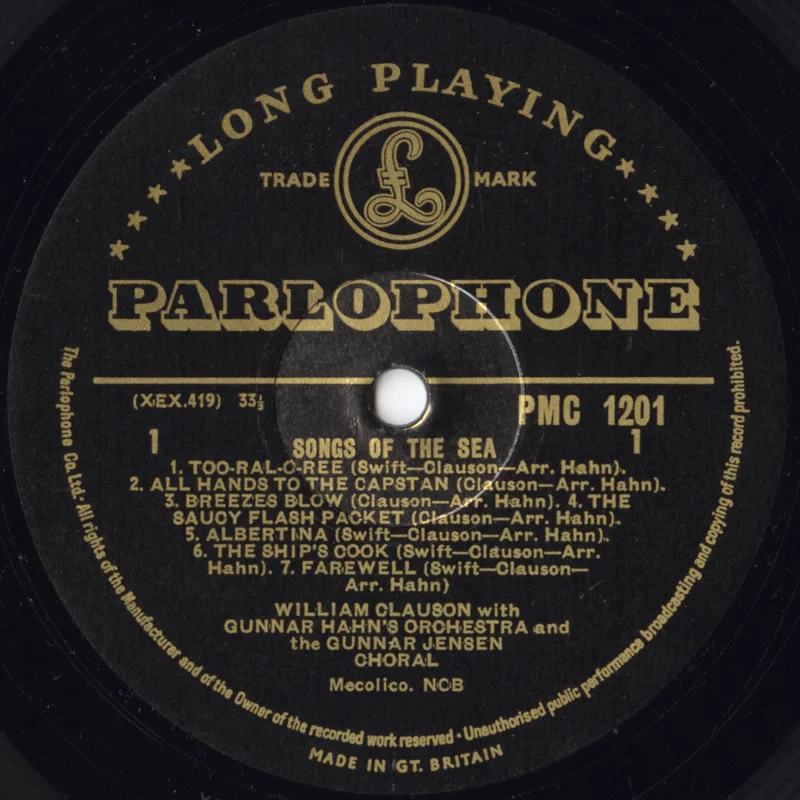
Side A label of PMC 1201, Songs Of The Sea (gold print)
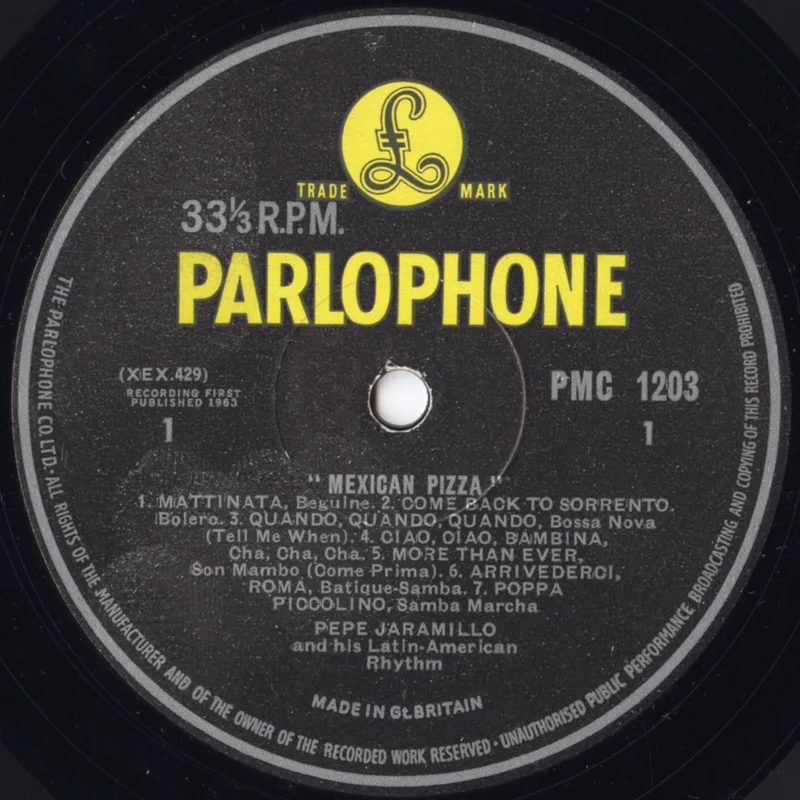
Side A label of PMC 1203, Mexican Pizza (yellow print)
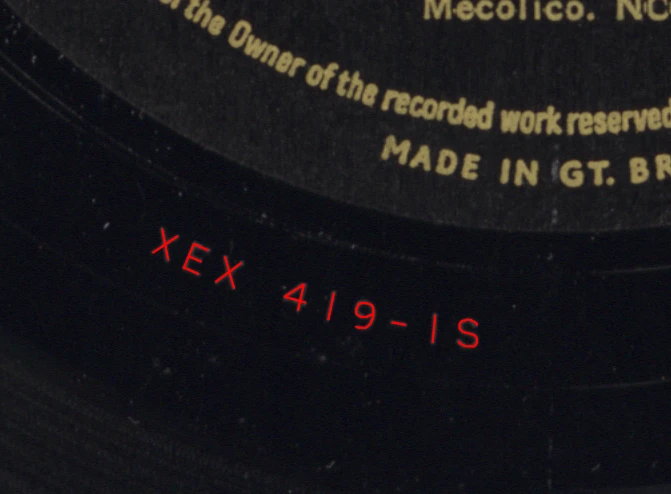
Side A deadwax and part of the label of my copy of PMC 1201, Songs Of The Sea. The inscription reads XEX 419-1S. I have traced the inscription in red
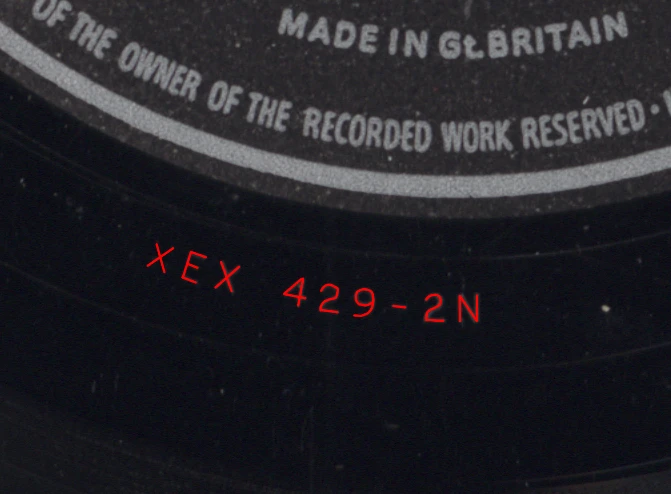
Side A deadwax and part of the label of my copy of PMC 1203, Mexican Pizza. The inscription reads XEX 429-2N. I have traced the inscription in red
結果として、PMC 1201 は1963年1月から5月ごろまでのあいだに作られた盤と見られること、そして PMC 1203 は1963年7月〜12月上旬まで絞り込めることが、それぞれ分かりました。
In the end, PMC 1201 appears to have been made between January and around May 1963, and PMC 1203 can be narrowed down to between July and early December 1963.
詳しい絞り込みの過程は、以下の囲みコラムをご覧ください。
For the details of how I narrowed them down, see the box below.
4つの手がかりを手元の2枚に当てた結果を、表にまとめてみました。
Here is a table of what I found when I applied the four clues to my two copies.
| 手がかり | 何を見るか | PMC 1201 | PMC 1203 | 年代の目安 |
|---|---|---|---|---|
| レーベルの意匠 | 文字の色、上部の星の帯 | 金文字 (gold)、星の帯あり | 黄文字 (yellow)、星の帯なし | 金文字は1963年5月ごろまで、黄文字は1963年5月から |
| レーベル面の文言 | “RECORDING FIRST PUBLISHED” で始まる文言と、”SOLD IN U.K.” で始まる文言 | どちらもなし | 前者のみ (“RECORDING FIRST PUBLISHED 1963”) | 前者は1963年夏から、後者は1964年2月から |
| タックスコード | レーベル中央の型押し | MT | KT | MT は1963年1月1日から、KT は1963年7月1日から(どちらも下限のみ) |
| マトリクス | 音溝の外側の刻印 | XEX 419-1S / XEX 420-1S | XEX 429-2N / XEX 430-2N | PMC 1201 は Please Please Me (XEX 421 / XEX 422) の直前の番号 |
| Clue | What to look at | PMC 1201 | PMC 1203 | Rough dating |
|---|---|---|---|---|
| Label design | Colour of the print, band of stars at the top | Gold print, with the band of stars | Yellow print, no band of stars | Gold print until around May 1963, yellow print from May 1963 |
| Label wording | The text beginning “RECORDING FIRST PUBLISHED” and the text beginning “SOLD IN U.K.” | Neither | The former only (“RECORDING FIRST PUBLISHED 1963”) | The former from summer 1963, the latter from February 1964 |
| Tax code | Embossed in the centre of the label | MT | KT | MT from 1 January 1963, KT from 1 July 1963 (both are lower limits only) |
| Matrix | Inscribed outside the grooves | XEX 419-1S / XEX 420-1S | XEX 429-2N / XEX 430-2N | PMC 1201 has the numbers immediately before Please Please Me (XEX 421 / XEX 422) |
PMC 1201 のタックスコードの MT は1963年1月1日から使われた記号だそうですから(Peter Rice 氏の表でも thebeatles-collection.com の表でも同じ日付です)、手元の盤がプレスされたのはそれ以降ということになります。ただしタックスコードは、古い型がプレス機に残っていれば後の時期の盤にも押されてしまうので、「これより前ではない」という下限にしか使えません。
The tax code MT on PMC 1201 is said to have come into use on 1 January 1963 (Peter Rice’s table and the table at thebeatles-collection.com give the same date), so my copy was pressed on or after that date. A tax code, though, only gives a lower limit, a “not before this date”: if an old die was left in the press, it would stamp the old code on later records too.
上限のほうはレーベルから分かります。コレクターの年代表では、金文字のレーベルが使われたのは1963年5月ごろまでとなっています。マトリクスの XEX 419 / XEX 420 は、Please Please Me の XEX 421 / XEX 422 のすぐ手前の番号です(末尾の枝番 -1S は、数字がラッカー盤のカット回数を示すというのがコレクターのあいだの通説です)1。これらを重ねてみると、手元の PMC 1201 は1963年の前半、1月から5月ごろまでのあいだに作られた盤と見られます。
The upper limit comes from the label. The collectors’ dating charts have the gold-print label in use until around May 1963. The matrix numbers XEX 419 / XEX 420 come immediately before XEX 421 / XEX 422 of Please Please Me (as for the suffix -1S, the accepted view among collectors is that the digit shows how many times the lacquer was cut)1. Putting these together, my PMC 1201 appears to have been made in the first half of 1963, somewhere between January and around May.
PMC 1203 のほうはタックスコードが KT に変わっていて、こちらは1963年7月1日からの記号です。レーベルは黄文字で、PMC 1201 にあった星の帯(★★LONG PLAYING★★ と入った帯です)が無く、”RECORDING FIRST PUBLISHED 1963″ の文言が入っている一方で、同じ年代表が1964年2月からとしている “SOLD IN U.K.” で始まる文言は、まだ見当たりません。となると、こちらは1963年7月から翌1964年1月までのあいだ、ということになりますね。
On PMC 1203 the tax code has changed to KT, which is the code from 1 July 1963. The label has yellow print, the band of stars that PMC 1201 had (the band reading ★★LONG PLAYING★★) is gone, and the wording “RECORDING FIRST PUBLISHED 1963” is there, while the wording beginning “SOLD IN U.K.”, which the same dating chart puts from February 1964, is not yet present. That puts this copy somewhere between July 1963 and January 1964.
この PMC 1203 は紙面掲載が確認できました。 Disc 誌(週刊)1963年12月7日号の12頁、Nigel Hunter 担当の欄に Mexican Pizza の LP 評が載っています。評は見本盤で書かれることもあるそうなので、店頭に並んでいた証拠にまではなりませんが、遅くとも12月上旬には発売されていたか、発売の直前だったと考えてよさそうです。盤の特徴と紙面の情報を総合すると、PMC 1203 は1963年7月〜12月上旬まで絞り込めます。発売月のほうは、45cat というサイトがこの盤を1963年10月としていて、整合性はとれています。ただし10月という月そのものを裏づける記事は、業界誌では見つけられませんでした。
For this PMC 1203 I did find a mention in print. The 7 December 1963 issue of Disc (a weekly), page 12, carries an LP review of Mexican Pizza in Nigel Hunter’s column. Reviews were sometimes written from review copies, I am told, so this is not proof that the record was in the shops, but it seems safe to say that it had been released by early December at the latest, or was just about to be. Taking the record itself and the printed evidence together, PMC 1203 can be narrowed down to between July and early December 1963. As for the month of release, the site 45cat dates this record to October 1963, which is consistent with that. I could not, however, find any article in the trade papers that confirms October as such.
Parlophone の LP を発売月つきで一覧にしている fonorama.cz というサイトがあるのですが、そこでは PMC 1201 が1963年9月の発売になっているのです。 9月に世に出たはずの盤が、年代表では5月ごろまでとなっている金文字のレーベルを貼られ、しかも Please Please Me の直前の番号を持つ原盤からプレスされている、というのは不自然に思えます。
There is a site called fonorama.cz that lists Parlophone LPs with their release months, and it has PMC 1201 released in September 1963. It seems odd to me that a record supposedly released in September should wear a gold-print label, which the dating charts put at no later than around May, and be pressed from masters numbered immediately before Please Please Me.
9月以外の日付を伝える記録を探していくと、スウェーデン国立図書館の音源データベース (SMDB) にこの盤が登録されていて(目録には “Suecana”、つまり国外で出たスウェーデン関係の資料という注記がついています)、その目録に “Parlophone, P 1963 [utg. maj 1963]” と書かれていました。角括弧の中は、1963年5月に出た、という注記です。盤の特徴から絞り込んだ1月から5月ごろまでの範囲に収まっています。
When I went looking for records that give a date other than September, the LP turned out to be registered in the sound recording database (SMDB) of the Swedish national library, with the catalogue entry marked “Suecana” (meaning material of Swedish interest published abroad), and the entry reads “Parlophone, P 1963 [utg. maj 1963]”. The part in square brackets is a note saying it was issued in May 1963. That falls within the January to around May range I had narrowed down from the record itself.
もっとも、これで5月の発売と決まったわけではありません。角括弧は、盤の外から目録の作成者が補った情報であることを示す書き方で、何を見て5月としたのかは目録に書かれていないのです。いま言えるのは、スウェーデンの図書館の記録は盤の特徴から絞り込んだ時期と整合し、fonorama の9月は盤とも図書館の記録とも合わない、というところまででしょう。
That said, this does not settle a May release. Square brackets are the cataloguer’s way of showing that the information was supplied from outside the record itself, and the entry does not say what the cataloguer looked at to arrive at May. What I can say for now is this much: the Swedish library’s record is consistent with the period narrowed down from the record itself, and fonorama’s September fits neither the record nor the library’s entry.
発売を伝える記事がひとつも見つからない盤について、二次資料の日付を盤そのものから確かめ直せるというのは、興味深いところです。
For a record with not a single release announcement to be found, being able to check the dates in secondary sources against the record itself is something I find interesting.
Calibrating the Famous One
前の記事でも書きましたが、Please Please Me (PMC 1202) の初回プレスの識別方法として知られているのは、次の5項目です。
As I wrote in the previous article, the points known for identifying a first pressing of Please Please Me (PMC 1202) are the following five:
- Label: Black & Gold Parlophone
- Matrix: XEX 421-1N / XEX 422-1N
- Tax Code: M T
- "Dick James Mus. Co." publishing credit on tracks A1, A2, B4 & B6
- "Photo: Angus McBean" at the extreme bottom-right corner
このリストを、隣の2枚の側から眺めてみます。 5項目は、性質の違う2つの組に分かれます。ひとつは、Dick James の出版社表記と、Angus McBean の写真クレジットの位置で、これはビートルズの盤にしか無い項目です。もうひとつは、レーベルの意匠、マトリクスの枝番、タックスコードの3つで、こちらは1963年の Parlophone の LP ならどの盤にも備わっている手がかりです。
Let me look at this list from the side of the two neighbours. The five points fall into two groups of different kinds. One group is the Dick James publishing credit and the position of the Angus McBean photo credit, and these are points found only on the Beatles’ record. The other group is the label design, the matrix suffix and the tax code, three clues that any Parlophone LP from 1963 carries.
結果として、Please Please Me の直前の番号を持つ PMC 1201 は、ビートルズの盤にしか無い2項目を除けば、有名盤の初回と同じ特徴を持っていることが分かりました。また、金文字から黄文字への切り替えは PMC 1202 と PMC 1203 のあいだで起こったと考えられ、金文字かどうかで初回を見分けられるのは、Please Please Me までの番号の盤に限られることになります。
It turned out that PMC 1201, the number just before Please Please Me, has the same features as the first pressing of the famous record, apart from the two points found only on the Beatles’ record. The changeover from gold print to yellow print also appears to have happened between PMC 1202 and PMC 1203, which means that gold print marks a first pressing only on records numbered up to Please Please Me.
詳しい照合の過程は、以下の囲みコラムをご覧ください。
For the details of the comparison, see the box below.
では、その3つで隣の PMC 1201 を Please Please Me の初回と並べてみます。レーベルの意匠は、リストの1項目めと同じ金文字です。
So let me put the neighbouring PMC 1201 next to the first pressing of Please Please Me on those three points. The label design is gold print, the same as the first point on the list.
タックスコードについては、yokono.co.uk というコレクターのサイトが Please Please Me の英国モノ盤を14版に分けて記録していて、金文字の初回2版はどちらも中央の型押しが M と T だとしています。手元の PMC 1201 の MT は、これと同じ記号です。
As for the tax code, a collectors’ site called yokono.co.uk records the British mono Please Please Me in 14 variants, and it gives the embossing in the centre as M and T for both of the first two gold-print variants. The MT on my PMC 1201 is the same code.
マトリクスの枝番は、PMC 1201 が -1S、Please Please Me の初回が -1N です。数字がラッカー盤のカット回数を示すという通説に従えば、どちらも1回目のカットの原盤からプレスされた盤ということになります(枝番の読み方は、盤を読んだ節の脚注のとおりです)。
The matrix suffix is -1S on PMC 1201 and -1N on the first pressing of Please Please Me. If I follow the accepted view that the digit shows how many times the lacquer was cut, both were pressed from first-cut masters (how to read the suffix is as described in the footnote to Reading the Vinyl).
同じ yokono の観察では、金文字の初回2版のレーベル面には、”RECORDING FIRST PUBLISHED” で始まる文言も “SOLD IN U.K.” で始まる文言も無く、手元の PMC 1201 と同じ顔です。
According to the same yokono observations, the labels of the first two gold-print variants carry neither the text beginning “RECORDING FIRST PUBLISHED” nor the text beginning “SOLD IN U.K.”, which is just how my PMC 1201 looks.
つまり、ビートルズの盤にしか無い2項目を脇に置けば、Please Please Me の直前の番号を持つ PMC 1201 は、残りのどの項目でも有名盤の初回と一致することになります。 1963年の前半に Parlophone の LP が工場から出荷されていた際、似たような特徴を備えた盤がそこにはあったということです。
In other words, leave aside the two points that only a Beatles record can have, and PMC 1201, the number immediately before Please Please Me, matches the first pressing of the famous record on every point that remains. When Parlophone LPs were leaving the factory in the first half of 1963, there were records among them with much the same features.
では、金文字なら初回、という読みは、どの番号の盤まで通用するのでしょうか。
So up to which catalogue number does the rule “gold print means first pressing” hold?
私が Discogs のレーベル写真で PMC 1191 から 1210 までを見た範囲では(写真の見つからない番号も2つあります)、PMC 1201 までの盤は金文字だけ、PMC 1202 は金文字と黄文字の両方、PMC 1203 から先は黄文字 (yellow) だけでした。手元の PMC 1203 も黄文字で、”RECORDING FIRST PUBLISHED 1963″ の文言が入っています。
As far as I could see from the Discogs label photos of PMC 1191 to 1210 (there are two numbers for which I could not find photos), the records up to PMC 1201 have gold print only, PMC 1202 has both gold and yellow, and from PMC 1203 onwards there is yellow print only. My PMC 1203 also has yellow print, with the wording “RECORDING FIRST PUBLISHED 1963”.
いま確認できる範囲では、Gold Parlophone レーベルから Yellow Parlophone レーベルへの切り替えは PMC 1202 と PMC 1203 のあいだで起こったと考えられます。盤を読んだ節で引いた年代表が金文字の終わりとしている1963年5月とも合います。番号の上では、Please Please Me が金文字で出た最後の盤、Mexican Pizza が黄文字で出た最初の盤、ということになりそうです。
As far as I can confirm for now, the changeover from the Gold Parlophone label to the Yellow Parlophone label appears to have happened between PMC 1202 and PMC 1203. That also fits May 1963, which the dating chart I cited in Reading the Vinyl gives as the end of gold print. By catalogue number, then, Please Please Me looks like the last record issued with gold print and Mexican Pizza the first issued with yellow.
となると、PMC 1203 から先の盤は、初回のプレスから黄文字で出ていることになります。金文字かどうかで初回を見分けられるのは、Please Please Me までの番号の盤に限られるわけです。鑑定リストの1項目めは、あの盤が切り替えのすぐ手前に出たからこそ効いている項目だった、と言えそうです。
If so, the records from PMC 1203 onwards came out with yellow print from their first pressing. Telling a first pressing by gold print only works for records numbered up to Please Please Me. The first point on the identification list, it seems, works precisely because that record came out just before the changeover.
売れた盤は版を重ねます。 Please Please Me も yokono の記録では14版に分かれていて、初回の特徴は、そのなかの珍しいものとして単独で語られることになります。
A record that sells goes through one pressing after another. Please Please Me too is divided into 14 variants in yokono’s records, and the features of the first pressing come to be talked about on their own, as the rare ones among them.
Please Please Me の両隣の2枚は、Discogs で見る限り、PMC 1201 は金文字だけ、PMC 1203 は黄文字だけです。 1963年の Parlophone の LP が、初回のプレスのときにどんな特徴を備えていたのか。その基準となる例が、この2枚には初回のままの状態で残っている、と言えそうです。
As for the two records on either side of Please Please Me, as far as Discogs shows, PMC 1201 exists only with gold print and PMC 1203 only with yellow. What features did a Parlophone LP of 1963 have at its first pressing? These two records, it seems, preserve a reference example of that, still in their first-pressing state.
Parlophone in 1963
ここまで、2枚を買い、盤面の手がかりから作られた時期を絞り、Please Please Me の初回の識別点と照らし合わせてきました。この節では少し離れたところから、3枚が番号の上で並んだ経緯を、EMI の工場の事務の流れとして眺めてみます。前の記事で立てた問い、1963年当時の Please Please Me (PMC 1202) は Parlophone の LP の中でどんな位置にいたのか、への答えの1つにもなるはずです。
So far I have bought the two records, used the clues on the vinyl to narrow down when they were made, and checked them against the points that identify a first pressing of Please Please Me. In this section I step back a little and look at how the three records came to sit side by side in the numbering, as a matter of the paperwork that moved through EMI’s factory. This should also give one answer to the question I raised in the previous article: where did Please Please Me (PMC 1202) stand among Parlophone’s LPs in 1963?
Catalogue Numbers and Matrix Numbers
まず、カタログ番号とマトリクスの関係からです。盤を読んだ節で見たとおり、PMC 1201 のマトリクス XEX 419 / XEX 420 は、Please Please Me の XEX 421 / XEX 422 の直前の番号でした。では、マトリクスの番号はいつもカタログ番号の順に進んでいるのでしょうか。
First, the relationship between catalogue numbers and matrix numbers. As I saw in Reading the Vinyl, the matrix numbers of PMC 1201, XEX 419 / XEX 420, come immediately before XEX 421 / XEX 422 of Please Please Me. So do the matrix numbers always run in the order of the catalogue numbers?
同じころの Parlophone の LP を Discogs のレーベル写真で読んでいくと、順序が入れ替わっているところがいくつか見つかります。
Reading the label photos on Discogs for Parlophone LPs of around the same time, I found several places where the order is reversed.
たとえば PMC 1190 (Bridge On The River Wye) は XEX 405 / XEX 406 で、1つ後の番号の PMC 1191 (XEX 403 / XEX 404) より後の番号です。 PMC 1197 の XEX 417 / XEX 418 も、PMC 1198 (XEX 413 / XEX 414) と PMC 1199 (XEX 415 / XEX 416) の後です。
For example, PMC 1190 (Bridge On The River Wye) is XEX 405 / XEX 406, which is later than PMC 1191 (XEX 403 / XEX 404), the next catalogue number. XEX 417 / XEX 418 of PMC 1197 also come after PMC 1198 (XEX 413 / XEX 414) and PMC 1199 (XEX 415 / XEX 416).
カタログ番号は発売の計画の段階で先に割り振られ、マトリクスの番号はカッティング用のテープが用意できた順に振られた、と見ると説明がつきます。
The order makes sense if the catalogue numbers were assigned first, at the planning stage of a release, and the matrix numbers were assigned in the order in which the tapes prepared for cutting became available.
次に、Please Please Me の前後です。 XEX 417 / XEX 418 は PMC 1197、デヴィッド・フロスト (David Frost) ほか出演の BBC のテレビの風刺番組 That Was The Week That Was のレコードです。
Next, the numbers around Please Please Me. XEX 417 / XEX 418 are PMC 1197, the record of That Was The Week That Was, the BBC television satire programme with David Frost and others.
その次の XEX 419 / XEX 420 が PMC 1201 の Clauson、そして XEX 421 / XEX 422 が Please Please Me。テレビの風刺番組、北欧の船歌集、マージービートの3枚が、マトリクスの番号の上で続いています。
The next pair, XEX 419 / XEX 420, is the Clauson record, PMC 1201, and then XEX 421 / XEX 422 is Please Please Me. A television satire programme, a collection of Nordic sea songs and Merseybeat follow one another in the matrix numbers.
この並びを、XEX 417 から XEX 436 までの範囲で表にしておきます。番号の列には、PMC のほかに、カナダの Capitol から出た盤の番号も入れました。また、PMC のどの盤にも見つからない番号も、そのまま載せています。
Here is a table of this sequence, from XEX 417 to XEX 436. In the number column I have put, besides the PMC numbers, the numbers of the records issued by Capitol in Canada. I have also left in the numbers that do not turn up on any PMC record.
| XEX | 番号 Number |
盤 Record |
|---|---|---|
| XEX 417 / 418 | PMC 1197 | David Frost ほか That Was The Week That Was David Frost and others, That Was The Week That Was |
| XEX 419 / 420 | PMC 1201 | William Clauson Songs Of The Sea |
| XEX 421 / 422 | PMC 1202 | The Beatles Please Please Me |
| XEX 423 / 424 | Capitol T-6033 | Jimmy Shand Jimmy Shand’s Party |
| XEX 425 / 426 | Capitol T-6032 | Jimmy Shand Scottish Country Dances |
| XEX 427 / 428 | PMC の盤に見当たらない Not found on any PMC record |
|
| XEX 429 / 430 | PMC 1203 | Pepe Jaramillo Mexican Pizza |
| XEX 431〜434 | PMC の盤に見当たらない Not found on any PMC record |
|
| XEX 435 / 436 | PMC 1205 | Glasgow Phoenix Choir Will Ye No Come Back Again? |
Please Please Me の直後の XEX 423〜426 は、カナダの Capitol Records of Canada から出た ジミー・シャンド (Jimmy Shand) の LP 2枚に使われていました。内訳は、Capitol T-6033 Jimmy Shand’s Party が XEX 423 / 424、Capitol T-6032 Scottish Country Dances が XEX 425 / 426 で、どちらも1963年7月22日の発売です。このうち T-6032 の中身は、英国の Parlophone が1957年に出した10インチ盤 PMD 1029 の10曲に、PMD 1012 からと思われる2曲を足したもので、レーベルにも “RECORDED IN GREAT BRITAIN” と印刷されています。英国の Parlophone からは出ず、カナダの Capitol から出た2枚です。このように英国で作られた原盤がカナダの Capitol からだけ出た例はほかにもあり、翌1964年の The Beatles Twist And Shout、Capitol T-6054 の XEX 455 / 456 もその1つです。
XEX 423 to 426, immediately after Please Please Me, were used for two LPs by Jimmy Shand issued by Capitol Records of Canada. Specifically, Capitol T-6033 Jimmy Shand’s Party is XEX 423 / 424 and Capitol T-6032 Scottish Country Dances is XEX 425 / 426, and both were released on 22 July 1963. Of the two, T-6032 contains the 10 songs of PMD 1029, a 10-inch record that Parlophone in Britain issued in 1957, plus 2 songs that appear to come from PMD 1012, and the label, too, is printed “RECORDED IN GREAT BRITAIN”. Neither was issued by Parlophone in Britain; both came out only from Capitol in Canada. There are other examples of British-made masters coming out only from Capitol in Canada. One is The Beatles Twist And Shout, Capitol T-6054, XEX 455 / 456, from the following year, 1964.
いっぽう、表の空いた2行は、PMC のどの盤にも出てこない XEX の番号です。どちらも PMC 1203 の前後の番号で、XEX 427 / 428 と XEX 431〜434 です。 PMC 1133 から PMC 1222 までを Discogs のレーベル写真で見ていきましたが、XEX 423〜428 と XEX 431〜434 を持つ盤は、英国の PMC には見つかりませんでした。
The two empty rows in the table, on the other hand, are XEX numbers that appear on no PMC record. Both lie around PMC 1203: XEX 427 / 428 and XEX 431 to 434. I went through PMC 1133 to PMC 1222 in the Discogs label photos, but found no British PMC record carrying XEX 423 to 428 or XEX 431 to 434.
カタログ番号とマトリクス番号の順が入れ替わることは、ステレオ側でも起きています。 Parlophone の LP はモノとステレオで別々の通し番号を使っていて、モノが XEX、ステレオが YEX です。
Catalogue numbers and matrix numbers swap order on the stereo side as well. Parlophone LPs used separate running sequences for mono and stereo: XEX for mono, YEX for stereo.
PMC 1201 のステレオ盤 PCS 3041 は YEX 92 / YEX 93、Please Please Me の PCS 3042 は YEX 94 / YEX 95、PMC 1203 の PCS 3043 は YEX 96 / YEX 97、PMC 1205 の PCS 3044 は YEX 98 / YEX 99 と、こちらは4枚が番号どおりに続きます。
PCS 3041, the stereo edition of PMC 1201, is YEX 92 / YEX 93. PCS 3042, Please Please Me, is YEX 94 / YEX 95. PCS 3043, the stereo PMC 1203, is YEX 96 / YEX 97, and PCS 3044, the stereo PMC 1205, is YEX 98 / YEX 99. Here the four records do run in numerical order.
その先の YEX 100 から YEX 111 までを含めた10枚を、Discogs のレーベル写真で1枚ずつ確かめてみました。 10枚はすべて PCS 3041 から PCS 3050 までの盤で、YEX の番号の順に並べると次の表になります。
I then went on to YEX 100 to YEX 111 and checked ten records in all, one by one, in the Discogs label photos. All ten are records from PCS 3041 to PCS 3050, and arranged by YEX number they come out as the table below.
| YEX の順 YEX order |
YEX | PCS | 盤 Record |
|---|---|---|---|
| 1 | YEX 92 / 93 | PCS 3041 | William Clauson Songs Of The Sea |
| 2 | YEX 94 / 95 | PCS 3042 | The Beatles Please Please Me |
| 3 | YEX 96 / 97 | PCS 3043 | Pepe Jaramillo Mexican Pizza |
| 4 | YEX 98 / 99 | PCS 3044 | Glasgow Phoenix Choir Will Ye No Come Back Again? |
| 5 | YEX 100 / 101 | PCS 3049 | Mrs. Mills Everybody’s Welcome At Mrs. Mills’ Party |
| 6 | YEX 102 / 103 | PCS 3046 | Cambridge Circus (The Footlights Revue) |
| 7 | YEX 104 / 105 | PCS 3048 | Jimmy Shand And His Band Awa Frae Hame |
| 8 | YEX 106 / 107 | PCS 3047 | Billy J. Kramer & The Dakotas Listen… |
| 9 | YEX 108 / 109 | PCS 3050 | Adam Faith For You |
| 10 | YEX 110 / 111 | PCS 3045 | The Beatles With The Beatles |
表の PCS の列と YEX の順を見比べると、ここでも番号と順は別々に動いています。 PCS 3049 のミセス・ミルズ (Mrs. Mills) が5番目、PCS 3045 の With The Beatles が最後の10番目です。
Comparing the PCS column of the table with the YEX order, the numbers and the order again move independently. Mrs. Mills on PCS 3049 is fifth, and With The Beatles, PCS 3045, is tenth and last.
With The Beatles が早い PCS 番号のまま YEX では一番あとになったのは、録音を終えたのが1963年10月と遅かったためと見られます。同じ形の食い違いは PCS 3046 から PCS 3050 までのほかの盤にも出ていて、カタログ番号は先に決まり、マトリクスの番号はテープが揃ってから、というモノ側と同じ流れがステレオ側にも見えます。
That With The Beatles kept an early PCS number yet came last in YEX appears to be because its recording was finished as late as October 1963. The same kind of mismatch shows up in the other records from PCS 3046 to PCS 3050, and the flow seen on the mono side, catalogue numbers settled first and matrix numbers assigned once the tapes were ready, appears on the stereo side too.
ステレオ側には、XEX の空きに当たる隙間がありません。同じころの YEX 92〜111 は、上の表のとおり10枚で隙間なく埋まっています。
On the stereo side there are no gaps corresponding to the empty XEX numbers. YEX 92 to 111 of the same period are filled without a gap by the ten records in the table above.
カナダの Jimmy Shand の2枚は、この隙間の無さと合っています。この2枚はモノ盤で、T-6032 の元が1956〜57年の10インチ盤であることからも、録音はモノだったと見られます。ですから、残る XEX 427 / 428 と XEX 431〜434 が振られたのも、同じ時期にステレオの番号が振られていない何かだった、というところまでは言えます。それが何だったのかは分かりません。
The two Canadian Jimmy Shand records fit the absence of gaps. Both are mono records, and the fact that the source of T-6032 is the 10-inch records of 1956 to 1957 also points to the recordings having been mono. So this much can be said: the remaining XEX 427 / 428 and XEX 431 to 434 were also assigned to something that was not given stereo numbers in the same period. What that something was, I do not know.
The Genres on the Label
もうひとつは、2枚のカタログの中での置かれ方です。 PMC 1201 の裏ジャケットは “Another “Music of the World” L.P.” と名乗っています。 PMC 1203 のほうは、Jaramillo 自身の連作の1枚として出ています。
The other point is where the two records sat within the catalogue. The back cover of PMC 1201 calls itself “Another “Music of the World” L.P.” PMC 1203, for its part, came out as one of Jaramillo’s own series.
Discogs の分類では、この Music of the World は PMC 1055(1958年)から続く、EMI の各レーベルにまたがる世界各地の音楽のシリーズで、エディット・ピアフ (Edith Piaf)、イブ・モンタン (Yves Montand)、ジョアン・ジルベルト (João Gilberto) などの盤が含まれています。
In the Discogs classification, this Music of the World is a series of music from around the world, running across EMI’s various labels from PMC 1055 (1958), and it includes records by Edith Piaf, Yves Montand and João Gilberto, among others.
世界各地の音楽という枠、Jaramillo の連作のようなレーベル自前のイージーリスニング、それにマージービート。 1963年の Parlophone は、これらを同じ番号帯に並べて出していました。
Music from around the world as a category, the label’s own easy listening such as Jaramillo’s series, and Merseybeat: in 1963, Parlophone was issuing all of these side by side in the same run of numbers.
前の記事で書いた、メジャーレーベルのメインシリーズにはさまざまなジャンルが雑多に並ぶことが多い、という見立てを、Parlophone の PMC の番号で確かめてみましょう。 Discogs で1961年から1963年ごろのリリースとされている Parlophone PMC 1133〜1219 を、おおまかに分類したものです。
In the previous article I wrote that “in the main (popular) series of a major label such as RCA Victor / Columbia / Capitol, you often find a jumble of very different genres sitting side by side”. Let me check that view against Parlophone’s PMC numbers. Below is a rough classification of Parlophone PMC 1133 to 1219, which Discogs dates to releases from around 1961 to 1963.
| 種類 Type |
例 Examples |
|---|---|
| コメディ Comedy |
Beyond The Fringe (1145), Spike Milligan (1148), Michael Flanders & Donald Swann (1164, 1216), Michael Bentine (1179), Bernard Cribbins (1186), The Rag Trade (1188), Bridge On The River Wye (1190), The Cool Mikado (Soundtrack) (1194), That Was The Week That Was (1197), The Establishment (1198), Cambridge Circus (1208), Malcolm Muggeridge (1211) |
| 軽音楽・ムード音楽 Light music and mood music |
Papa Bue’s Viking Jazz Band (1141, 1168), Pepe Jaramillo (1147, 1183, 1203), Ron Goodwin (1149, 1175), The Temperance Seven (1152), The Bowman-Hyde Singers And Players (1155), Alyn Ainsworth (1159), Joe “Mr Piano” Henderson (1161, 1182), Ambrose (1173), Mrs. Mills (1178, 1212), Francisco Cavez (1189), Bob Harvey (1191), Bill Shepherd (1218) |
| スコットランド・アイルランド Scottish and Irish |
Blue Bonnets Over The Border (1135), Scottish Festivals Of Male Voice Praise (1143, 1199), Jimmy Shand (1144, 1210), Glasgow Phoenix Choir (1172, 1205), Bridie Gallagher (1176), Scottish Mixture (1214) |
| 世界各地の音楽(Music of the World シリーズを含む) Music from around the world (including the Music of the World series) |
Florika Sava (1153), Musette Panorama (1167), Yves Montand (1196), Bossa Nova Brazil! (1200), William Clauson (1201), Los Morochucos (1217), Bahamas Treasure Chest (1219) |
| ジャズの復刻・米国盤のライセンス Jazz reissues and licensed US records |
Duke Ellington (1136, 1154, 1184), Mel Tormé (1137), Kai Winding & J. J. Johnson (1138), Triple Treat (1139), Louis Armstrong (1140, 1142, 1146, 1150), George Wein (1156), Wendell Hawkins Trio (1157), Hank Ballard (1158), Little Willie John (1163), Bill Doggett (1165), Jazz Sounds Of The Twenties (1166, 1171, 1174, 1177), Zoot Sims (1169), Booker Ervin (1170), Bennie Green (1180), Howard McGhee (1181), Betty Blake (1193), Jazz In The Making (1195) |
| 大人向けの歌手 Singers for adults |
Matt Monro (1151, 1185), Elaine & Derek (1160) |
| カントリー Country |
Houston Wells And The Marksmen (1215) |
| 若者向けに見えるもの(例外) Apparently aimed at the young (the exceptions) |
Jerry Lordan (1133), Parade Of The Pops (1134), Adam Faith (1162, 1192, 1213), Mike Sarne (1187), The Beatles (1202, 1206), Billy J. Kramer (1209) |
これらのジャンルをみてみると、目につくのはコメディ、軽音楽やムード音楽、スコットランドとアイルランドの音楽、それにジャズの復刻です。大人の客に向いたものが多く見えます。いっぽう、10代向けのポップスの LP もあることはありますが、数はわずかです。 1964年に入ると、ホリーズ(The Hollies、PMC 1220)のようなビートグループの LP も Parlophone から出るようになります。
Looking over these genres, what stands out is comedy, light and mood music, Scottish and Irish music, and jazz reissues. Much of it looks aimed at adult customers. There are LPs of pop for teenagers too, but only a few. From 1964, LPs by beat groups like The Hollies (PMC 1220) also start to come out on Parlophone.
当時のレコード店で、Parlophone はここ、Decca はここ、というように、レーベルごとに棚が作られていたわけではないでしょうから、PMC 1201 / 1202 / 1203 が、同じ棚に並んではいなかったはずです。それでも、当時のレコード購買層にとっては、Parlophone ときけば「大抵が大人向けの落ち着いた音楽だったり、スコティッシュ/アイリッシュ音楽だったり、コメディだったり」というイメージが強かったはずです。
Record shops of the day would not have had a shelf for each label, Parlophone here, Decca there, so PMC 1201 / 1202 / 1203 must not have been sitting on the same shelf. Even so, for the record-buying public of the time, the name Parlophone must have called up a strong image: mostly sedate music for adults, or Scottish and Irish music, or comedy.
そんななか、1962年10月5日にデビューシングルを、1963年1月11日にセカンドシングルを、それぞれ出したばかりで、英国中の若者を熱狂させることになる激しいビート音楽のアルバムが、Parlophone から登場した。当時のさまざまな年齢層の購買層がどのように思ったのか、そういったことに思いをはせると、なかなか興味深いところです。
Into that came, from Parlophone, an album of hard-driving beat music by a group that had only just released its debut single on 5 October 1962 and its second on 11 January 1963, and that would soon have young people all over Britain in a frenzy. How did record buyers of the various age groups feel about it at the time? Letting my mind wander over questions like that is rather interesting.
What the Numbers Show
こうして番号を並べてみると、Please Please Me のモノのマトリクス XEX 421 / 422 は、That Was The Week That Was の XEX 417 / 418、Clauson の XEX 419 / 420 に続く次の番号です。
Lining up the numbers like this, the mono matrix numbers of Please Please Me, XEX 421 / 422, are the next numbers after XEX 417 / 418 of That Was The Week That Was and XEX 419 / 420 of Clauson.
ステレオ盤でも、Please Please Me のマトリクスは Clauson の盤の次の番号です。 YEX 94 / 95 は、Clauson の YEX 92 / 93 と Jaramillo の YEX 96 / 97 のあいだに収まっていて、カタログ番号で両隣にいた2枚が、ステレオのマトリクスの番号でも両隣にいます。
On the stereo records too, the matrix numbers of Please Please Me come right after those of the Clauson record. YEX 94 / 95 sits between Clauson’s YEX 92 / 93 and Jaramillo’s YEX 96 / 97, so the two records that were its neighbours in the catalogue numbers are its neighbours in the stereo matrix numbers as well.
With The Beatles は PCS 3045 という早い番号なのに、YEX では最後です。ビートルズのために番号を取っておいたようにも見えますが、Mrs. Mills の PCS 3049 が5番目になるなど、ほかの盤にも同じずれがあります。 With The Beatles のずれは、録音が1963年10月までかかったことで説明がつく、と見られます。
With The Beatles has the early number PCS 3045, yet it comes last in YEX. It might look as if the number had been set aside for the Beatles, but the same shift appears on other records, with Mrs. Mills’ PCS 3049 coming fifth, for instance. The shift of With The Beatles appears to be explained by the recording having run on until October 1963.
1963年のマトリクスの番号を見るかぎり、Please Please Me は Parlophone の1枚として、ほかの LP と同じ手順で番号を振られていました。特別扱いの跡は、番号からは見つかりません。前の記事で書いた「当時の Parlophone レーベルの他の作品と同じように録音され、同じようにプレスされ、同じようにパッケージされ、同じように市場に送られていた」という私の見立ての一部(少なくとも、マトリクスの番号の振られ方)が、盤の番号からも確認できたような気分です。
As far as the matrix numbers of 1963 show, Please Please Me was given its numbers by the same procedure as the other LPs, as one Parlophone record among them. The numbers show no trace of special treatment. In the previous article I wrote that “The album was recorded in the same way, pressed in the same way, packaged in the same way and sent out to the market in the same way as every other release on the Parlophone label at the time.” Part of that view of mine, at least the way the matrix numbers were assigned, feels as though it has now been confirmed by the numbers on the records themselves.
この記事では、2枚を盤と番号から見てきました。次の記事『Please Please Me の隣接盤 Pt. 3: Songs Of The Sea と Mexican Pizza』では、この2枚を作った人と、収録された歌と音を見ていきます。
In this article I have looked at the two records from the vinyl itself and from their numbers. In the next article, “The Neighbours of Please Please Me, Pt. 3: Songs Of The Sea and Mexican Pizza“, I look at the people who made them, and at the songs and the sound they contain.
Notes
- -1N といった枝番の英字ですが、N は Neumann 製カッティングレースでモノーラルカッターでカッティングされたと言われていますが、真偽は確認できていません。 S は不明です。数字の通説に従えば、PMC 1201 は両面とも1回目、PMC 1203 は両面とも2回目のカットということになります。なお deadwax には、6時の位置のマトリクスのほかに、9時の位置に母盤の番号、3時の位置にスタンパーの記号が刻まれていて、スタンパーの記号は G R A M O P H L T D の10文字を 1 2 3 4 5 6 7 8 9 0 に置き換えて読むのだそうです(thebeatles-collection.com「Parlophone Decoding」)。手元の PMC 1201 は、A面が 1 と G、B面が 1 と R でした。 ↩
As for the letter in a suffix such as -1N, N is said to mean that the lacquer was cut on a Neumann cutting lathe with a mono cutter, but I have not been able to confirm whether this is true. What S stands for is unknown. If I follow the accepted view of the digit, PMC 1201 is a first cut on both sides and PMC 1203 a second cut on both sides. In the deadwax, besides the matrix number at the 6 o’clock position, the mother number is inscribed at the 9 o’clock position and the stamper code at the 3 o’clock position, and I am told the stamper code is read by replacing the 10 letters G R A M O P H L T D with 1 2 3 4 5 6 7 8 9 0 (thebeatles-collection.com, "Parlophone Decoding"). My copy of PMC 1201 has 1 and G on side A, and 1 and R on side B. ↩
References
Trade Press
- Disc, 7 December 1963, p.12, "LPs" in the column "Album releases with Nigel Hunter" (the individual reviews are unsigned)
- Record Mirror, 21 December 1963, EMI’s Christmas LP advertisement
- Record Mail (EMI’s monthly new-release paper), January 1964, p.11, "TOP LPs"
Catalogues and Databases
- The sound recording database (SMDB) of the National Library of Sweden: the entry for PMC 1201 ("Parlophone : PMC 1201", "Parlophone, P 1963 [utg. maj 1963]", note "Suecana"): https://smdb.kb.se/catalog/id/001530104
- fonorama.cz, Parlophone (edited by Zdeněk Rada and Pavel Kellner. No sources given for the data): http://www.fonorama.cz/firmy/P/Parlophone.htm
Collectors’ Sites
- thefirstpressing.blogspot.com, Parlophone (dating of the label designs and wording. No sources given): https://thefirstpressing.blogspot.com/2013/12/parlophone.html
- thebeatles-collection.com, "Parlophone Labels and 33 1/3 Prefix": http://thebeatles-collection.com/wordpress/2011/07/16/parlophone-labels-and-33-13-prefix/
- thebeatles-collection.com, "Parlophone Decoding": http://thebeatles-collection.com/wordpress/2011/07/16/parlophone-decoding/
- Peter Rice’s table of UK purchase tax codes (reproduced by LondonJazzCollector): https://londonjazzcollector.wordpress.com/buying-records-online/uk-purchase-tax-codes/
- yokono.co.uk, the British mono Please Please Me (updated 6 June 2025, 14 variants): https://www.yokono.co.uk/collection/beatles/uk/lp/uk_lp_mono_ppm.html
- The Beatles Bible, the release of "Love Me Do": https://www.beatlesbible.com/1962/10/05/single-release-love-me-do-ps-i-love-you/
- The Beatles Bible, "Please Please Me": https://www.beatlesbible.com/songs/please-please-me/
Discogs and 45cat
- Discogs, PMC 1202 Please Please Me (mono, gold print), sales history (accessed 27 October 2026): https://www.discogs.com/release/1350468
- Discogs, PMC 1201 Songs Of The Sea: https://www.discogs.com/release/18609211
- Discogs, PMC 1203 Mexican Pizza: https://www.discogs.com/release/2498648
- 45cat, PMC 1203 Mexican Pizza: https://www.45cat.com/vinyl/album/pmc1203
- Discogs, PMC 1190 Bridge On The River Wye: https://www.discogs.com/release/1980742
- Discogs, PMC 1197 That Was The Week That Was: https://www.discogs.com/release/2260374
- Discogs, PCS 3046 Cambridge Circus (YEX 102 / 103 read from the label photos): https://www.discogs.com/release/5869000
- Discogs, PCS 3050 Adam Faith For You (YEX 108 / 109 read from the label photos): https://www.discogs.com/release/5402272
- Discogs, the series page for Music Of The World (membership of the series is a classification by Discogs editors): https://www.discogs.com/label/332838-Music-Of-The-World-4
- 45cat, Capitol (Canada) T-6033 Jimmy Shand Jimmy Shand’s Party (XEX 423 / XEX 424 on the label photos; release date as given by 45cat): https://www.45cat.com/vinyl/album/t6033
- 45cat, Capitol (Canada) T-6032 Jimmy Shand Scottish Country Dances (XEX 425 / XEX 426 on the label photos; release date as given by 45cat): https://www.45cat.com/vinyl/album/t6032