2026/07/11

グルーヴマシンの録音を追いかけて (III): ディスコグラフィカルなデータ

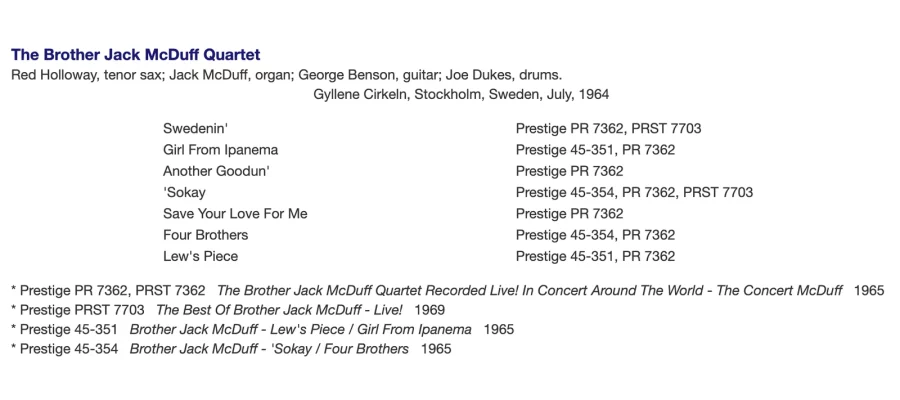
PR 7476 Walk On By と PR 7529 The Midnight Sun の裏ジャケ

Part II の最後で予告した通り、最終回ではディスコグラフィの検証と、セッション・原盤・CD の対応マトリクスをまとめます。

このシリーズを調べる過程で、ディスコグラフィの世界にも「完璧な一次資料」は存在しないことを痛感しました。まず、その話から始めさせてください。

Continue reading
2026/07/11

グルーヴマシンの録音を追いかけて (II): 時系列順に聞いてみる

Part I では、McDuff、Dukes、Benson、Holloway の 4 人がそれぞれどんなプレイヤーだったかを書きました。ここからは、この 4 人の録音を時系列で辿ってみます。

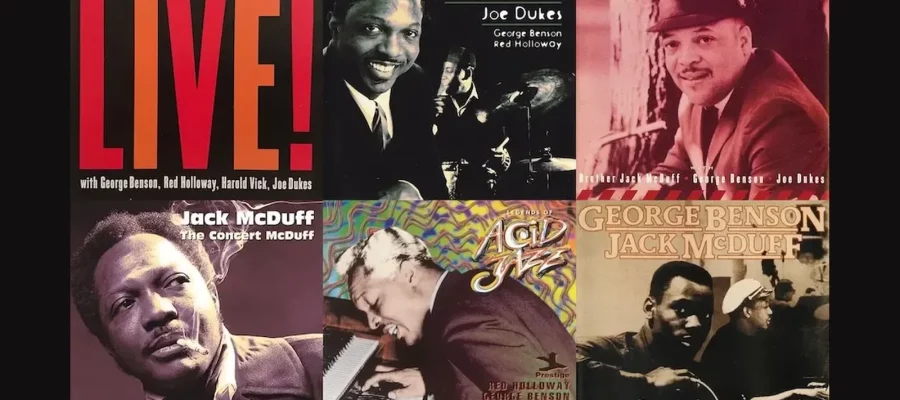
McDuff-Holloway-Benson-Dukes の Prestige CD 6 枚

1963 年 6 月の Newark から、同年 10 月の San Francisco、1964 年 2 月の Los Angeles、同年夏のヨーロッパ、そして 1964〜65 年の New York スタジオへ。2 年間のうちにバンドがどう変わっていったのか、セッション単位で聴いていきます。

なお、ライブ盤の編集手法(拍手のオーバーダブやフェードアウト処理)にも各所で触れます。「ライブ盤 = ライブの完全な記録」とは限らない、ということが、聴いていくとわかります。

ここからは語り口を少し変えて、音源に向き合う実況風の筆致でいきます(笑)。

Continue reading
2026/07/11

グルーヴマシンの録音を追いかけて (I): 4人の奇跡の2年間

この 4 人の演奏が、昔からたまらなく好きなんです。

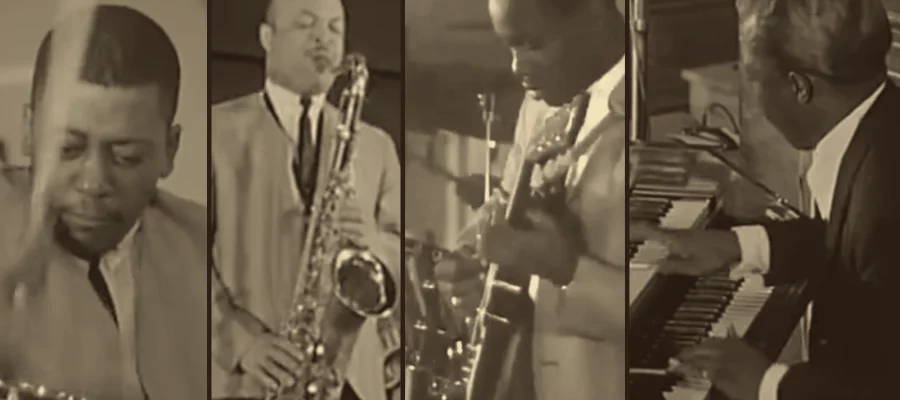
Red Holloway, Joe Dukes, George Benson, Brother Jack McDuff performing at the Antibes Jazz Festival, 1964

1964 年夏、Antibes Jazz Festival での 4 人。左から Red Holloway (ts)、Joe Dukes (ds)、George Benson (g)、Brother Jack McDuff (org)。

Brother Jack McDuff(ジャック・マクダフ)のオルガン、Red Holloway(レッド・ホロウェイ)のテナー、George Benson(ジョージ・ベンソン)のギター、Joe Dukes(ジョー・デュークス)のドラムス。1963 年から 1965 年にかけて Prestige レーベルに残された録音は、聴くたびに体が勝手に動き出します。何度聴いても飽きません。末恐ろしいグルーヴマシンの魔力に、私はずっと虜になっています。

ところが、この 4 人の録音を体系的に聴こうとすると、すぐに困ったことになります。

録音自体は 1963 年から 1965 年の 2 年間に集中しているのに、同じセッションの曲が全然違う LP に収録されたりしていて、体系的に音源を追うのが難しいのです。McDuff は Prestige に長く在籍し、ギタリストが Grant Green → Kenny Burrell → George Benson → Pat Martino と入れ替わりました。後期の LP はこれらの時代をまたいで収録しています。たとえば Steppin’ Out (PRST 7666) は 6 曲中に Green、Burrell、Benson、Martino の 4 人のギタリストが混在し、録音年も 1961 年から 1966 年まで 5 年にわたります。後年の CD 再発でもやはり同じで、Silk and Soul (PRCD-24242-2) は 13 曲中 Benson が弾いているのは 1 曲だけです。どの盤にこの 4 人の演奏が入っているのかを把握するだけで、ちょっとした調査が必要になります。

このシリーズでは、散らばった録音をセッション単位で束ね直して、4 人のバンドとして聴き直してみたいと思います。Part I ではまず、この 4 人がそれぞれどんなプレイヤーで、なぜ噛み合っていたのかを書きます。Part II では時系列順に録音を辿り、Part III でディスコグラフィの整理と検証を行います。

Continue reading
2026/07/11

Tracking the Groove Machine (III): Discographical Data

Back covers of PR 7476 Walk On By and PR 7529 The Midnight Sun

As promised at the end of Part II, this final installment covers discographical verification and cross-reference matrices mapping sessions, original LPs, and CDs.

While researching this series, it was driven home to me that there is no such thing as a “perfect primary source” in discography. Let me start with that.

Continue reading
2026/07/11

Tracking the Groove Machine (II): Listening in Chronological Order

In Part I, I wrote about what kind of players McDuff, Dukes, Benson, and Holloway each were. From here, I’ll trace the four players’ recordings in chronological order.

Six Prestige CDs by McDuff, Holloway, Benson, and Dukes

From Newark in June 1963, to San Francisco in October of that year, Los Angeles in February 1964, Europe that summer, and then on to the New York studios in 1964-65. I’ll be listening session by session, following how the band changed over the course of two years.

I’ll also touch on the editing techniques used in the live albums (overdubbed applause, fadeout processing) at various points. “Live album = complete record of a live performance” isn’t always the case, as you’ll hear.

Continue reading
2026/07/11

Tracking the Groove Machine (I): Two Miraculous Years

I have been hopelessly in love with this quartet’s playing for a very long time.

Red Holloway, Joe Dukes, George Benson, Brother Jack McDuff performing at the Antibes Jazz Festival, 1964

The quartet at the Antibes Jazz Festival, summer 1964. From left: Red Holloway (ts), Joe Dukes (ds), George Benson (g), Brother Jack McDuff (org).

Brother Jack McDuff on organ, Red Holloway on tenor, George Benson on guitar, Joe Dukes on drums. Every time I listen to the recordings they left on Prestige Records between 1963 and 1965, my body starts moving on its own. I never get tired of them. I have been captivated by the spell of this fearsome groove machine for years.

The trouble is, the moment you try to listen to this quartet’s recordings systematically, you run into problems.

The recordings themselves are concentrated in just two years, 1963 to 1965, yet tracks from the same session ended up scattered across completely different LPs, making it hard to follow the music in any orderly way. McDuff had a long tenure on Prestige, and his guitarists rotated through Grant Green, Kenny Burrell, George Benson, and Pat Martino. Later LPs drew from sessions spanning these different eras. For example, Steppin’ Out (PRST 7666) has four different guitarists across its six tracks (Green, Burrell, Benson, and Martino), with recording dates stretching five years from 1961 to 1966. CD reissues were no better: Silk and Soul (PRCD-24242-2) has thirteen tracks, but Benson plays on only one. Just figuring out which releases contain this quartet’s performances requires a bit of detective work.

In this series, I want to reassemble the scattered recordings session by session and listen to them fresh as a four-piece band. Part I covers who these four players were and why they clicked. Part II traces the recordings in chronological order, and Part III tackles the discographical data.

Continue reading
2025/06/26

Schiit Mimir Balanced Mesh™ DAC

Introduction

つい先日、音楽好きな知人のお宅を訪問する機会がありました。主に LP(特に 1940〜50 年代のジャズやソウル/R&Bのオリジナル盤)や 45 回転シングル盤、78 回転盤(こちらもジャズやソウル/R&Bがメイン)を愛聴されていて、CD は積極的には聴かず、PC オーディオやストリーミングにもまったく興味がない、という方です。

The other day I had a chance to visit a friend who’s a hardcore music lover. His daily spins are mostly LPs – original jazz, soul and R&B pressings mainly from the ’40s to ’50s – plus 45 rpm singles and even 78 rpms of the same genres. CDs rarely make it onto his system, and PC-based audio or streaming? Zero interest.

Billie Holiday、Johnny Hodges、Willie Smith、Aretha Franklin、Helen Merrill、Dinah Washington、Solomon Burke などを特に愛好されており、自慢のオリジナル盤 LP や SP 盤をいろいろ聴かせていただきました。

He’s especially fond of artists like Billie Holiday, Johnny Hodges, Willie Smith, Aretha Franklin, Helen Merrill, Dinah Washington, and Solomon Burke, and he treated me to a parade of prized and treasured LPs and 78 rpm records of original pressings.

Some of his collection – Jazz, Soul, Blues, etc.

(その方のコレクションの一部)

Continue reading
2025/06/24

David Bowie in Jazz (Wagram Music 3387412)

2003年頃から活動しているフランスの Wagram Music レーベル。

数えきれないほどのコンピレーション CD をリリースしてきたこのレーベルですが、2016年より “In Jazz” もリリースしています。これは、著名アーティストの楽曲をジャズミュージシャンが思い思いにカヴァーした演奏を集めたオムニバス CD シリーズです。

テーマに沿って新規録音された音源…、というわけではなく、各アーティストの既存アルバムからカヴァー曲を集めて1枚にまとめあげたもののようです。しかし、いざ聴いてみると不思議な統一感と程度なバラエティが共存しており、どのリリースもかなり楽しめます。

Continue reading
2024/08/30

“Monaural” on Compact Disc Digital Audio

Introduction / 余談からスタート

我が家のオーディオ環境では、2004年に TEAC VRDS-25X の中古を導入するまでは、カーオーディオと兼用していたポータブルCDプレーヤや、タダで譲り受けた LD/CD プレーヤなどで、CD を聴いていました(笑)

In my home audio environment, until I installed a used TEAC VRDS-25X in 2004, I listened to CDs with a portable CD player (which was also used with my car audio system), or with a LD/CD player I got for free 🙂

当時はアナログ再生がメインだったからですが、かといって「アナログマンセー」だったわけではありませんし(笑)、今でもディジタル再生も同じくらい好んでいます。

This was because analog was my main source for listening at the time, but that does not mean that I was an “analog supremacist”, and I still prefer digital playback as much as analog playback.

2012年初頭、(のちに Musical Surroundings MYDAC II として製品化された)DAC のプロトタイプ基板 を開発者の Michael Yee さんにいただいたことをきっかけにして、CD を直接再生することはなくなり、CD をリッピングしたのち PC から DAC 経由で再生するようになりました。ここから我が家での本格的なディジタル再生が始まりました。

In early 2012, Mr. Michael Yee, the developer of the audio components, kindly gave me a prototype DAC board (which later commercialized as Musical Surroundings MYDAC II). After that, I stopped playing CDs directly, and my primary digital audio playback method became “playing digital files (that were ripped from CDs) from PCs via DACs”. This was the beginning of full-fledged digital playback in my home.

以前から CD を購入するたびに、XLD (X Lossless Decoder)Exact Audio Copy を使い、ALAC (Apple Lossless) 形式のディジタルファイルとして SSD や NAS に保存しており、現在はこれを Audirvāna Origin + Music app (旧名 iTunes) から DAC に流し込んで再生しています。

Even since before 2012, I have always used such software as Exact Audio Copy and XLD (X Lossless Decoder) to rip the CDs as digital files in ALAC (Apple Lossless) format on my SSD or NAS. Recentely I always play these audio files using the combination of Audirvāna Origin and Music app (was: iTunes) via the DAC.

System Configuration as of August 25, 2024

2024年8月25日時点での我が家のシステム構成図


Michell Orbe 追加後、特に変更はありません

いまだに Audirvāna Origin を「Music Integrated Mode (legacy)」モードで使っている(Audirvana はあくまでバックエンドで、iTunes/Music をフロントエンドとして使用)のは、取り込み年月日、再生回数、最終再生年月日などのデータを、iTunes/Music から他のアプリに持って行けないからです(笑)

I still use Audirvāna Origin in “Music Integrate Mode (legacy)” mode (i.e. Audirvana for backend, iTunes/Music for frontend), simply because there is no way to bring statistical data (such as imported date, play count, last played date etc.) to other apps.

Audirvana Origin “Music Integrated Mode (legacy)”

上記余談はさておき、CD 上の音源を PC 上にもってくることで、ディジタルデータとしての客観的な数値やパラメータを目にすることが容易になります。

Returning to the main subject — by bringing the sound source on the CD to the PC, it becomes much easier to see the objective values and parameters as digital data.

今回のお題、「CD におけるモノーラル音源」も、そんな中で気づいたものでした。

The subject here, “monaural sound sources on CDs” was also something I noticed in this context.

2012年7月下旬、あるモノーラル音源のCDをリッピングしている時、トラックによってファイルサイズがかなり違うことが気になったのです。残念ながら、この時の CD がどれだったのか、いまだに思い出せずにいるのですが。

It was in late July 2012, while I was ripping a certain monaural CD (which I still can’t remember it was, though), I noticed that the file size varied considerably from track to track.

PLEASE NOTE / 注

以下、本稿を通じて、「左右チャンネルがバイナリ一致したモノーラルCD」と「そうではないモノーラルCD」との間での優劣について書いているわけではなく、両者の差が生じる要因に純粋に興味があることにご留意ください。

Throughout this article, I am NOT going to discuss “is the true 2-track mono CD (with binary identical channels) better audio-wise than the CD which is not?”, but am just interested in what made this difference.

Continue reading
2024/08/08

Things I learned on Phono EQ curves, Pt. 24

EQカーブの歴史、ディスク録音の歴史を(私が独りで勝手に)学ぶ本シリーズ。前回 Pt.23 では、1970年代民生用アンプに内蔵されたフォノイコの RIAA 偏差 に関する興味深い記事、および、米国で伝統的に使われていた LCR 録音イコライザの話などを紹介しました。

In the previous Part 23, I learned an interesting article on RIAA deviation of 1970’s consumer amplifiers, as well as LCR recording/reproducing equalziers that had been the legacy especially in the United States.

今回の Pt.24 では、音声信号が最終的にレコードの溝として記録されるまでに通過するシグナルチェーン、そこで使われる機器の歴史的変遷などについて、改めて復習していきます。

This time on Pt.24, I am going to revisit and learn the signal chain from the audio source to the groove cut into lacquer discs, as well as the history and evolution of these.

Recording process flow chart

source: RCA Engineer, Vol. 3, No. 2, Oct.-Nov. 1957, pp.8-9
1957年のRCA社内エンジニア向け紀要に掲載された、録音プロセスのフローチャート
“Recording process flow chart” from 1957 technocal bulletin for RCA’s engineers.

Continue reading