2026/07/11

グルーヴマシンの録音を追いかけて (III): ディスコグラフィカルなデータ

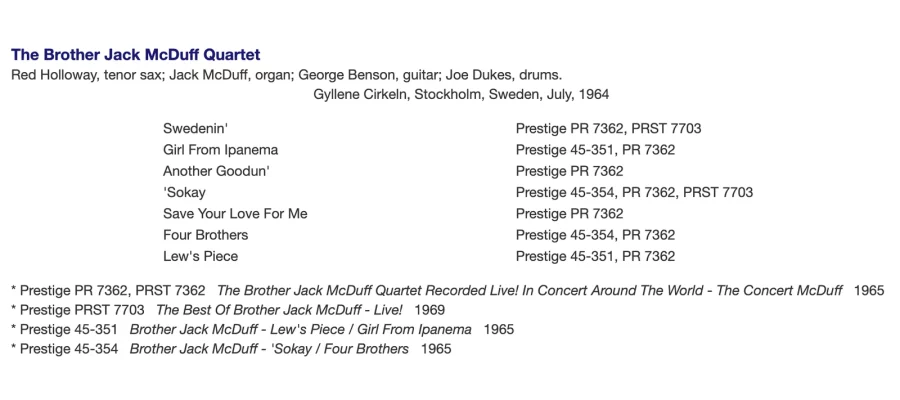
PR 7476 Walk On By と PR 7529 The Midnight Sun の裏ジャケ

Part II の最後で予告した通り、最終回ではディスコグラフィの検証と、セッション・原盤・CD の対応マトリクスをまとめます。

このシリーズを調べる過程で、ディスコグラフィの世界にも「完璧な一次資料」は存在しないことを痛感しました。まず、その話から始めさせてください。

Continue reading
2026/07/11

グルーヴマシンの録音を追いかけて (II): 時系列順に聞いてみる

Part I では、McDuff、Dukes、Benson、Holloway の 4 人がそれぞれどんなプレイヤーだったかを書きました。ここからは、この 4 人の録音を時系列で辿ってみます。

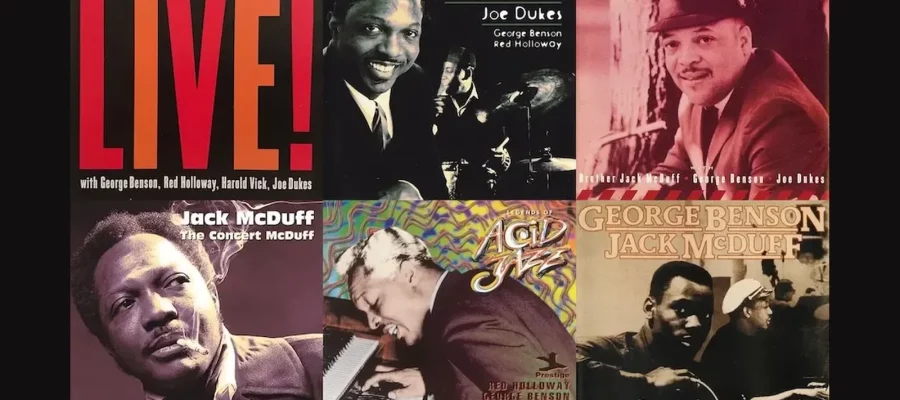
McDuff-Holloway-Benson-Dukes の Prestige CD 6 枚

1963 年 6 月の Newark から、同年 10 月の San Francisco、1964 年 2 月の Los Angeles、同年夏のヨーロッパ、そして 1964〜65 年の New York スタジオへ。2 年間のうちにバンドがどう変わっていったのか、セッション単位で聴いていきます。

なお、ライブ盤の編集手法(拍手のオーバーダブやフェードアウト処理)にも各所で触れます。「ライブ盤 = ライブの完全な記録」とは限らない、ということが、聴いていくとわかります。

ここからは語り口を少し変えて、音源に向き合う実況風の筆致でいきます(笑)。

Continue reading
2026/07/11

グルーヴマシンの録音を追いかけて (I): 4人の奇跡の2年間

この 4 人の演奏が、昔からたまらなく好きなんです。

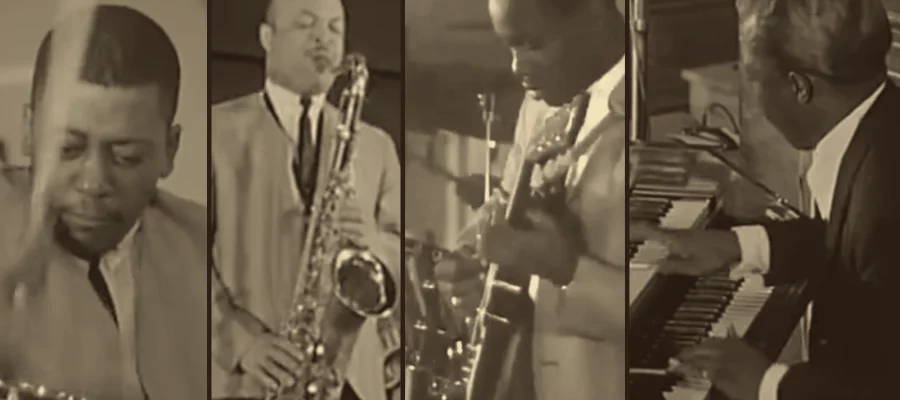
Red Holloway, Joe Dukes, George Benson, Brother Jack McDuff performing at the Antibes Jazz Festival, 1964

1964 年夏、Antibes Jazz Festival での 4 人。左から Red Holloway (ts)、Joe Dukes (ds)、George Benson (g)、Brother Jack McDuff (org)。

Brother Jack McDuff(ジャック・マクダフ)のオルガン、Red Holloway(レッド・ホロウェイ)のテナー、George Benson(ジョージ・ベンソン)のギター、Joe Dukes(ジョー・デュークス)のドラムス。1963 年から 1965 年にかけて Prestige レーベルに残された録音は、聴くたびに体が勝手に動き出します。何度聴いても飽きません。末恐ろしいグルーヴマシンの魔力に、私はずっと虜になっています。

ところが、この 4 人の録音を体系的に聴こうとすると、すぐに困ったことになります。

録音自体は 1963 年から 1965 年の 2 年間に集中しているのに、同じセッションの曲が全然違う LP に収録されたりしていて、体系的に音源を追うのが難しいのです。McDuff は Prestige に長く在籍し、ギタリストが Grant Green → Kenny Burrell → George Benson → Pat Martino と入れ替わりました。後期の LP はこれらの時代をまたいで収録しています。たとえば Steppin’ Out (PRST 7666) は 6 曲中に Green、Burrell、Benson、Martino の 4 人のギタリストが混在し、録音年も 1961 年から 1966 年まで 5 年にわたります。後年の CD 再発でもやはり同じで、Silk and Soul (PRCD-24242-2) は 13 曲中 Benson が弾いているのは 1 曲だけです。どの盤にこの 4 人の演奏が入っているのかを把握するだけで、ちょっとした調査が必要になります。

このシリーズでは、散らばった録音をセッション単位で束ね直して、4 人のバンドとして聴き直してみたいと思います。Part I ではまず、この 4 人がそれぞれどんなプレイヤーで、なぜ噛み合っていたのかを書きます。Part II では時系列順に録音を辿り、Part III でディスコグラフィの整理と検証を行います。

Continue reading
2026/07/11

Tracking the Groove Machine (III): Discographical Data

Back covers of PR 7476 Walk On By and PR 7529 The Midnight Sun

As promised at the end of Part II, this final installment covers discographical verification and cross-reference matrices mapping sessions, original LPs, and CDs.

While researching this series, it was driven home to me that there is no such thing as a “perfect primary source” in discography. Let me start with that.

Continue reading
2026/07/11

Tracking the Groove Machine (II): Listening in Chronological Order

In Part I, I wrote about what kind of players McDuff, Dukes, Benson, and Holloway each were. From here, I’ll trace the four players’ recordings in chronological order.

Six Prestige CDs by McDuff, Holloway, Benson, and Dukes

From Newark in June 1963, to San Francisco in October of that year, Los Angeles in February 1964, Europe that summer, and then on to the New York studios in 1964-65. I’ll be listening session by session, following how the band changed over the course of two years.

I’ll also touch on the editing techniques used in the live albums (overdubbed applause, fadeout processing) at various points. “Live album = complete record of a live performance” isn’t always the case, as you’ll hear.

Continue reading
2026/07/11

Tracking the Groove Machine (I): Two Miraculous Years

I have been hopelessly in love with this quartet’s playing for a very long time.

Red Holloway, Joe Dukes, George Benson, Brother Jack McDuff performing at the Antibes Jazz Festival, 1964

The quartet at the Antibes Jazz Festival, summer 1964. From left: Red Holloway (ts), Joe Dukes (ds), George Benson (g), Brother Jack McDuff (org).

Brother Jack McDuff on organ, Red Holloway on tenor, George Benson on guitar, Joe Dukes on drums. Every time I listen to the recordings they left on Prestige Records between 1963 and 1965, my body starts moving on its own. I never get tired of them. I have been captivated by the spell of this fearsome groove machine for years.

The trouble is, the moment you try to listen to this quartet’s recordings systematically, you run into problems.

The recordings themselves are concentrated in just two years, 1963 to 1965, yet tracks from the same session ended up scattered across completely different LPs, making it hard to follow the music in any orderly way. McDuff had a long tenure on Prestige, and his guitarists rotated through Grant Green, Kenny Burrell, George Benson, and Pat Martino. Later LPs drew from sessions spanning these different eras. For example, Steppin’ Out (PRST 7666) has four different guitarists across its six tracks (Green, Burrell, Benson, and Martino), with recording dates stretching five years from 1961 to 1966. CD reissues were no better: Silk and Soul (PRCD-24242-2) has thirteen tracks, but Benson plays on only one. Just figuring out which releases contain this quartet’s performances requires a bit of detective work.

In this series, I want to reassemble the scattered recordings session by session and listen to them fresh as a four-piece band. Part I covers who these four players were and why they clicked. Part II traces the recordings in chronological order, and Part III tackles the discographical data.

Continue reading
2015/07/04

Rhythm Machine

オリジナル LP はマイナーレーベルから出たレア盤(Lulu 6072-25)らしいのですが、2012年にCD化されたので、いまでは比較的気軽に聴くことができます。

ファンク系あり、モロに1970年代マーヴィン・ゲイ風味あり、スウィート系あり。バラエティ豊かな楽曲群。

それ以上に、この時代にしては珍しく、調律の合っていないピアノ。ゆらぎまくりでグルーヴ感を台無しにするドラムス。

どこまでもB級で、どこまでも憎めないこの作品。21世紀のいま聴くと逆に新鮮なのが面白いです。

2014/09/29

The Fela/James Brown Connection

本稿は、The Afrofunk Music Forum に 2006年に掲載された David McDavitt 氏の記事「The Fela/James Brown Connection」を、ご本人の許可を得て日本語翻訳したものです。

This article is a Japanese translation of 2006 article by Mr. David McDavitt, entitled “The Fela/James Brown Connection”. Presented here with David-san’s permission.


ミスター・ブラウンとオリジナル J.B.’s がナイジェリアはラゴスに赴いたのは1970年12月とされています。その一方で、それに先立つこと数ヶ月、1970年7月22日録音の「There Was A Time (I Got To Move)」や同年8月16日録音「I Got To Move」ではすでに、アフロビート的なアレンジの萌芽が感じられるのは興味深いところです。

Mr. Brown and his original J.B.’s toured Lagos, Nigeria in December 1970. On the other hand, prior to the Lagos one-nighter, Mr. Brown recorded “There Was A Time (I Got To Move)” (recorded on July 22, 1970) and “I Got To Move” (recorded on August 16, 1970) – both already shows an interesting sign of influence from Afro music.


The Fela / James Brown Connection
(by David McDavitt, published April 22, 2006. 原文 / original article)

Fela Kuti and James Brown

フェラ・クティ (Fela Kuti) のアフロビート、ジェームス・ブラウン (James Brown) のソウル。それぞれに信者がおり、かつ互いの音楽の素晴らしさをたたえ合ってきた。だが、依然として論争は続く — どっちがどっちをパクったのか?

Continue reading
2014/08/05

Get On Up: The James Brown Story (Original Motion Picture Soundtrack)

It’s a real pity – we can’t see the movie until next spring in Japan – get on up! All I can do so far is to listen to the Original Soundtrack album, watching the official trailers, seeking and reading the reviews online, etc…

日本では、来春公開予定とのこと。。。とても待ちきれません。サントラCDを聴いたり、予告編を観たり、オンラインでレビューを探して読みあさったりが関の山。

 
Continue reading
2014/02/15

You gotta go to the Eddie’s Lounge, the grooviest ‘Shitamachi’ bar in Nishi-Nippori, Tokyo

Eddie on the groove
 

In short: if you like soulful music and groovy jazz, you gotta go to the Eddie’s Lounge (Facebook page) now. Also, if you are professional/amateur musician and you want a place to join the jam, Eddie’s Lounge is one of the best places to dig in Tokyo.

Continue reading