2025/08/10

ディスコ曲「ジンギスカン」が教育現場に浸透した時期と経緯

1979年リリースのディスコソング「ジンギスカン」 (Dschinghis Khan) が、なぜ今でも小学校の運動会や林間学校でのキャンプファイアーなどでよく耳にするのか。そもそも、いつ頃から教育現場で使われ始めたのか。

以前から不思議で仕方なかったので、いろいろ調べてみました。

意外にも、リリース翌年の1980年辺りから教育現場での使用例が多く確認でき、現在に至るまで長く定番ソングとなっていることを確認しました。

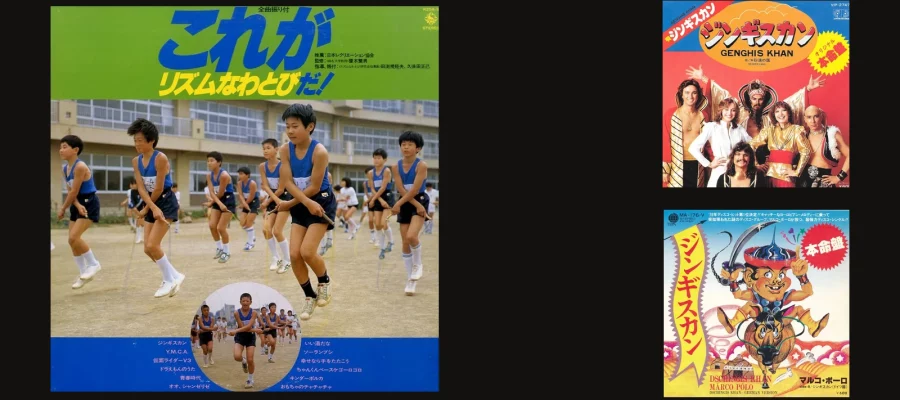
そのきっかけは「リズムなわとび」という体育の活動にあった可能性があり、ほかにもレクリエーションダンスなどでも多くの使用例が確認できました。

しかし、「なぜこの曲だけがこんなにも長く定番化しているのか」「浸透に地域差はあったのか」については、まだ良く分からない、というのが現時点の状況です。

以下、あまりきれいにまとまっていない長い調査過程ログのようなものですが、興味のある方はご覧ください。

Continue reading
2024/12/06

曲名とアーティスト名と収録アルバム名が全て一緒のってどれくらいある?

たまには(?)軽いネタを。

今から10年以上前に、クルマで移動中、たまたまカーオーディオのディスプレイがこうなりました。

“Happy End” by Happy End, on the album “Happy End”

“Happy End” by Happy End, on the album “Happy End”

アルバム「はっぴいえんど」収録の楽曲「はっぴいえんど」、演奏は はっぴぃえんど

曲名、アーティスト名、収録アルバム名の3者が完全一致 した珍しい例ですね。

それから、ことあるごとに、曲名、アーティスト名、収録アルバム名が完全一致する例を見つけてはメモしていました。これはそのまとめです。

Continue reading
2023/05/21

Howard Roberts, Teo Macero and Miles Davis

先日、Twitter 上で Sugar さんが、Miles Davis の Nefertiti について、こんなことを書かれていました。

プロデューサーがテオ・マセロのものと、ハワード・ロバーツが担当のものと2種類で構成されている。プロデュース担当曲数もほぼ同じ(ジャケ裏参照)。で、このハワード・ロバーツって一体誰なの?まさかギタリストではないよね。またテオ・マセロがプロデュースした曲の録音エンジニアはフレッド・プラウトで、ハワード・ロバーツがプロデュースした曲はスタン・トンケルが録音担当となっているけど。

Sugar-san's tweet on 13:59, May 20, 2023

さすがにあの Wrecking Crew の Howard Roberts さんじゃないよね…、ってことで、この方のことを自分なりに調べてみました。

Continue reading
2022/06/15

なぜ日本だけで「SP盤」と呼ぶようになったのか

昔懐かし、蓄音機でかける、割れやすいレコード。

10インチ (片面3分程度) / 12インチ (片面5分程度) が一般的です。

回転数は、当初は 80rpm、76rpm など、いろいろあったようですが、のちに 78rpm に統一されました(正確には 78.26rpm)。

で、そのレコードを指して、日本では SP盤 と呼ばれることが多いです。いわく、LP盤 (33 1/3rpm の Long Playing) に対して、Standard Playing の省略形である、と。

しかし、不思議なのです。日本以外で「SP」や「Standard Playing」という表記を見かけたことがありません。 代わりに英語圏でよく見かけるのは「78rpm」「Shellac Records」「Phonograph Records」「Gramophone Records」といったものばかり。

どうして、日本だけ別の呼び方になったのか、あるいは他の国でも「SP」という表記があるのか、なんとなく気になったので、いろいろ調べてみました。もともとは Twitter 上でのつぶやきから始まったものですが、ここにまとめておきます。

Continue reading
2020/09/25

(Too Long) List of “Music To (…) By” Records

During the many years of my hunting records (and loving exploring listening to music), I sometimes encounter the ones with the title “Music To (blah blah) By“. I find it interesting – the phrases ending with “By”, not with “To” nor “For”.

レコード蒐集や音楽探求をこれだけ長く続けていると、時に「Music To (なんちゃらかんちゃら) By」というタイトルのレコードや曲にたびたび遭遇します。このタイトル自体がとても興味深いといいますか、最後が「To」でも「For」でもなく、「By」というのがいい味出してる気がします。

It also makes me wonder – why are there so many records containing the music intended (or effective) for listening while doing something?

そして、「〜をしている時にかかっている音楽」「〜してる時に聴くと良い音楽」「これさえあれば〜できる音楽」と銘打たれたアルバム(や曲)が、なぜあれやこれやと(しかも最後が「By」のパターンで)これだけ世に出ているんだろう、と。

So here’s the list of such titles I could find (so far) 🙂

で、そういうタイトルのものを探して一覧にしてみました(笑)

PLEASE NOTE: THIS ARTICLE IS VERY LENGTHY! I never thought there was so many…

注意:むっちゃ長いですよ。 こんなにたくさんあるとは思いませんでした…

Continue reading
2014/09/29

The Fela/James Brown Connection

本稿は、The Afrofunk Music Forum に 2006年に掲載された David McDavitt 氏の記事「The Fela/James Brown Connection」を、ご本人の許可を得て日本語翻訳したものです。

This article is a Japanese translation of 2006 article by Mr. David McDavitt, entitled “The Fela/James Brown Connection”. Presented here with David-san’s permission.


ミスター・ブラウンとオリジナル J.B.’s がナイジェリアはラゴスに赴いたのは1970年12月とされています。その一方で、それに先立つこと数ヶ月、1970年7月22日録音の「There Was A Time (I Got To Move)」や同年8月16日録音「I Got To Move」ではすでに、アフロビート的なアレンジの萌芽が感じられるのは興味深いところです。

Mr. Brown and his original J.B.’s toured Lagos, Nigeria in December 1970. On the other hand, prior to the Lagos one-nighter, Mr. Brown recorded “There Was A Time (I Got To Move)” (recorded on July 22, 1970) and “I Got To Move” (recorded on August 16, 1970) – both already shows an interesting sign of influence from Afro music.


The Fela / James Brown Connection
(by David McDavitt, published April 22, 2006. 原文 / original article)

Fela Kuti and James Brown

フェラ・クティ (Fela Kuti) のアフロビート、ジェームス・ブラウン (James Brown) のソウル。それぞれに信者がおり、かつ互いの音楽の素晴らしさをたたえ合ってきた。だが、依然として論争は続く — どっちがどっちをパクったのか?

Continue reading
2014/09/08

Tennis and vinyl records

2014年USオープンテニスの男子決勝戦の組み合わせは、なんとなんと、錦織圭(ランキング11位、第10シード)対 マリン・チリッチ(ランキング16位、第14シード)となりました!果たして今回が、フェデラー、ナダル、ジョコビッチ、マレーのビッグ4による10年にもなる独占状態の終わりの始まりとなるのでしょうか?

Kei Nishikori versus Marin Cilic Final at the 2014 US Open! Will be the beginning of the end of the long domination by the Big Four? (Federer=Nadal=Djokovic=Murray) Time will tell.


ところで、「テニスとレコード」というと、何を思い浮かべますでしょうか?「レコード」といっても「記録」ではなく、いわゆる LP レコードのことです。

By the way, what would come in your mind if you think of “Tennis and Records?” I mean, tennis and vinyl records.
(the rest part of this article will be available in Japanese…)

 
[The Sound of Tennis]

The Sound of Tennis / Everett Covin
(MGM SE-4925, 1973)

Continue reading
2014/08/08

Jazz Tunes entitled “Hiroshima” and “Nagasaki”

For most of the people born and raised in Japan, every August means very special, making them feel very solemn – Nuclear bombing in Hiroshima (Sunday, 8:15 AM, August 6, 1945) and Nagasaki (Thursday, 11:02 AM, August 9, 1945); the end of the World War II aka the Pacific War (Wednesday, August 15, 1945); and coincidentally Aug. 15 is the “Obon” day – Buddist custom to honor the spirits of ancestors. Although I really do know (even as a native Japanese) that there’s been many public debates and controversies around the world relating to the use of nuclear weapons, every August we Japanese renew our determination to attain peace, talking to ourselves we never want to repeat the tragedy.

我々日本人の多くにとって、毎年8月というのは特別な月です。もちろんそれは広島と長崎に原子爆弾が投下され多くの方が犠牲になった月、そして終戦を迎えた月であるからです(また終戦記念日は偶然にもお盆でもあります)。原子爆弾が使用された事実については世界中で賛否両論の議論があるのは知っていますが、日本人にとって毎年8月が特別な気持ちにさせられる月であることは事実であり、悲劇が繰り返されないことを願い、平和を祈念する月でもあります。

HiroshimaCenotaph 2008 01.JPG
HiroshimaCenotaph 2008 01” by Taisyo – photo taken by Taisyo.
Licensed under CC BY-SA 3.0 via Wikimedia Commons.

On the other hand, some of the Japanese have been enthusiastic about Jazz music for many years (even since before the end of the WWII) – of course I’m one of such Jazz fans for dozens of years. And I sometimes encounter the Jazz/Popular songs that make me feel very confused with mixed emotions. “Hiroshima” by Albert Ammons is one of them.

その一方で、日本人の中には熱狂的なジャズファンが長らくいたわけで、私もその1人なのですが、そんな私がたまに複雑な気持ちにさせられたり、どう受け止めたらいいのかよく分からなくなる、そんなジャズやポピュラーの楽曲に出会うことがあります。アルバート・アモンズ (Albert Ammons) の「Hiroshima」という演奏もそんな曲です。

Continue reading
2013/06/14

That’s A Plenty! (Part 2)

娘が生まれて初めて「That’s A Plenty」を聴いてからはや3ヶ月。未だにこの楽曲に飽きる気配はみせません。クルマで移動中は、かならず That’s A Plenty プレイリストの再生をせがみますし、最近購入したディジタルピアノでも That’s A Plenty の Aメロ Bメロを嬉々として弾き、自転車でお散歩中も鼻歌でメロディを歌う毎日です。

It’s been three months since my daughter knew that old standard tune “That’s A Plenty”, and she never lost interest to this song: she always ask me to play the playlist (on my iPhone) containing various versions of “That’s A Plenty”; she loves to play A melody and B melody of that tune with her new digital piano; she still hums the tune while she rides on her bicycle outside.

Continue reading
2013/05/24

That’s A Plenty! (Part 1)

私がここ暫く Plays Monk ものにドップリ浸っている一方、5歳の娘は最近ある曲に熱狂的にハマっています。

I’ve been exploring the vast world of “Plays Monk” by various musicians (as you see on my previous posts here), while my five-years-old daughter fell deeply in love with one particular song.


1914年、Lew Pollack 作曲、Ray Gilbert 作詞のスタンダードナンバー、「That’s A Plenty」です。

The song is “That’s A Plenty”, an old standard tune written by Lew Pollack and Ray Gilbert in 1914.

 
[That's A Plenty Cover]
 

(私のお下がりの)娘の iPhone には、現時点で32バージョン(一部同一演奏の重複あり)の「That’s A Plenty」が同期されており、毎日何度も何度も聴いたり歌ったり弾いたりして楽しんでいます。

Her iPhone (handed down from me) always contains many versions of “That’s A Plenty” (32 versions so far) – she enjoys this number so much, listening to it, humming along with it, playing it on keyboards, etc.

 
[That's A Plenty]

Continue reading