
This article is presented in Japanese and English on the same page.
- 1958年に大手が見送った互換盤が、10年後にシングルで戻ってきた。 1968年、Buddah や Atlantic、MGM、ABC、Elektra が相次いで互換シングルを出し始めた。
- 家庭向けの LP とは別に、AM 局とシングル市場が互換盤を呼び戻したと筆者は見る。局はステレオ盤をモノーラルで流したときの音のつり合いとカートリッジの交換費用に悩み、ジュークボックス業者はステレオ盤を求め、Buddah はシングルの値上げを見込んでいた。
- 「互換」の中身は社ごとに違った。 Atlantic や MGM、Warner Bros.-Seven Arts が使った CSG は左右の位相をずらし、モノーラルにまとめたときの音のつり合いを整えた。 Elektra は溝の縦の振れを抑える方式と報じられた。
- Buddah は “Dual 45” の方式を明かさず、伝えられたのは、適切なミックスが決まるまで何時間も試行錯誤したという話だった。溝に何がしてあったのかは、次回、Buddah と Elektra のシングルの盤起こしで確かめる。
- Compatible records, which the major labels passed over in 1958, returned ten years later in the singles format. In 1968, Buddah, Atlantic, MGM, ABC, and Elektra all began releasing compatible singles in quick succession.
- In my view, AM radio stations and the singles market brought compatible records back, separately from the home LP market. Stations struggled with the balance of stereo records broadcast in mono and with the cost of replacing cartridges, jukebox operators wanted stereo records, and Buddah expected to raise the price of singles.
- What “compatible” meant in practice varied by company. CSG, used by Atlantic, MGM, and Warner Bros.-Seven Arts, shifted the phase between the left and right channels to even out the balance when they were summed to mono. Elektra was reported to be cutting its singles with vertical limiting.
- Buddah never disclosed the method behind its “Dual 45” singles; all that was reported was that finding the proper mix took many hours of trial and error. What was actually done to the grooves is the subject of the next article, based on needle drops of Buddah and Elektra singles.
変更履歴 / Revision History
- 2026年11月29日: 初版公開
- November 29, 2026: Initial publication
The Buddah Singles in My Collection and the “Dual 45” Label
手元に、1968年に Buddah が出したシングルが2枚あります。 Lemon Pipers の「Rice Is Nice」(BDA-31) と、Judy White の「(Tell Me) Who Am I」(BDA-33) です。どちらのレーベルにも “Dual 45” と印刷されています。
I have two singles that Buddah released in 1968: “Rice Is Nice” by the Lemon Pipers (BDA-31) and “(Tell Me) Who Am I” by Judy White (BDA-33). Both carry the words “Dual 45” printed on their labels.
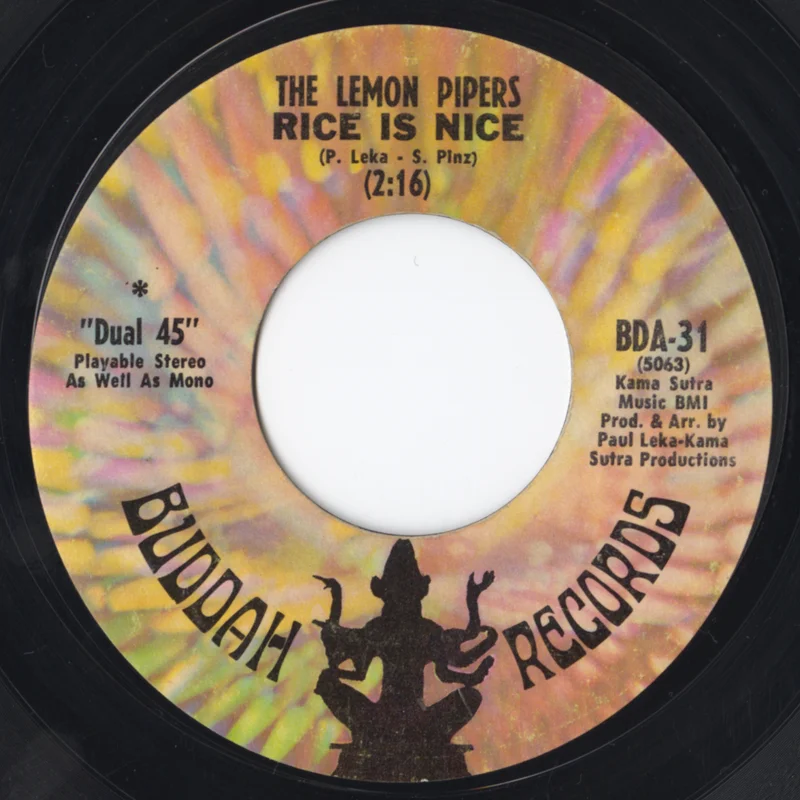
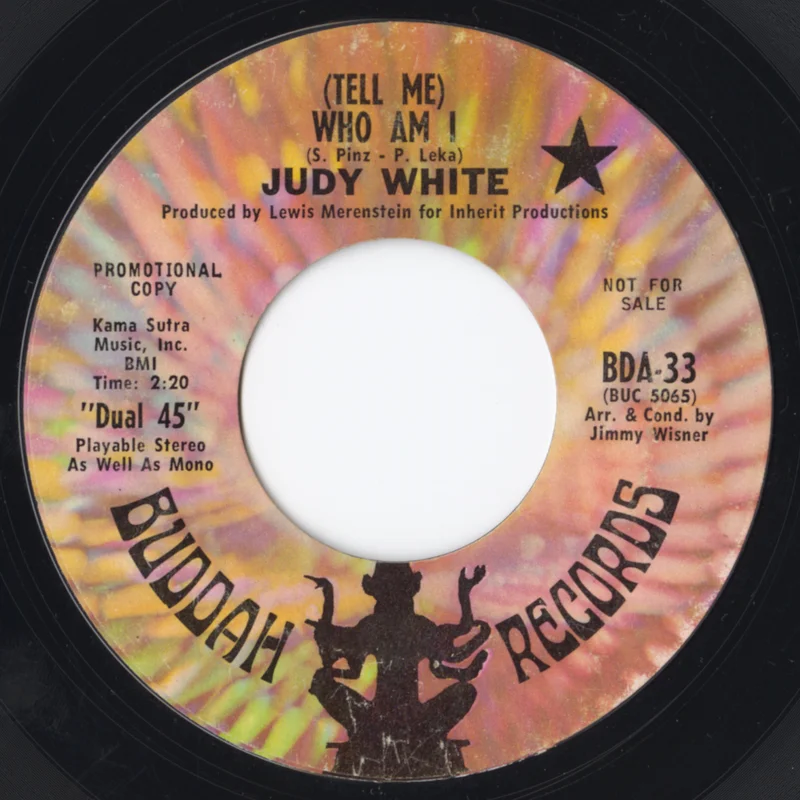
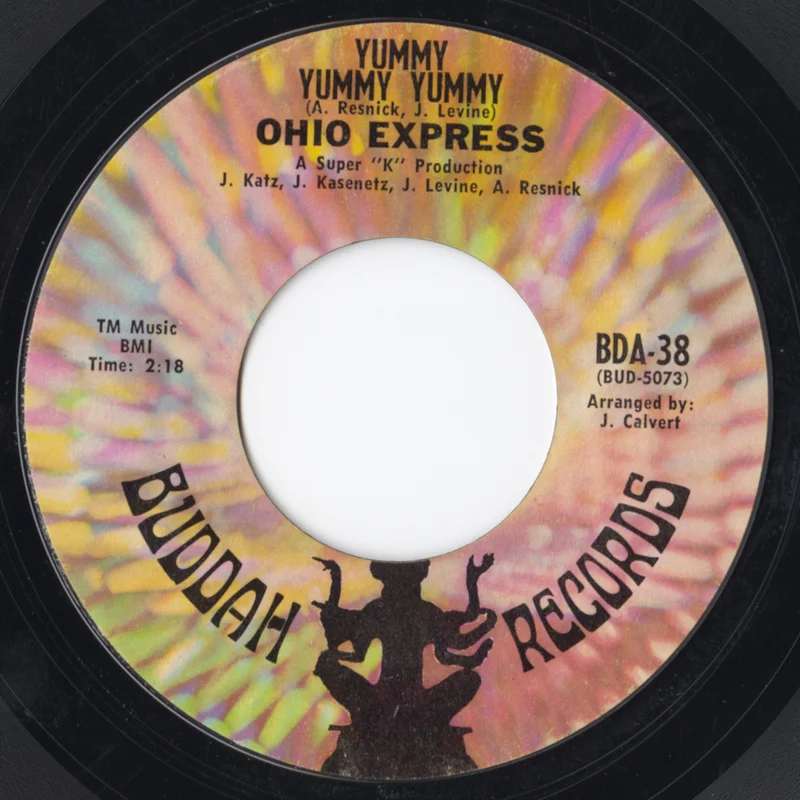
Figure 1: Buddah singles from 1968. From left: The Lemon Pipers, “Rice Is Nice” (BDA-31); Judy White, “(Tell Me) Who Am I” (BDA-33, a promotional copy for radio); and Ohio Express, “Yummy Yummy Yummy” (BDA-38). The first two are printed “Dual 45” and “Playable Stereo As Well As Mono”; the one on the right is not (author’s collection).

Figure 2: Close-up of “Dual 45” (BDA-31)
Lemon Pipers と Judy White の盤のレーベルには、“Dual 45” “Playable Stereo As Well As Mono” という文言が印刷されています。「ステレオでもモノーラルでもかけられる」という意味です。 Billboard の1968年3月16日号は、Buddah が全シングルのスリーブにも同じ趣旨の文言を載せると報じました。 3枚のレーベルの右端は、同じころに出た Ohio Express の「Yummy Yummy Yummy」(BDA-38) で、こちらのレーベルには “Dual 45” の表記がありません。
The labels of the Lemon Pipers and Judy White singles carry “Dual 45” and “Playable Stereo As Well As Mono.” The March 16, 1968 issue of Billboard reported that Buddah would also print similar wording on the sleeves of all its singles. At the far right of the three labels is “Yummy Yummy Yummy” by the Ohio Express (BDA-38), released around the same time, whose label carries no “Dual 45” marking.
デッドワックス (盤の溝の内側の無音部分) にも違いがあります。デッドワックスには、盤を見分けるためのマトリクス番号が、手書きや刻印で記されています。 BDA-31 と BDA-33 のマトリクス番号は BUC- で始まり、BDA-38 は BUD- で始まります。
There is also a difference in the dead wax (the ungrooved area inside the recorded grooves), where matrix numbers identifying the pressing are etched by hand or stamped. The matrix numbers on BDA-31 and BDA-33 begin with BUC-, whereas that of BDA-38 begins with BUD-.
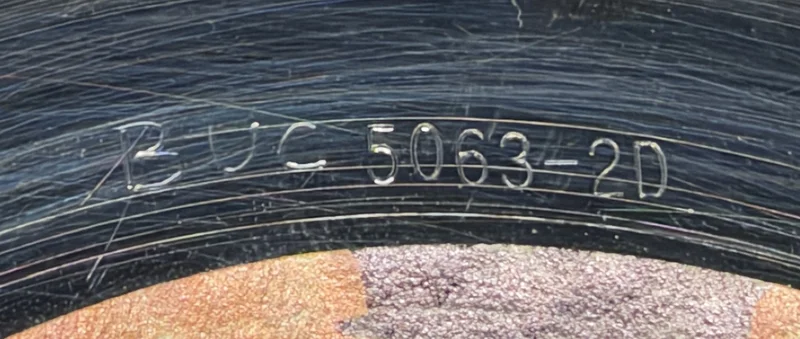
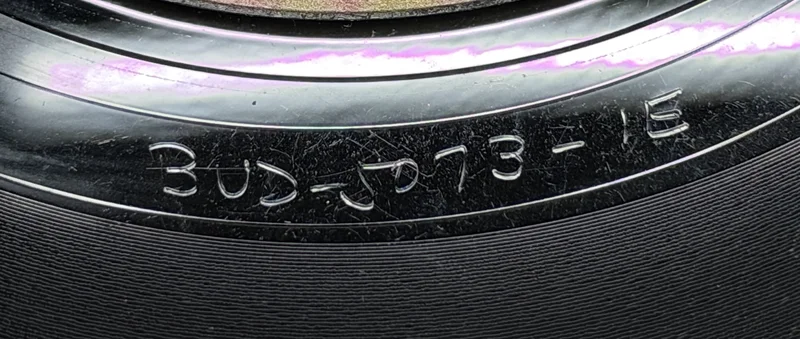
Figure 3: Matrix numbers in the dead wax. Top: BUC 5063-2D on BDA-31 (“BUC” hand-etched, the number stamped). Bottom: BUD-5073-1E on BDA-38 (entirely hand-etched). The “Dual 45” pressings begin with BUC-, the one without the marking with BUD- (photos by the author).
1968年の Buddah のシングルで、レーベルに “Dual 45” とあるのは、BDA-31 から BDA-40 までの10枚のうち、36 と 38 を除く8枚です。筆者がレーベルの写真で確かめた結果は Discogs の登録と一致し、8枚ともマトリクス番号は BUC- で始まっていました。 BUC- の C が「互換」を表す英語の頭文字ではないかと考えていますが、これはあくまで推測です。
Among the ten Buddah singles from BDA-31 through BDA-40 released in 1968, eight carry “Dual 45” on the label, with 36 and 38 being the two exceptions. My checks of label photos match the Discogs entries, and all eight have matrix numbers starting with BUC-. I suspect the C in BUC- stands for “compatible,” though that is only a guess.
連作1本目『CBS の「互換ステレオ盤」とはなんだったのか、そしてなぜ消えたのか(1958)』の終わりで紹介したように、Billboard は1968年2月、Columbia が開発した方式を使って、モノーラル機でもステレオ機でもかけられるシングルを Buddah が出すと報じました。その8か月前には、CBS Records の Davis が、互換盤は開発すべきでないと語っていました。
As noted at the end of the first article in this series, What Was the CBS “Compatible Stereo Record,” and Why Did It Vanish? (1958), Billboard reported in February 1968 that Buddah was releasing singles playable on both mono and stereo equipment using a system developed by Columbia. Eight months earlier, Davis of CBS Records had stated that compatible records should not be developed.
連作2本目『LP のモノーラル盤とステレオ盤の並走はなぜ終わったのか(1967〜68)』は、小売の LP がモノーラルをやめたあとも、ラジオ局向けのモノーラル盤は残り、シングルを買う客もモノーラルの側にいた、というところで終わりました。
The second article, Why Did the Parallel Run of Mono and Stereo LPs End? (1967–68), ended at the point where retail LPs had gone stereo-only, while radio stations still received mono records and singles buyers were still on the mono side.
1958年の大手は、互換盤を出さずに、モノーラル盤とステレオ盤を両方そろえる道を選びました。その互換盤が、なぜ1968年にもう一度呼び戻されたのか。連作1本目の結びに置いたこの問いが、1つ目の問いです。
In 1958, the major labels declined to issue compatible records and chose to stock both mono and stereo editions instead. Why were compatible records called back in 1968? That question, posed at the end of the article that opened this series, is the first question here.
BDA-31 と BDA-33 のレーベルにある “Playable Stereo As Well As Mono” の文言は、ステレオ機でもモノーラル機でもかけられると約束しています。ただ、その約束が何を指すのかは文言からは読み取れません。モノーラル機の針でステレオ盤の溝を傷めないということなのか。ステレオ盤をモノーラルで鳴らしても音が意図した通りになるということなのか。「互換」をうたった盤の溝には、何がしてあったのか。この2枚を前にして浮かんだのが、2つ目の問いです。
The wording “Playable Stereo As Well As Mono” on the labels of BDA-31 and BDA-33 promises that the disc can be played on either stereo or mono equipment, but the phrase itself does not say what that promise entails. Did it mean that a mono stylus would not damage the stereo groove, or that the stereo mix would still sound as intended when played in mono? What was actually done to the grooves of records marketed as “compatible”? This is the second question, and it came to me with these two singles in hand.
連作3本目となる本稿では、当時の業界誌からラジオ局とシングルの市場の事情をたどって1つ目の問いを考え、各社が掲げた「互換」の方式までを見ていきます。手元の盤の溝に何がしてあったのかという2つ目の問いは、次回、盤起こしの結果とともに考えます。
In this third article in the series, I trace the circumstances of radio stations and the singles market through the trade press of the day to address the first question, and look at the “compatible” methods each company put forward. The second question, what was actually done to the grooves of my own records, I will take up in the next article, together with the results of needle drops.
What Troubled Radio Stations
レコード会社が家庭向けの LP からモノーラル盤を引き揚げていったころ、連作2本目の終わりで触れたラジオ局の側で、とくに困っていたのは AM 局でした。 AM 局の電波はモノーラルなので、ステレオ盤を放送に乗せるには、盤に刻まれた左右の音をひとつにまとめて送り出さなければなりません。 ところが、左右の音を単純に混ぜてモノーラルにすると、意図した通りの音のつり合いにならない、という問題が指摘されていました。ボーカルなど中央の音が強く出すぎたり、位相の問題で一部の音が消えてしまったりするのです。
As record companies phased out mono LPs for home buyers, the radio stations I mentioned at the end of the second article had troubles of their own, and AM stations had the most. Because AM radio transmits in mono, airing a stereo record means combining the left and right channels cut into the groove and sending them out as a single signal. Simply mixing the left and right channels into mono, however, was said to upset the intended balance: sounds in the center, such as the vocal, could come out too strong, while phase problems could make some sounds disappear.
Billboard の1968年1月6日号は、1面に記事を並べてラジオ局の苦境を報じています。そのひとつ “Sound Pulls a ‘Houdini'” (音が脱出王フーディーニのように消える) で、MGM の技師長 Valentin は、AM 局で起きる現象を語りました。
The January 6, 1968 issue of Billboard ran front-page stories on the difficulties facing radio stations. In one of them, “Sound Pulls a ‘Houdini’,” MGM chief engineer Val Valentin described what happened on AM broadcasts.
There is a definite “sound disappearance” when a stereo album is broadcast on an AM station, according to Val Valentin, chief engineer for MGM Records.
MGM Records の技師長 Val Valentin によれば、ステレオのアルバムを AM 局で放送すると、はっきりとした「音の消失」が起きる。
Billboard, January 6, 1968, p. 1消えるといっても、レコードが鳴らなくなるわけではありません。ステレオで聴けば鳴っている音の一部が、モノーラルに畳むと聞こえにくくなる、という訴えです。左右の音が打ち消し合い、その分だけ音が小さくなる、というのです。
“Disappearance” did not mean the record went silent. The complaint was that some of the sound heard in stereo became hard to hear when folded down to mono: the left and right signals canceled each other out, and the level dropped by that much.
同じ1面に並んだ Claude Hall の署名記事 “Sparks Cry of ‘Not Equipped'” (「設備がない」という声が上がる) は、局の設備を取り上げています。多くの AM 局にはまだステレオのアルバムをかける用意がなく、ターンテーブル用のステレオ・カートリッジやヘッドシェルを買いそろえるには費用がかさむ、という報告です。
Alongside it on page 1, Claude Hall’s bylined article “Sparks Cry of ‘Not Equipped'” examined station equipment. It reported that many AM stations still lacked the equipment to play stereo albums, and that outfitting their turntables with stereo cartridges and headshells was expensive.
設備がないことと、音が消えることは、別々の問題です。前者は局がカートリッジを買えば片づきますが、後者は、ステレオの音をモノーラルにまとめるときに起きると訴えられた音の問題です。
Lack of equipment and sound disappearance were two separate problems. A station could solve the first by buying cartridges, whereas the second was a problem of sound, said to arise when a stereo signal was summed to mono.
同じ号の16頁には、プロヴィデンスの局 WJAR の声が載りました。 WJAR は、モノーラル盤をやめていく流れに理解を示したうえで、レコード会社に注文をつけています。
Page 16 of the same issue carried a comment from WJAR, a station in Providence. While acknowledging the phaseout of mono records, WJAR asked the record companies for help.
Phasing out monaural records makes sense, but there must be some way record companies could help us out with our technical problems or come up with a compatible record.
モノーラル盤を段階的にやめていくのは理にかなっている。しかし、レコード会社が我々の技術的な問題に手を貸してくれるか、互換盤を出してくれるか、何か方法があるはずだ。
Billboard, January 6, 1968, p. 161面の2本の記事と並べて読むと、WJAR の言う互換盤は、局の手元の装置でかけられ、モノーラルで送り出しても音のつり合いが崩れない盤のことだろうと筆者は受け取りました。古い針がステレオ盤の溝を傷めるかどうか、という意味での互換とは、力点が違って見えます。
Read alongside the two front-page stories, WJAR’s compatible record seems to me to mean a disc that stations could play on their existing equipment and that would keep its balance when broadcast in mono. The emphasis seems to lie elsewhere than on whether an older stylus would damage a stereo groove.
同じページで Epic の Len Levy は、ラジオ局向けにモノーラル盤を作る用意があると語りました。実際、ABC や MGM、Warner Bros. といったレコード会社は、店頭に並べる LP をステレオに一本化したあとも、ラジオ局に配るプロモ盤 (宣伝用の盤) にはモノーラルを残していました。 2月1日から局向けもステレオ盤のみに切り替えた Capitol は例外です。
On the same page, Len Levy of Epic said his label was prepared to supply mono records to radio stations. In practice, labels such as ABC, MGM, and Warner Bros. kept pressing mono promotional copies for broadcasters even after moving retail LPs to stereo only. Capitol, which switched its promotional LPs to stereo only starting February 1, was an exception.
もっとも、すべてのラジオ局が同じように困っていたわけではありません。 Billboard の2月17日号の投書欄には、FM 局 WPIX-FM の技術者 Charles Whitaker の反論が載りました。 Whitaker は、ステレオ用のピックアップでかければ問題はなく、音の打ち消し合いはステレオ初期の話だと書いています。
Not every radio station shared these problems, however. In the letters column of the February 17 issue of Billboard, Charles Whitaker, an engineer at WPIX-FM, pushed back, arguing that playing stereo discs with a stereo pickup caused no trouble and that phase cancellation belonged to the early days of stereo.
In the early days of stereo recording, quite a large number of albums were produced with a “phase” problem. The record sounded fine in stereo, but monaurally one channel cancelled the other, leading to a drastic drop in level or “disappearance” of, for example, the singer. This problem has long since been eliminated
ステレオ録音の初期には、かなりの数のアルバムが「位相」の問題を抱えたまま作られた。そのレコードはステレオでは問題なく鳴ったが、モノーラルでは片方のチャンネルがもう片方を打ち消し、大幅なレベルの低下や、たとえば歌手の「消失」を引き起こした。この問題はとうの昔に解消されている
Billboard, February 17, 1968, pp. 24, 28Whitaker の書いた歌手の「消失」は、Valentin の言う「音の消失」と同じ現象を指していると読めます。
Whitaker’s reference to the “disappearance” of a singer can be read as describing the same phenomenon as Valentin’s “sound disappearance.”
Whitaker は1年前、イージー・リスニングのヒット曲にステレオ版がないことを嘆いていた人でもあります。 Billboard の1967年2月11日号の社説 “The Whitaker Drive” が、その不満を取り上げていました。ステレオで流したい FM 局の側から見れば、ステレオ用のピックアップでかければ片づく話だったのでしょう。けれども Hall の記事が伝えていたのは、AM 局の多くがそのステレオ用の機材をまだ持っていないことでした。
A year earlier, Whitaker had also complained about the lack of stereo versions of easy-listening hits, a complaint taken up in the February 11, 1967 Billboard editorial “The Whitaker Drive.” From the standpoint of an FM station wanting to broadcast in stereo, playing records with a stereo pickup presumably settled the matter. Hall’s article, however, reported that many AM stations did not yet own that stereo equipment.
連作1本目の記事で紹介したように、1958年の Goldmark は、互換盤の使い道としてラジオ局、とくにステレオを試験的に流す FM 局を示唆していました。互換盤をいちばん必要としていたのがラジオ局だったことは、10年たっても変わらなかったのかもしれません。ただ、Goldmark が見ていたのはステレオを流す側の使い道で、1968年の AM 局が困っていたのはモノーラルで送り出す側の問題です。互換という同じ語が、10年のあいだに別の意味で使われるようになっていた、と筆者は考えています。
As discussed in the first article in this series, Goldmark in 1958 had suggested radio stations, particularly FM stations experimenting with stereo broadcasts, as a use for compatible records. Radio stations may still have been the ones that needed compatible records most ten years later. But Goldmark had stereo broadcasting in mind, whereas the AM stations of 1968 faced a problem on the mono transmission side. Over those ten years, as I see it, the same word, “compatible,” had come to be used in a different sense.
Singles and Jukeboxes
ラジオ局のほかにも、どんな盤が手に入るかが商売にかかわる人たちがいました。連作2本目の結びで触れたように、小売の LP がモノーラル盤をやめても、45回転のシングルはモノーラルのままでした。ジュークボックスを置く業者は、機械に入れるステレオ盤を求めていました。 Billboard の1968年2月10日号で Elektra のシングルを伝えた記事に、業者の不満が載っています。
Radio stations were not the only ones whose business depended on which records were available. As noted at the end of the second article, 45-rpm singles remained mono even after retail LPs dropped mono pressings. Jukebox operators wanted stereo records for their machines, and their frustration was reported in a February 10, 1968 Billboard article on Elektra’s singles.
For the last decade, the operators have been complaining that while their equipment is geared for stereo play, the only stereo product available has been little LP’s produced on a custom basis for jukebox manufacturers.
この10年、業者は不満を言い続けてきた。機械はステレオでかけられる作りになっているのに、手に入るステレオの品は、ジュークボックスのメーカー向けに特注で作られた Little LP だけだった。
Billboard, February 10, 1968, p. 4Little LP は、Seeburg などのジュークボックスでかけるために作られた 7インチ・33 1/3回転の盤で、Billboard の誌面はステレオ盤として書いています。対応した機械では、45回転のシングルとまぜてかけられました。筆者は2012年の記事『What the EP (Extended Playing) Originally Stands For』でこの盤を紹介しました。業者が求めていたのは、こうした専用の盤ではなく、店で売られているふつうのシングルのステレオ盤だったと考えられます。
Little LPs were 7-inch, 33 1/3-rpm records made for Seeburg and other jukeboxes, described by Billboard as stereo discs; machines that supported them could mix them with 45-rpm singles. I introduced these discs in my 2012 article What the EP (Extended Playing) Originally Stands For. What operators wanted was probably not specialty product of that kind, but stereo versions of regular retail singles.
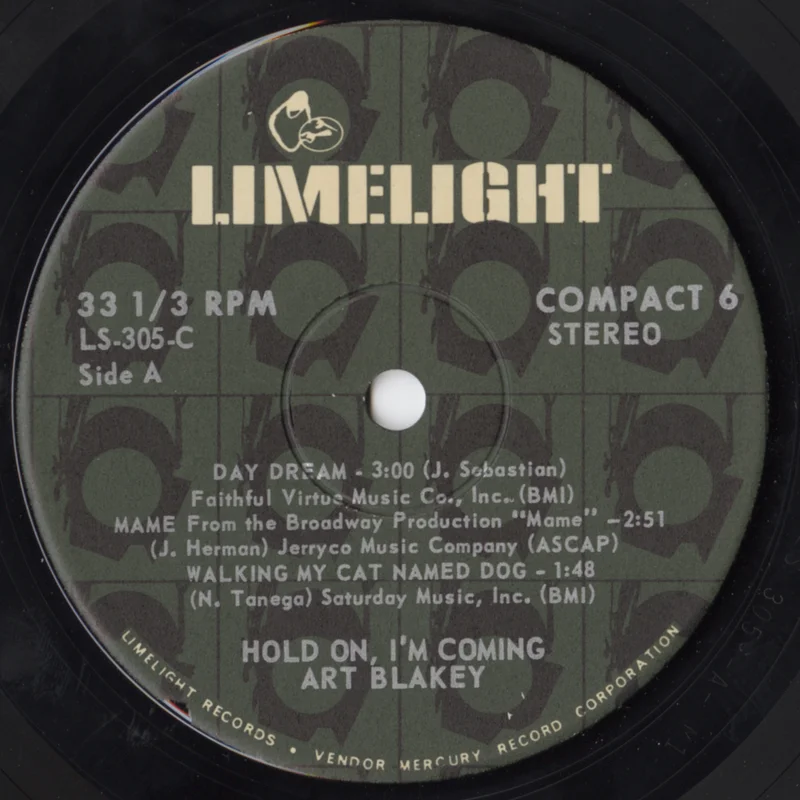
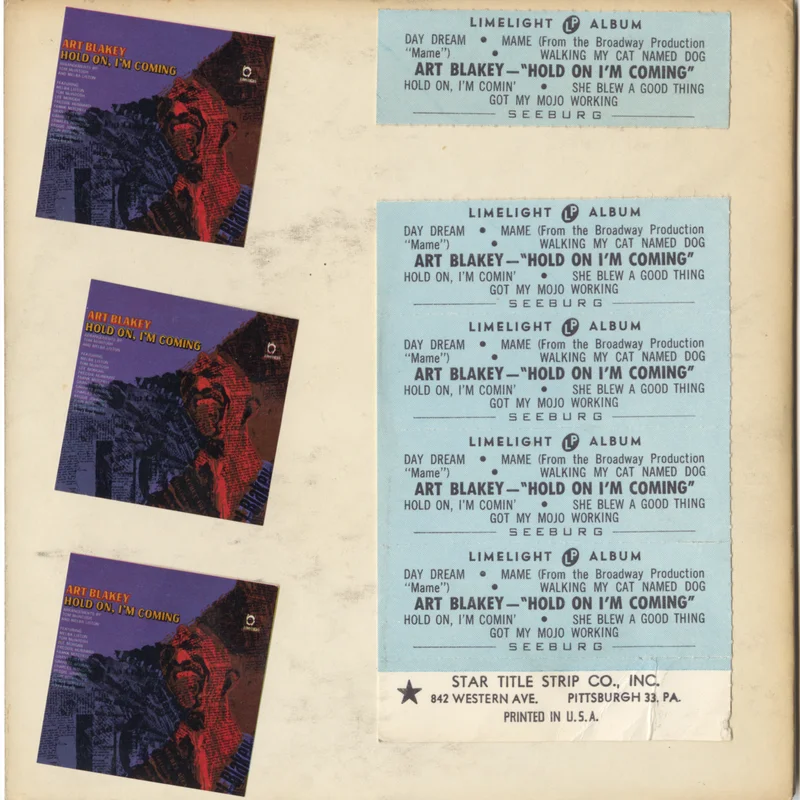
Figure 4: An example of a “Little LP” (Compact 6): Art Blakey, Hold On, I’m Coming (Limelight, a Mercury label, LS-305-C, 1967). Left: the Side A label, printed “33 1/3 RPM,” “COMPACT 6,” and “STEREO.” Right: the jukebox title strips and miniature cover prints that came with the record (author’s collection).
そこに互換シングルを投じたのが Buddah です。同社のねらいは、Billboard の1968年2月17日号の3頁に載った Aaron Sternfield の署名記事が伝えています。
Buddah stepped in with its compatible single. The company’s goals were reported by Aaron Sternfield on page 3 of the February 17, 1968 issue of Billboard.
The compatible single is an attempt to interest the adult buyer in singles by giving him a true stereo sound, to provide a source of stereo records for jukebox operators, and to provide a more profitable basis for the singles industry.
この互換シングルは、本物のステレオの音を届けることで大人の買い手にシングルへの関心を持ってもらい、ジュークボックス業者にステレオ盤の供給源をもたらし、シングルの商売により採算の取れる土台を築こうとする試みである。
Billboard, February 17, 1968, p. 3シングルを買う客の多くがモノーラル機を使っていたことは、連作2本目の結びで書きました。そうすると、ここでいう「大人の買い手」は、家にステレオ装置をそろえて LP を聴いていた客を指すと思われます。ステレオの音をシングルにも持ち込めば、その客をシングルの売り場に呼べる、というのが Buddah の見立てだったのでしょう。
As I wrote at the end of the second article, many singles buyers used mono players. That suggests “the adult buyer” here referred to listeners who owned stereo equipment at home and bought LPs. Buddah apparently expected that bringing stereo sound to singles would draw those buyers to the singles racks.
シングルの商売の採算というねらいは、小売価格の値上げと結びついていました。この記事によれば、Buddah のステレオ・シングルはモノーラルのシングルと同じ値段で売り出されました。ただ、同社の Bogart は、いずれ小売の値段を89セントから99セントに上げられると見ていました。
The goal of making singles more profitable was tied to raising retail prices. According to Sternfield’s article, Buddah launched its stereo singles at the same price as mono singles, but the label’s Bogart expected the retail price could eventually rise from 89 cents to 99 cents.
同じ2月17日付の Record World も、4頁に社説を掲げました。見出しは “The Key to a Price Increase: The Stereo Single” (値上げの鍵はステレオ・シングル) です。利幅の薄いシングルを値上げする根拠として、「答えはステレオ・シングルだ」と論じています。理由の1つには、大手のレーベルがステレオ盤をモノーラル機でかけてよいと広報していることも挙げられました。 LP からモノーラル盤をなくすために大手が広めた理屈を、この社説はシングルの値上げにも使っていました。
Record World also ran an editorial on page 4 of its February 17 issue under the headline “The Key to a Price Increase: The Stereo Single.” Arguing for a price increase on low-margin singles, the editorial declared, “The answer is the stereo single!” Among its reasons was that major labels were publicizing that stereo records could be played on mono equipment. The editorial took the argument the majors had spread to eliminate mono LPs and used it to justify raising the price of singles.
ジュークボックスのうちステレオに対応した機械の割合については、1968年の分は手元に無く、翌年の記事に数字があります。 Billboard の1969年7月26日号の1頁に、Earl Paige の署名記事が載りました。この “Ops High on Stereo 45’s” (業者はステレオの45回転に好意的) という見出しの記事は、全米の推定50万台のジュークボックスのうち48%がステレオ・シングルをかけられるという数字を挙げています。その出どころは書かれていませんが、1年後に半数近くまで来ていたことからすると、1968年の時点でも、ステレオでかけられる機械は少なくなかったと考えられます。
I do not have a 1968 figure for the share of jukeboxes capable of playing stereo, though a figure appeared the following year. On page 1 of the July 26, 1969 issue of Billboard, Earl Paige’s article “Ops High on Stereo 45’s” stated that 48% of the estimated 500,000 jukeboxes in the United States could play stereo singles. No source is given for the number, but if nearly half were stereo-capable a year later, machines that could play stereo were probably not scarce in 1968 either.
ところが、いざステレオや互換のシングルが出始めても、ジュークボックスの現場にはすぐに行き渡りませんでした。その様子を伝えたのが、Billboard の1968年5月18日号の社説 “Where Are Stereo Singles?” (ステレオ・シングルはどこにあるのか) です。 Buddah はシングルの90%をステレオでプレスしていました。社説は、ステレオ・シングルを求める声を聞いてきて、いまは出ているのにたいしたことは起きていないと書き、ジュークボックス業者の押しが足りないと評しました。
Even after stereo and compatible singles began arriving, they did not reach jukeboxes quickly. The May 18, 1968 Billboard editorial “Where Are Stereo Singles?” noted that Buddah was pressing 90% of its singles in stereo, observed that despite earlier calls for stereo singles little had happened once they appeared, and criticized jukebox operators for not pushing harder.
翌月の6月8日号の54頁が報じたジュークボックス業者の団体 MOA のセミナーでは、流通の食い違いが浮かび上がっています。卸 (ワンストップ) はステレオ・シングルを求めておらず、業者と卸の間で話が通じていない、という声が出ました。あわせて、作られていないものは手に入らない、という不満も上がっています。
A seminar held by the Music Operators of America (MOA), reported on page 54 of the June 8 issue the following month, brought out a mismatch in distribution. Speakers noted that wholesalers (one-stops) were not asking for stereo singles and that operators and one-stops were not communicating, alongside complaints that operators could not buy what was not being produced.
さらに、業者自身の足並みもそろっていませんでした。同誌の1968年12月7日号 (37頁から39頁) には、“Operators OK Stereo Singles” (業者はステレオ・シングルを歓迎) という記事があります。業者への聞き取りで、新しいジュークボックスはみなステレオの品に対応していることが確かめられました。その一方で、反対した業者の Dorothy Christensen は、ステレオ盤は新しい機械ではかかるが古い機械ではかからないので、2組買わなければならなくなる、と語っています。
Operators themselves were divided as well. In “Operators OK Stereo Singles” (Billboard, December 7, 1968, pp. 37–39), interviews confirmed that all newer jukeboxes could play stereo product, but dissenting operator Dorothy Christensen said that stereo discs played on new machines and not on old ones, which would force operators to buy two sets of records.
家庭のモノーラル機とステレオ機の並存と同じことが、新旧の機械を抱えるジュークボックス業者の手元でも起きていました。 Bogart が、ステレオ・シングルの計画を成功させるには作るのを互換盤だけに絞る必要がある、と語った背景にも、この事情があったと考えられます。
The same coexistence of mono and stereo players found in homes existed among jukebox operators running both old and new machines. That situation likely stood behind Bogart’s statement that for a stereo singles program to succeed, production had to be limited to compatible records alone.
1958年に大手が見送った互換盤が、10年後の1968年にもう一度使われるようになった背景には、家庭向けの LP とは別の事情がありました。モノーラル電波で放送する AM 局の側には、ステレオ盤の左右をまとめたときに音のつり合いが崩れるという悩みや、カートリッジを替える負担が残っていました。 45回転シングルの側にも、モノーラル機を使う客と、ステレオ盤を求めるジュークボックス業者のあいだを1枚の盤でつなぎたい思惑がありました。家庭向けの LP がステレオへ移り終えたあとも、AM 局とシングルという2つの場では互換盤が求められていた、と筆者は見ています。
Compatible records, passed over by the major labels in 1958, returned ten years later, in 1968, for reasons distinct from the home LP market. AM stations broadcasting in mono still faced problems with the balance when the left and right channels of a stereo record were summed, and the cost of replacing cartridges. In the 45-rpm singles market, labels wanted one record that could serve both consumers with mono players and jukebox operators asking for stereo discs. In my view, even after home LPs finished moving to stereo, compatible records were still wanted in two places, AM radio and singles.
How Each Label Approached “Compatible” Singles Differently
1968年の春にかけて、シングルを互換盤で出す動きが相次ぎました。 Billboard の3月23日号の4頁に、“MGM Singles Go Compatible” (MGM のシングルが互換盤に移行) という記事が載っています。その記事は、シングルを互換盤に切り替える同社が「Atlantic、Buddah、ABC、Elektra に続く」と書きました。
Through the spring of 1968, one label after another moved to release compatible singles. On page 4 of the March 23 issue of Billboard, “MGM Singles Go Compatible” reported that MGM’s shift to compatible singles “follows the lead of Atlantic, Buddah, ABC, and Elektra.”
当時のレコードの「互換」という表現には、3つの異なる意味がありました。 1つ目は、古いモノーラル機の針でステレオ盤の溝を傷めないかという、針と溝の側の問題です。 2つ目は、ステレオ盤をモノーラル機でかけてよいかという、大手のレーベルの広報が強調した呼びかけです。 3つ目は、ステレオの音をモノーラルにまとめたときに音のつり合いが崩れないかという、ラジオ局の苦情に見られた音の問題でした。
At the time, the word “compatible” carried three distinct meanings for records. The first was physical: whether an older mono stylus would damage a stereo groove. The second was promotional: the major labels’ campaign telling consumers that stereo records could be played on mono equipment. The third was sonic: whether a stereo recording kept its balance when summed to mono, the issue raised by radio stations.
Elektra’s Reported Limit on Stylus Movement; CSG’s Curb on Center Buildup
Elektra が対処したのは、針と溝の物理的な動きでした。同社の新しいシングルは縦の振れを制限して刻むと、Billboard の1968年2月10日号の4頁は伝えています。新しいモノーラルのピックアップを使うラジオ局でも、問題なくかけられるようにするためです。ステレオの溝には上下の縦の振れが含まれますが、モノーラル専用の針には縦に動きにくいものがありました。記事に1958年の CBS や Columbia の名は出てきませんが、同社のやり方は、針と溝の側にあたる1つ目の「互換」への対処だと推測できます。
Elektra addressed the physical interaction between stylus and groove. Page 4 of the February 10, 1968 Billboard reported that the label was cutting its new singles with restricted vertical excursion so that radio stations using newer mono pickups could play them without trouble. Stereo grooves contain vertical modulation, and some mono-only styli had limited vertical compliance. Although the article mentions neither CBS’s 1958 record nor Columbia, Elektra’s method appears to target the first, stylus-and-groove sense of compatibility.
これに対して、3つ目の「互換」、つまり「モノーラルにまとめたときの音のつり合い」に手を打ったのが、Howard Holzer の装置 CSG (compatible stereo generator) でした。同誌の1968年1月27日号 (24頁) には、“WIZARD OF SOUND” (音の魔術師) という記事が載っています。そこで Contemporary Records 社長の Les Koenig が語った話によれば、Holzer は同社で8年間、技師長を務めました。その装置について、1月20日号の1面に載った Mike Gross と Eliot Tiegel の署名記事は、次のように報じました。
By contrast, Howard Holzer’s CSG (compatible stereo generator) addressed the third sense of compatibility: the balance when summed to mono. In “WIZARD OF SOUND” (Billboard, January 27, 1968, p. 24), Contemporary Records president Les Koenig noted that Holzer had served as his company’s chief engineer for eight years. A week earlier, on page 1 of the January 20 issue, Mike Gross and Eliot Tiegel described the device as follows.
employs a “logic system” which eliminates the buildup of center channel information in the mixing down of a stereo recording for airing by non-stereo AM and FM radio stations.
ステレオでない AM 局・FM 局向けにステレオ録音をまとめるときに、中央チャンネルの情報が積み上がるのをなくす「論理回路」を使っている。
Billboard, January 20, 1968, p. 12チャンネルのステレオ音源では、中央に定位させた音は左右に同じ波形で入っています。それをモノーラルにまとめると、中央の音が左右に振った音に比べて大きくなりすぎてしまいます。 AM 局で起きると Valentin が語った打ち消し合いとは逆向きの、音のつり合いの崩れです。 CSG は左右の位相の関係をずらしておくことで、まとめたときの中央の音量をそろえる機器でした。
In a two-channel stereo recording, a center-panned sound appears as identical waveforms in the left and right channels. Summing the two channels to mono makes center-panned elements disproportionately loud relative to sounds panned left or right, an imbalance in the opposite direction from the cancellation Valentin described on AM broadcasts. CSG shifted the phase relationship between the left and right channels in advance so that the center level stayed balanced when summed.
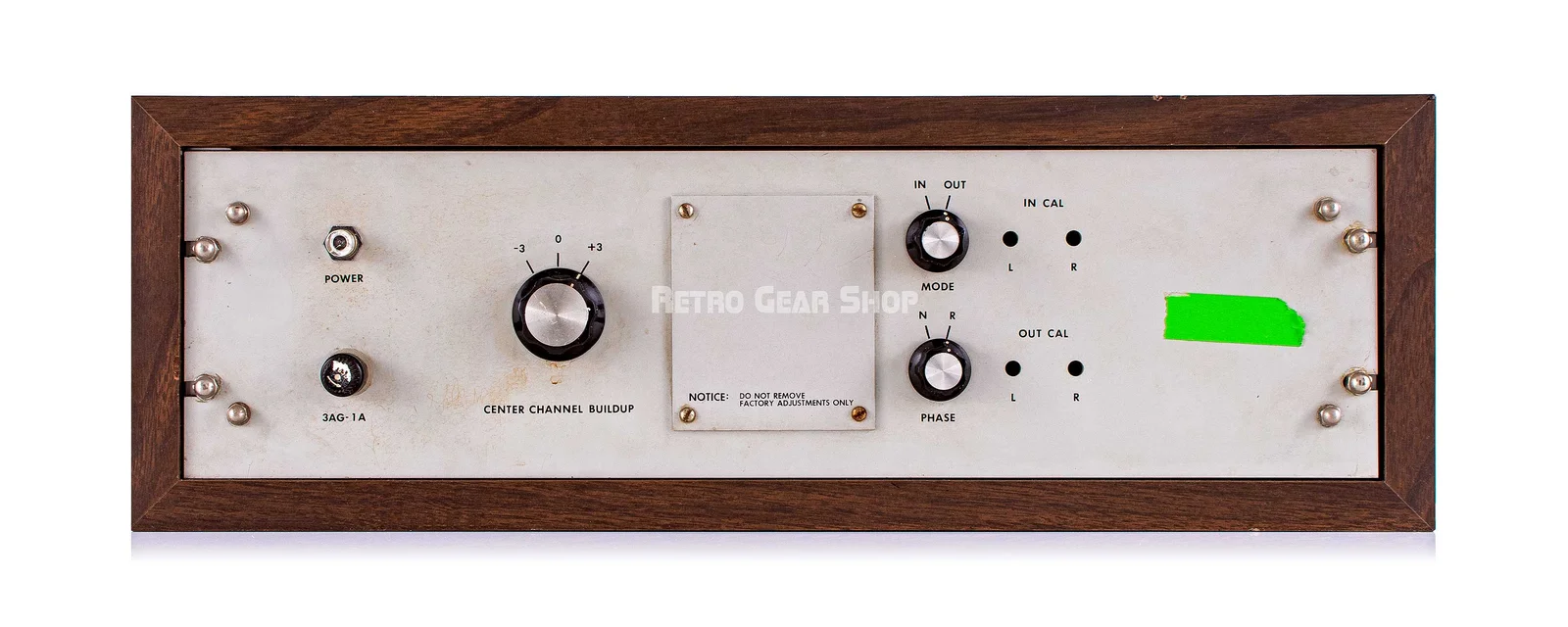
Figure 5: Front panel of the Haeco C.S.G. (Compatible Stereo Generator), the unit also featured in “The 90 Degrees Hidden in Bradley’s Barn.” The CENTER CHANNEL BUILDUP setting determines how loud center-panned sound is when the channels are summed to mono (courtesy of Retro Gear Shop).
この機器をシングルに採用したのが、Atlantic と MGM です。 Atlantic は Billboard の1968年4月6日号の7頁に全面広告を出し、“NEW PROCESS CSG STEREO COMPATIBLE” とうたいました。広告には、CSG STEREO の中心はマスタリングか録音の場で使う「ステレオ論理装置」だと書かれています。 45回転のレーベルには “CSG STEREO Mono/Stereo Compatible” と記されました。また、3月23日号の4頁の記事によれば、MGM の互換盤もこの Holzer が開発した方式 (誌面の綴りは “CGS”) を使っています。 MGM はこの互換シングルを “Saturation Sound” と名づけ、同じ号の44頁の全面広告で「ステレオでもモノーラルでも、どちらの方式でも最高の音質でかけられる、初めてのシングル」とうたいました。 Discogs には、傘下の Verve の盤 (VK-10592-SS) のデッドワックスに “CSG” と刻まれているという登録があります。
Atlantic and MGM both adopted CSG for their singles. Atlantic ran a full-page ad on page 7 of the April 6, 1968 Billboard announcing “NEW PROCESS CSG STEREO COMPATIBLE,” stating that the core of CSG STEREO was a “stereo logic device” used during mastering or recording. Its 45-rpm labels carried the wording “CSG STEREO Mono/Stereo Compatible.” According to page 4 of the March 23 issue, MGM’s compatible singles also used Holzer’s system (spelled “CGS” in the article). MGM promoted these singles as “Saturation Sound,” and its full-page advertisement on page 44 of the same issue billed each one as “a single that plays stereo or mono with maximum sound quality using either system.” A Discogs entry for a single on MGM’s Verve label (VK-10592-SS) records “CSG” in the dead wax.
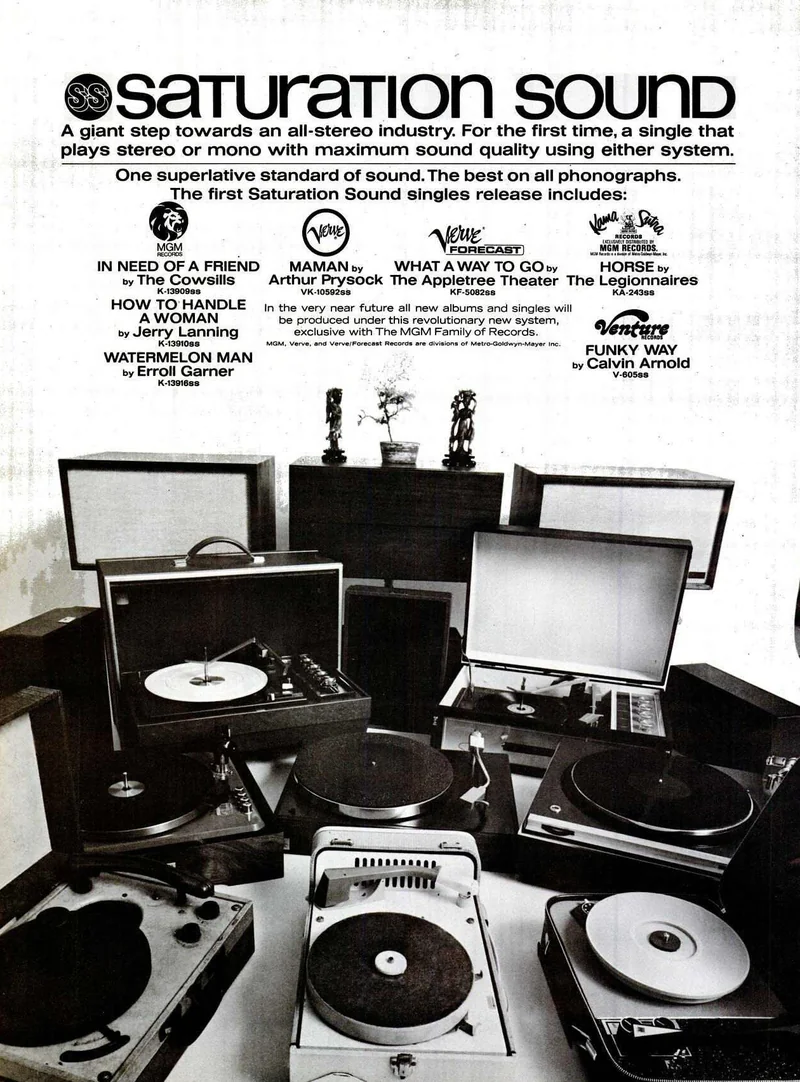
Figure 6: The full-page advertisement for MGM’s “Saturation Sound” in Billboard, March 23, 1968, p.44. It lists the first Saturation Sound singles on MGM, Verve, Verve/Forecast, Kama Sutra, and Venture, each catalog number ending in “ss,” above a photograph of several record players.
シングルではなく、ラジオ局向けの LP に CSG を入れた会社もありました。 Billboard の1968年5月4日号の4頁の記事が、それを伝えています。見出しは “WB-7 Shifts to Stereo Albums For Radiomen” (WB-7 がラジオ局向けアルバムをステレオに転換) です。 1月にはプロモ盤をモノーラルで出し続けるとしていた Warner Bros.-Seven Arts は、夏からラジオ局向けの LP を互換ステレオ盤だけにすると発表しました。そのために Holzer の装置をリースしています。なお、互換ステレオだけのシングルを出す計画は今のところない、とも報じられました。
Another company applied CSG not to singles, but to LPs for radio stations. On page 4 of the May 4, 1968 Billboard, “WB-7 Shifts to Stereo Albums For Radiomen” reported that Warner Bros.-Seven Arts, which in January had planned to keep pressing mono promos, would switch its radio-station LPs entirely to compatible stereo starting that summer and had leased Holzer’s device for the purpose. The article added that the label had no plans at that time to issue compatible-stereo-only singles.
その Warner Bros.-Seven Arts は1968年、Beau Brummels のアルバム Bradley’s Barn を出しました。ジャケット裏には “This recording employs the Haeco-CSG System.” の1行があります。筆者は『Bradley’s Barn に隠れた 90度: 1968年の LP に刻まれた Haeco-CSG』でその盤を計測しました。そして、片方のチャンネルが約90度ずれている CSG の処理が溝に刻まれていることを確かめました。あの記事の結びで「なぜ 1968年に、レコード会社がこんな処理を必要としたのか」と残しておいた背景には、ラジオ局向けの盤や互換シングルをめぐる、この年の動きがありました。
In 1968, the same Warner Bros.-Seven Arts released the Beau Brummels album Bradley’s Barn, whose back cover carries the line “This recording employs the Haeco-CSG System.” In The 90 Degrees Hidden in Bradley’s Barn: Haeco-CSG on a 1968 LP, I measured that LP and confirmed that CSG processing, shifting one channel by roughly 90 degrees, was cut into the groove. Behind the question I left at the end of that article, “Why, in 1968, did a record company need processing like this?”, lay these 1968 developments in radio-station pressings and compatible singles.
ABC and Buddah Kept Their Methods Undisclosed
残る2社の溝に何がしてあったのかは、当時の誌面からは見えてきません。 Billboard の1968年3月16日号の3頁に、“STEREO SINGLE SPINS AHEAD” (ステレオ・シングルが前進) という囲み記事が載りました。そこでは ABC Records が45回転をすべて互換の形で出すと発表したことが報じられていますが、方式は書かれていません。
Period trade reports do not reveal what the remaining two labels did to their grooves. A boxed item on page 3 of the March 16, 1968 Billboard, “STEREO SINGLE SPINS AHEAD,” reported that ABC Records had announced all its 45s would be issued in compatible form, without describing the process.
手元の “Dual 45” のシングルを出した Buddah も、詳しい仕組みは伏せられていました。 Columbia が開発した方式を使ったと報じた Billboard の1968年2月17日号の3頁は、こう書いています。
Buddah, which issued the “Dual 45” singles in my collection, also kept the details private. Page 3 of the February 17, 1968 Billboard, which reported that Buddah was using a system developed by Columbia, stated the following.
Columbia officials would give no details about the system. Even with the system, Bogart said that Paul Leka, production manager for the Lemon Pipers, and Cal Roberts, the Columbia man working on the project, spent many hours in trial and error before the proper mix was determined.
Columbia の担当者は、方式について詳しいことを明かさなかった。 Bogart によれば、方式があってもなお、Lemon Pipers の制作担当 Paul Leka と、この仕事を受け持った Columbia の Cal Roberts は、適切なミックスが決まるまで何時間も試行錯誤を重ねた。
Billboard, February 17, 1968, p. 3同じ記事で Bogart は、互換盤を作るには1枚につきおよそ1セントの追加費用がかかる、と語っています。 8か月前に Davis が「モノーラルとステレオの両方の音質を下げるだけ」として退けた互換盤の方式を、同じ CBS の Columbia が他社のために作っていたことになります。
In the same article, Bogart said that making compatible discs added roughly 1 cent per record in production cost. Eight months after Davis had dismissed compatible records “because that would mean only lessened quality for both mono and stereo sound reproduction,” Columbia, part of the same CBS organization, was building a compatible system for another label.
CSG のように信号を通す装置だけだったのなら、適切なミックスを決めるために何時間も試行錯誤したという話は出てこないはずです。この証言からすると、Buddah と Columbia の方式は、装置だけでなくミックスの判断を含んでいたのではないかと推測できます。
If the system had simply been a signal-processing box like CSG, there would have been no need for hours of trial and error to find the proper mix. Bogart’s account suggests that the Buddah and Columbia approach involved mixing decisions in addition to hardware.
試行錯誤の末に作られた Buddah の盤には、どんな音が入っていたのでしょうか。縦の振れを制限して刻んだという Elektra のシングルが本当にそうなっていたのかも、誌面だけでは確かめられません。
What kind of sound ended up on the Buddah singles produced through that trial and error? Nor can the trade press alone tell us whether Elektra’s singles, said to be cut with vertical limiting, actually were.
次回は、Buddah と Elektra のシングルを盤起こしして、溝に何がしてあったのかを確かめます。
In the next article, I will make needle drops of Buddah and Elektra singles to see what was done to their grooves.
References
- Billboard, February 11, 1967, p. 26 (editorial "The Whitaker Drive")
- Billboard, January 6, 1968, p. 1 ("Sound Pulls a ‘Houdini’"; Val Valentin of MGM / By Claude Hall, "Sparks Cry of ‘Not Equipped’"), p. 8 (ABC; Capitol’s radio programming subscriber service to supply only stereo albums from February 1), p. 16 (WJAR, Providence; Len Levy of Epic)
- Billboard, January 20, 1968, p. 1 (By Mike Gross and Eliot Tiegel; Howard Holzer’s CSG), p. 3 (WB)
- Billboard, January 27, 1968, p. 24 ("Wizard of Sound"; Les Koenig of Contemporary Records)
- Billboard, February 10, 1968, p. 4 (Elektra’s singles; jukebox operators)
- Billboard, February 17, 1968, p. 3 (By Aaron Sternfield; Buddah’s compatible singles, Columbia, Bogart), pp. 24, 28 (Letters to the Editor; Charles Whitaker of WPIX-FM)
- Billboard, March 16, 1968, p. 3 ("Buddah Boosts Stereo Singles"; the box "Stereo Single Spins Ahead", ABC)
- Billboard, March 23, 1968, p. 4 ("MGM Singles Go Compatible"), p. 44 (MGM’s "Saturation Sound" advertisement)
- Billboard, April 6, 1968, p. 7 (Atlantic full-page advertisement, "New Process CSG Stereo Compatible")
- Billboard, May 4, 1968, p. 4 ("WB-7 Shifts to Stereo Albums For Radiomen")
- Billboard, May 18, 1968, p. CMW-1 (editorial "Where Are Stereo Singles?")
- Billboard, June 8, 1968, p. 54 (the MOA seminar)
- Billboard, December 7, 1968, pp. 37–39 ("Operators OK Stereo Singles"; Dorothy Christensen)
- Billboard, July 26, 1969, p. 1 (By Earl Paige, "Ops High on Stereo 45’s")
- Record World, February 17, 1968, p. 4 (editorial "The Key to a Price Increase: The Stereo Single")
- Records from my collection: Buddah BDA-31 (The Lemon Pipers "Rice Is Nice" / "Blueberry Blue"), BDA-33 (Judy White "(Tell Me) Who Am I" / "Building A World For Two"), BDA-38 (Ohio Express "Yummy Yummy Yummy"), Limelight LS-305-C (Art Blakey "Hold On, I’m Coming," Compact 6), Warner Bros.-Seven Arts Bradley’s Barn (The Beau Brummels)
- Discogs entries (labels of Buddah BDA-31 to BDA-40; Verve VK-10592-SS)
- Photograph of the Haeco CSG unit (courtesy of Retro Gear Shop)
- Part 1 of this series (the compatible stereo record of 1958)
- Part 2 of this series (the end of mono and stereo LPs side by side, 1967–68)
- The Bradley’s Barn article (the analysis procedure)
- What the EP (Extended Playing) Originally Stands For (2012)