The date: July 4, 1960. The place: a beautiful mansion in Newport, Rhode Island. An interesting recording session took place there that day, and the results were released on record.
![[RCA Victor LPM-2302 Front Cover]](https://microgroove.jp/img/VictorLPM2302_F.jpg)
![[RCA Victor LPM-2302 Back Cover]](https://microgroove.jp/img/VictorLPM2302_B.jpg)
After The Riot At Newport / The Nashville All-Stars
(RCA Victor [US] LPM-2302)
Buy this CD at Amazon.com
AFTER THE RIOT AT NEWPORT
The Nashville All-Stars, a group of talented session musicians from Nashville, were scheduled to appear at the 1960 Newport Jazz Festival. Because of the riots that broke out at Newport in early July, however, the remaining concerts were cancelled partway through the festival, and the Nashville All-Stars never made it to the stage.
Instead, an interesting jam session was recorded at a beautiful mansion that RCA Victor Records, the label responsible for bringing these Nashville musicians to Newport, had rented for the festival. Here is an excerpt from George Wein’s original liner notes, which tell the story behind the recording:
. . . When it became obvious that the reminder of the concert was canceled, Ben Rosner thought it a good idea to have a party on the lawn and record the musicians at a jam session. The music on this disc is what transpired that sunny Monday afternoon. Incidentally, but importantly, two selections in the album were composed for the occasion. Chet Atkins penned “Nashville to Newport”, and Boots Randolph with Hank Garland extemporized “Riot-Chous” the night before the session – right after the big riot.
Most of the members of the Nashville All-Stars heard here were legendary studio musicians of the Country & Western field in Nashville, revered almost like gods on that scene. They played on an unbelievable number of recording sessions there, and backed big names like Elvis Presley, the Everly Brothers, and Roy Orbison time and time again. You could call them the faces of the Nashville Sound of that era. This album captures some very interesting performances: what happens when such talented C&W musicians play jazz in earnest? They actually loved jazz as much as the C&W music they played for a living. According to the liner notes, in after hours they find their way to a little club in Nashville where they switch styles and start “swinging,” far into the early hours of the morning . . .
C&W MUSICIANS WITH A GREAT LOVE FOR JAZZ
![[RCA Victor LPM-2302 Side-A]](https://microgroove.jp/img/VictorLPM2302A.jpg)
![[RCA Victor LPM-2302 Side-B]](https://microgroove.jp/img/VictorLPM2302B.jpg)
This is strictly my personal impression, but heard purely as a jazz album, I have to admit it falls a notch or two short. Compared, that is, with the many albums we call jazz classics.
Even Buddy Harman, the legendary drummer who all but built the drum style of the country sound, gets a little frantic on the straight-ahead up-tempo swinger “’S Wonderful” (B-1): he cannot help leaning on the bass drum on the downbeat, and the resulting clatter is rather endearing.
The great bass stylist Bob Moore (who left superb playing on more sessions than anyone could count, Roy Orbison’s “Oh, Pretty Woman” and Simon & Garfunkel’s “Bridge Over Troubled Water” among them) sounds understandably unaccustomed to walking four to the bar on the upright: he seems to have his hands full just keeping time, trailing slightly behind the beat.
Boots Randolph, who would later score a huge hit with his own “Yakety Sax” and go on to play alongside any number of pop and rock musicians, contributes gloriously greasy saxophone full of curious phrasing. And then there is Chet Atkins, the master who ends up sounding like nobody but himself no matter what he plays, jazz included. His solos (heard on “Nashville To Newport” (A-2) and “Frankie And Johnny” (B-3)) are interesting enough to rank as a first-rate crossover of jazz and country.
The guitar solo on “Frankie And Johnny” (B-3) in particular is a little gem: it comes within a hair of sounding like jazz, and yet, listened to with a cool head, it is not jazz at all. Which makes me love it all the more! Brenton Banks, on violin and piano, is surprisingly (?) orthodox, and holds up quite well as jazz.
And yet. Two of the musicians on this album are another matter entirely. What they play here, exactly as it stands, is excellent even judged purely as jazz. This goes far beyond country musicians having some fun on the side: these two deliver jazz of the finest grade.
One of them is Gary Burton, heard here at the age of just seventeen, in what was probably one of his earliest recordings. Never too swinging, never too metallic, he lays down each note briskly and with care, and you can already hear the great career to come.
And the other is the hero of this article: Hank Garland. Alongside Chet Atkins, he was one of the pillars holding up the Nashville Sound, and everything about him here, the phrasing, the harmony, the tone, the way he comps behind a soloist, is the work of a complete stylist. This is perfect jazz guitar. More than that, it is jazz guitar of the very finest kind. His playing recalls someone like Barney Kessel, straight down the main line of the Charlie Christian school.
Think about what that means: a supreme stylist who let you feel a jazz sensibility even when he was playing country, and at the same time a guitarist who, handed a jazz tune, could lace his playing with the virtues of country and the flavor of the blues at the very highest level. That must have been nothing short of an event.
On this album he is featured on every track except one piano trio number, and whether comping or soloing, his presence fills the room. On some tracks, sadly, his solos are mixed a touch off-mike . . .
A-1: Relaxin’ (Jimmy Guinn)
A-2: Nashville To Newport (Chet Atkins)
A-3: Opus De Funk (Horace Silver)
B-1: ‘S Wonderful (G & I Gershwin)
B-2: ‘Round Midnight (Thelonious Monk)
B-3: Frankie And Johnny (P.D.)
B-4: Riot-Chous (Boots Randolph – Hank Garland)
Boots Randolph (as on A-1, A-3, ts on A-2, B-4),
Chet Atkins (g on A-2, B-3), Hank Garland (g except B-2, B-3),
Brenton Banks (p on A-1, B-1, B-2, vln on A-3, B-4), Floyd Cramer (p on A-2, A-3, B-3, B-4),
Gary Burton (vib except B-2, B-3), Bob Moore (b), Buddy Herman (ds).
Recorded in Newport, RI on July 4, 1960.
SUGAR FOOT RAG
So, what had Hank Garland been up to before he became one of Nashville’s foremost session guitarists? According to a detailed biography I found on the web (originally published in the January 1981 issue of Guitar Player magazine), Garland, born in 1930, took his first step as a professional in 1945. A chance encounter at a music store with Paul Howard, a member of the Grand Ole Opry, the proving ground for country musicians, led to Garland playing on the Opry himself.
Being only fifteen, though, he could stay for just eight weeks before returning home; once he turned sixteen he went back to Nashville and began his professional career in earnest. Around this time, under the influence of Billy Byrd, the guitarist in Ernest Tubb’s band, his interest in jazz turned serious. Byrd himself had sharpened his chops jamming on Charlie Christian numbers with the veteran Nashville guitarist Harold Bradley.
His feelings for jazz only kept growing, but in the Nashville of those days nobody could make a living playing it. So Hank Garland took a chair in Cowboy Copas‘s band, led by Bob Foster, and appeared on many recordings as a studio musician. At the time he was reportedly head over heels for Django Reinhardt, listening to Django records practically every day and studying his playing. The man who first told him to listen to Django, they say, was his close friend Chet Atkins.
Then in 1949 he left Copas and struck out on his own as a freelance studio musician. Out of that period came the tune that made his name overnight: his own composition “Sugarfoot Rag”. It first appeared on the Decca label as the B-side of Red Foley‘s million seller “Chattanoogie Shoe Shine Boy” (recorded November 8, 1949), in a version with lyrics added to what had originally been an instrumental. Hank Garland’s name was printed right there on the label, and the guitarist, who had just turned nineteen, suddenly found himself in the spotlight. From then on, besides his session work, he began cutting solo recordings under his own name.
His own recordings as a leader were made for the same Decca label between 1949 and 1951, and released at the time on eight 78 rpm discs. Today they are collected on CD and easy to hear. The swing in them goes far beyond anything you would file under country, and the guitar playing is endlessly varied and adventurous. A superb body of recordings, and one I can recommend to jazz guitar fans without a moment’s hesitation.
“Sugarfoot Rag” (the instrumental version), “Sugarfoot Boogie” (with a Django-styled guitar solo that is simply staggering), “Hillbilly Express” (a kaleidoscope of guitar), “Baby Guitar” (is there a jazz guitarist alive who could play like this?): these are so cool they nearly make me pass out.
![[Hank Garland And His Sugar Footers]](https://microgroove.jp/img/BearFamilyBCD15551_F.jpg)
Hank Garland And His Sugar Footers
(Bear Family [G] BCD-15551)
Busy as he was as a session guitarist for various labels, he also left five 78s’ worth of leader recordings on the Dot label in 1953 and 1954. So far I have managed to get hold of just two Hank Garland 78s: Decca 46382 (recorded in 1951) and Dot 15089 (recorded in 1953). As noted above, both are first-rate performances, swinging like mad, with guitar playing of the highest order to savor. The backing is solid Nashville brotherhood: Tommy Jackson, Owen Bradley, Harold Ray Bradley, and Ernest Newton.
![[Decca 46382 Side-A]](https://microgroove.jp/img/Decca46382A.jpg)
![[Decca 46382 Side-B]](https://microgroove.jp/img/Decca46382B.jpg)
Hilbilly Express c/w E-String Rag / Hank Garland
(Decca [US] 46382)
![[Dot 15089 Side-A]](https://microgroove.jp/img/Dot15089A.jpg)
![[Dot 15089 Side-B]](https://microgroove.jp/img/Dot15089B.jpg)
Steel Guitar Rag c/w Moonlight On The Colorado / Hank “Sugarfoot” Garland
(Dot [US] 15089)
After that he went on playing guitar on session after session. Even through the rockabilly and rock movement set off by Elvis Presley’s nationwide breakthrough (a long winter for many a country musician), Hank Garland kept getting hired for rockabilly dates. He was in such demand that his guitar found its way, you could almost say without exception, into some corner of the country, rock, and pop records being cut in Nashville day after day.
He also seems to have left a good number of recordings as a sideman on the Mercury label, my home turf. For example, on “Patti Page Sings Country And Western Golden Hits” (Mercury MG-20615 / SR-60615), which Patti Page recorded in Nashville in 1961, Hank Garland is featured, though uncredited, and on “Just Because” there is even a spot in the middle of the guitar solo where Patti Page calls out “Go Hank!” He seems to turn up on a sizable share of the country and rockabilly material recorded in Nashville, so I intend to keep my eyes open from here on.
Digging through the albums here at home, I found one: “Guitar’s Greatest Hits / Tom and Jerry” (Mercury MG-20626 / SR-60626). It is an instrumental album on which the so-called Nashville Gang solidly backs the two leaders, the guitarists Tom Tomlinson and Jerry Kennedy. When I first bought it I shrugged it off as some easy-listening country instrumental record (well, that is more or less what it sounds like, to be honest) and let it drift past my ears. I really ought to sit down with it again soon.
KISS ME QUICK, LITTLE SISTER
The sideman work that Hank Garland (and the rest of the Nashville Gang with him) recorded in Nashville day and night can be heard today on all sorts of CDs. But whatever else you pick, you cannot pass over Elvis Presley‘s Nashville recordings up through the first half of the 1960s.
In particular, the session of June 10 and 11, 1958, Elvis’s very first in Nashville, held just before he entered the army, and the session of June 25 and 26, 1961, which produced some of the finest performances of all his 1960s dates, would have to be the landmark ones. “A Big Hunk O’ Love” from the former, and “Little Sister” and “His Latest Flame” from the latter, are cool beyond anything before or since. Required listening!
The legendary Sun sessions of 1954 and 1955, the template for all rockabilly if there ever was one, tend to overshadow everything that came after, but the recordings up to the early 1960s, just before Elvis disappeared into the movies, are not to be taken lightly either. It does not pay to write things off without listening; I say this with a measure of regret toward my own former self . . .
![[Elvis - From Nashville To Memphis: The Essential 60's Masters I]](https://microgroove.jp/wordpress/wp-content/uploads/2026/09/FromNashvilleToMemphis.webp)
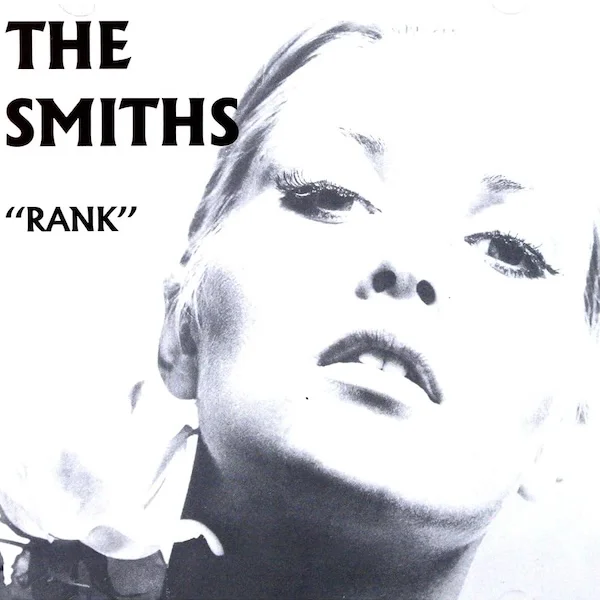
A side note about “His Latest Flame”: the first time I heard it, I thought the main melody sounded exactly like “Rusholme Ruffians,” the second track on side A of the Smiths‘ great album “Meat Is Murder” (it is the other way around, of course). And come to think of it, on “Rank,” the live album recorded in London in 1986, the Smiths played “(Marie’s The Name) His Latest Flame” and “Rusholme Ruffians” back to back as a medley. Leave it to Johnny Marr.
![[All Songs by Morrissey and Marr, except His Latest Flame by Pomus, Shuman]](https://microgroove.jp/img/WPCR308-2.jpg)
THE UNFORGETTABLE GUITAR
Which brings us back to where this article began: the Nashville Gang accepting RCA Victor’s invitation to appear at the 1960 Newport Jazz Festival. Around this time Hank Garland signed with Columbia as a solo artist. First, in a trio with Bob Moore and Buddy Harman, he recorded his pop-leaning first leader album, “Velvet Guitar” (Columbia/Harmony HS-11028).
Right after the 1960 Newport live recording, he made a quintet recording with Gary Burton added, “Subtle Swing” (Sesac SN-2301/2), for the SESAC label (later reissued as “The Unforgettable Guitar Of Hank Garland” (Columbia CL-2913)).
And then, at almost the same time, on August 23, 1960, he recorded the decisive album, the one said to have floored jazz fans all over America. The cover shot of Garland beaming contentedly behind the wheel of an MG MG-A (his own car, I wonder?) makes a fine impression too.
![[Columbia CL-1572 Front Cover]](https://microgroove.jp/img/ColumbiaCL1572_F.jpg)
![[Columbia CL-1572 Back Cover]](https://microgroove.jp/img/ColumbiaCL1572_B.jpg)
Jazz Winds From A New Direction / Hank Garland
(Columbia [US] CL-1572)
Another aside: a charming photo (taken in 1973) that appears to restage this cover can be seen on the web pages of Randy Dorman, the guitarist, engineer, and producer. This time, though, the great Hank Garland sits in the passenger seat, and the car is an MG-B . . .
Asides aside: anyone who put this album on for the first time with no background knowledge must have wondered who on earth this jazz guitarist could be. Backed by the superb team of Joe Benjamin and Joe Morello, Hank Garland and Gary Burton serve up modern jazz of the finest grade out of Nashville, a town nobody at the time associated with jazz (Gary Burton, it should be said, was never a country musician, nor is he from Nashville). On the slow ballad “Relaxin’,” which he had also played on the Newport live recording, Garland spins out the melody in a gentle, Joe Pass-like tone; on his own up-tempo “Riot-Chous,” likewise heard on the live album, he fires off one thrilling Charlie Christian-style line after another. And his interplay with Gary Burton’s vibes on “Move,” on side A, is as good as it gets.
![[Hank Garland and Gary Burton at the session]](https://microgroove.jp/img/HankGarland_GaryBurton.jpg)
One of the young players who fell in love with this album, listened to it over and over, and set his sights on becoming a professional jazz guitarist was, so the story goes, George Benson.
![[Columbia CL-1572 Side-A]](https://microgroove.jp/img/ColumbiaCL1572A.jpg)
![[Columbia CL-1572 Side-B]](https://microgroove.jp/img/ColumbiaCL1572B.jpg)
The album’s one weak point is the mixing. Hank Garland’s guitar, of all things, is bathed in echo, and I cannot help wishing it had been recorded solid and dry. That said, my copy is the mono edition, and I have no idea how the mix sounds on the stereo edition (CS-8372), which I have yet to hear . . .
A-1: All The Things You Are
A-2: Three-Four, The Blues
A-3: Move
A-4: Always
B-1: Riot-Chous
B-2: Relaxing
Hank Garland (g), Gary Burton (vib), Joe Benjamin (b), Joe Morello (ds).
Recorded at Bradley’s Studio, Nashville, TN on August 23, 1960.
Produced by Grady Martin for Don Law.
DON’T GIVE UP
Fifteen years into his professional career, having at last recorded the jazz album he had always wanted to make (and a genuinely fine one at that, one he himself must surely have been satisfied with), just as his name was about to reach jazz fans and jazz musicians across America, tragedy struck. In the fall of 1961 he was involved in an automobile accident. Another car crash?! How many musicians in America have been caught up in car accidents over the years?
He lay in a coma for months. When he finally regained consciousness his life had been saved, but the after-effects were so severe that playing as he once had was out of the question, and his career as a professional guitarist came to an end, just like that. He kept at his rehabilitation patiently for years and recovered to the point where he could play the guitar once more, but he never recorded in a studio again.
He passed away on December 27, 2004, at the age of 74. What he left behind will go on being loved by music fans and musicians for a long time to come.
![[Hank Garland, R.I.P.]](https://microgroove.jp/img/GarlandPlaysGarland.jpg)
References & Special Thanks:
-
Hank Garland Biography & Interviews
(by Rich Kienzle, originally published on Guitar Player magazine Jan. 1981 issue) -
Hank Garland Disography
(by Rocky Productions) -
Gradi Martin, Bob Moore
(at Rockabilly Kings – Bob & Gradi Fan Club)