2022/10/03

Things I learned on Phono EQ curves, Pt. 2

Pt.0 (はじめに)」、そして「Pt.1 (定速度と定振幅、電気録音黎明期)」の続きです。

This article is a sequel to “Things I learned on Phono EQ curves, Pt.0” and “Things I learned on Phono EQ curves, Pt.1”.

前回 は、いろいろ脱線しながら(笑)レコードに記録される2つの特性と、電気録音黎明期のあれこれについて調べました。今回は、EQカーブの話を離れて、電気録音黎明期のあれこれ についてもう少し調べていきます。

On the previous part, I studied on two recording characteristics (constant velocity and constant amplitude), as well as the history of Electrical Recording in its very early years, along with several digressions… This time, I am going to continue learning other things during the early days of electrical recording, apart from EQ curves.

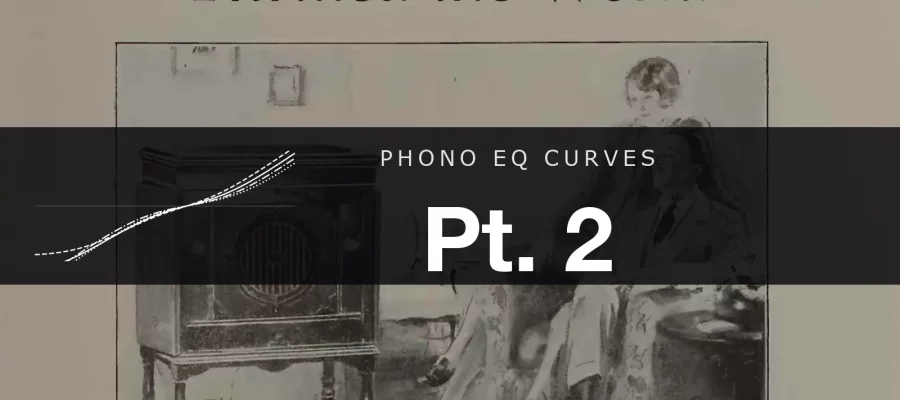
Brunswick Panatrope Ad, The Talking Machine World, Feb. 15, 1927, p.5

source: Brunswick Panatrope Ad on “The Talking Machine World, February 15, 1927”, p.5.

Continue reading
2022/09/27

Things I learned on Phono EQ curves, Pt. 1

Pt.0 (はじめに) の続きです。

This article is a sequel to “Things I learned on Phono EQ curves, Pt.0”.

レコードのEQカーブについて深掘りする前に、そもそも なぜイコライゼーションが生まれたのか、なぜ必要とされたのか、その歴史から調べてみることにしました。また、更にさかのぼって、音を溝に記録するとはどういうことか、についても学び直すことにしました。なので、カーブの話に到達するまでに長い道のりになってしまう予定です(笑)

Before digging deeper about EQ curves, I started to study from the very beginning: why the EQ curve was born, why it was/is needed for phonograph recording (and playback). Also, I tried to re-study the very basic – how the recording sounds are converted to a modulated spiral groove. So I’m afraid it will take very long before I reach the story of the EQ curve itself…

Digital image of the surface of 78 rpm record taken with optical magnification. The illumination is coaxial (the light falls vertically onto horizontal record), therefore only horizontal parts of the record reflect the light back into the optical system. These include the inter-groove surface of the record represented by the wide bands in the picture, and the bottom portion of the groove, represented by the thin lines. The scratches on the inter-groove surface are clearly seen. The size of the imaged surface is 2.35 x 2.19 mm 2 .

Audio Reconstruction of Mechanically Recorded Sound by Digital Processing of Metrological Data – Scientific Figure on ResearchGate.
Available from: https://www.researchgate.net/figure/Digital-image-of-the-surface-of-78-rpm-record-taken-with-optical-magnification-The_fig1_242606860 (accessed 4 Sep, 2022)

Continue reading
2022/09/23

Things I learned on Phono EQ curves, Pt. 0

以下、持論・異論・珍説が飛び交う、議論多き「フォノEQカーブ」について、1920年代電気録音黎明期にまで歴史を遡り、録音・再生カーブのみならず、ディスク録音全般について、正しく理解するために勉強した軌跡です。長編になります。

Following is just the beginning of the long series of the study I have been doing for a while, regarding the controversial topic “Phono EQ Curves” – people having various opinions on it, although many of them are subjective and not scientifical. I started the study and research of the history of disc recording as a whole, from the very early electrical disc recording technology in the 1920s.

Introduction / はじめに

我が家では15年ほど前から、78rpm や非RIAA LP用に Esoteric Sound (Rek-o-kut) Re-Equalizer という簡易式アドオン型フォノイコライザを使用しています。実は昨年、Re-Equalizer III という最新バージョンに置き換えたのですが。

Since 2006, I’ve been using Esoteric Sound (Rek-o-kut) Re-Equalizer (actually I replaced it with the most recent version Re-Equalizer III in 2021) for 78rpms and pre-RIAA LPs. It’s a niche phono EQ compensator.

Esoteric Sound Re-Equalizer

Esoteric Sound Re-Equalizer III (above), bought in 2021
Esoteric Sound Re-Equalizer (bottom), bought in 2006

Continue reading
2022/06/15

なぜ日本だけで「SP盤」と呼ぶようになったのか

昔懐かし、蓄音機でかける、割れやすいレコード。

10インチ (片面3分程度) / 12インチ (片面5分程度) が一般的です。

回転数は、当初は 80rpm、76rpm など、いろいろあったようですが、のちに 78rpm に統一されました(正確には 78.26rpm)。

で、そのレコードを指して、日本では SP盤 と呼ばれることが多いです。いわく、LP盤 (33 1/3rpm の Long Playing) に対して、Standard Playing の省略形である、と。

しかし、不思議なのです。日本以外で「SP」や「Standard Playing」という表記を見かけたことがありません。 代わりに英語圏でよく見かけるのは「78rpm」「Shellac Records」「Phonograph Records」「Gramophone Records」といったものばかり。

どうして、日本だけ別の呼び方になったのか、あるいは他の国でも「SP」という表記があるのか、なんとなく気になったので、いろいろ調べてみました。もともとは Twitter 上でのつぶやきから始まったものですが、ここにまとめておきます。

Continue reading
2022/04/07

Sound Storing Machines: The First 78rpm Records from Japan, 1903-1912

マニアックな音源のコンピレーションを次々と世に送り出している Sublime Frequencies レーベルから、最初期の日本の音源をまとめたアルバムがリリースされています。

メインタイトルは “Sound Storing Machines” つまり「蓄音機」です。

Sound Storing Machines

Sound Storing Machines: The First 78rpm Records from Japan, 1903-1912
(Sublime Frequencies SF115)

Continue reading
2022/01/05

超音波レコード洗浄機の歴史 / Ultrasonic Cleaning History

Mike Bodell 氏による、この2018年9月の記事、隅々まで大変読み応えのあるまとめでした。

レコードの超音波洗浄の歴史は1952年Bendix社の実験に始まり、1968年にRichard Henes氏によりUS Patentedとなった、と。

Continue reading
2021/10/30

HumminGuru Review 3: 10インチ盤クリーニング、そして気になる点

Note for non-Japanese readers:
FYI here’s the automatically trasnlated English version of this HumminGuru Review article by Google Translate.

1回目のレビュー(ハミングルが届くまで、そして最初に使った時の印象)、2回目のレビュー(レコードクリーニング前後の音を比較)に続き、最後となる今回は、KickStarter で入手した人に無料でついてきた10インチ/7インチレコード用アダプタのテストを行なってみます。

同時に、この超音波レコードクリーナーについて、いくつか気になる点、使用時の注意点、なども書いておきます。

Continue reading
2021/09/11

Technics SU-R1000 試聴記 #11: 内蔵ディジタルフォノイコ (補正前)

試聴11日目 (2021年6月29日) は、ついに SU-R1000 内蔵のディジタルフォノイコを試します。ただし、まずは測定レコードを使った補正はなしで。

パナソニック勤務の友人の計らいにより、2021年6月19日〜7月2日の2週間に渡って、話題のフルディジタルインテグレーテッドアンプ Technics SU-R1000 をお借りしての自宅環境で試聴です。

前回 まで同様、当時 Facebook に毎日載せていた試聴記の(加筆修正後の)転載となります。

GyroDec / GE VRII playing EmArcy 78 rpm Continue reading
2021/02/24

78 rpm stereo microgroove – Hooray for Rivermont Records!

78回転。マイクログルーヴ、ステレオ。

78 rpm, microgroove, and stereo recording.

そんなレコードが「新譜で」この世に存在することは奇跡的といっていいでしょう。

It’s nothing but miraculous that such records exists (and are still released).

Rivermont Records 596 Side-A Continue reading