2026/03/19

『Force』を今あらためて聴く — “Sweet Mao” と1976年

Revisiting “Force”: “Sweet Mao” and 1976

21年前には純粋に「強烈な音楽」として聴いていたこのLP、いま改めて聴き直すと、 その背後に、1976年という時代の空気や、アメリカの黒人急進派を取り巻く国際的な文脈が、色濃く刻まれていたことに気づかされます。

Revisiting this LP, which 21 years ago I heard simply as “overwhelming music”, I now find myself struck by how deeply it is marked by the atmosphere of 1976 and by the international context surrounding the Black radical milieu in the United States.

要点 (TL;DR)

Max Roach と Archie Shepp による “Sweet Mao” は、 文化大革命や毛沢東個人を讃えたり細目の賛否を論じる作品というよりも、 1976年時点における 黒人国際主義 (Black Internationalism) という文脈で 毛沢東が担っていた象徴性を音にした作品として読むと見通しがよいように思われる。

“Sweet Mao” by Max Roach and Archie Shepp seems more fruitfully heard not as a work praising the Cultural Revolution or Mao himself, nor as one debating its details one by one, but as a musical rendering of what Mao symbolized within the context of Black Internationalism in 1976.

[UNI 28.976 Front Cover]

Force: Sweet Mao – Suid Afrika 76 / Max Roach & Archie Shepp
(Uniteledis [F] UNI 28.976)
Continue reading
2025/08/10

ディスコ曲「ジンギスカン」が教育現場に浸透した時期と経緯

1979年リリースのディスコソング「ジンギスカン」 (Dschinghis Khan) が、なぜ今でも小学校の運動会や林間学校でのキャンプファイアーなどでよく耳にするのか。そもそも、いつ頃から教育現場で使われ始めたのか。

以前から不思議で仕方なかったので、いろいろ調べてみました。

意外にも、リリース翌年の1980年辺りから教育現場での使用例が多く確認でき、現在に至るまで長く定番ソングとなっていることを確認しました。

そのきっかけは「リズムなわとび」という体育の活動にあった可能性があり、ほかにもレクリエーションダンスなどでも多くの使用例が確認できました。

しかし、「なぜこの曲だけがこんなにも長く定番化しているのか」「浸透に地域差はあったのか」については、まだ良く分からない、というのが現時点の状況です。

以下、あまりきれいにまとまっていない長い調査過程ログのようなものですが、興味のある方はご覧ください。

Continue reading
2025/06/26

Schiit Mimir Balanced Mesh™ DAC

Introduction

つい先日、音楽好きな知人のお宅を訪問する機会がありました。主に LP(特に 1940〜50 年代のジャズやソウル/R&Bのオリジナル盤)や 45 回転シングル盤、78 回転盤(こちらもジャズやソウル/R&Bがメイン)を愛聴されていて、CD は積極的には聴かず、PC オーディオやストリーミングにもまったく興味がない、という方です。

The other day I had a chance to visit a friend who’s a hardcore music lover. His daily spins are mostly LPs – original jazz, soul and R&B pressings mainly from the ’40s to ’50s – plus 45 rpm singles and even 78 rpms of the same genres. CDs rarely make it onto his system, and PC-based audio or streaming? Zero interest.

Billie Holiday、Johnny Hodges、Willie Smith、Aretha Franklin、Helen Merrill、Dinah Washington、Solomon Burke などを特に愛好されており、自慢のオリジナル盤 LP や SP 盤をいろいろ聴かせていただきました。

He’s especially fond of artists like Billie Holiday, Johnny Hodges, Willie Smith, Aretha Franklin, Helen Merrill, Dinah Washington, and Solomon Burke, and he treated me to a parade of prized and treasured LPs and 78 rpm records of original pressings.

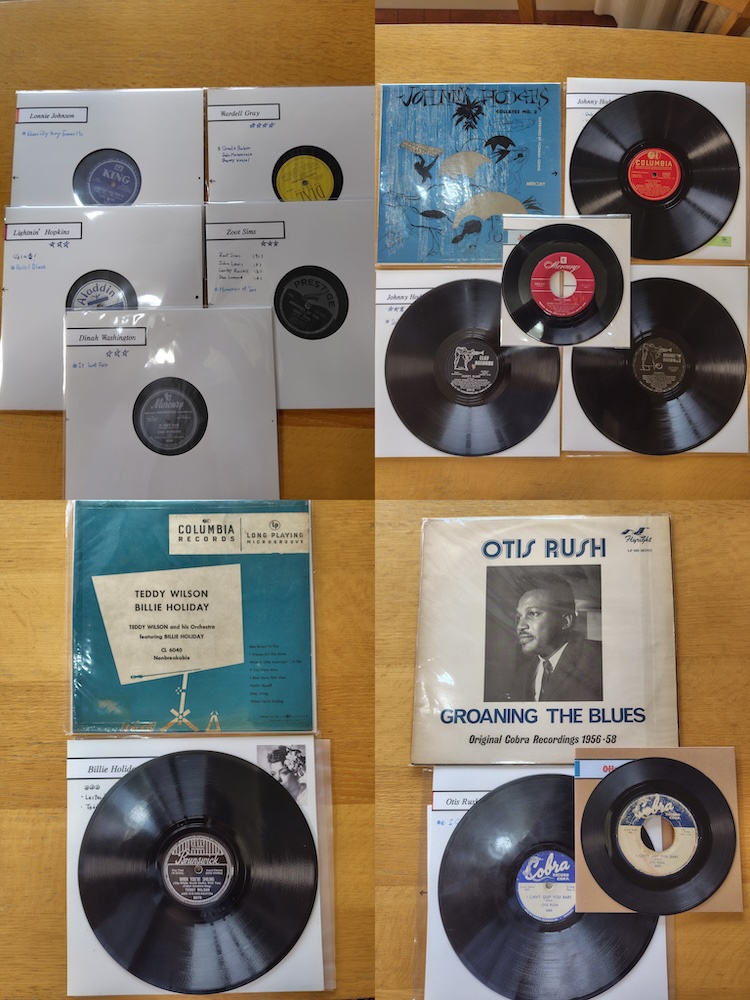
Some of his collection – Jazz, Soul, Blues, etc.

(その方のコレクションの一部)

Continue reading
2025/06/24

David Bowie in Jazz (Wagram Music 3387412)

2003年頃から活動しているフランスの Wagram Music レーベル。

数えきれないほどのコンピレーション CD をリリースしてきたこのレーベルですが、2016年より “In Jazz” もリリースしています。これは、著名アーティストの楽曲をジャズミュージシャンが思い思いにカヴァーした演奏を集めたオムニバス CD シリーズです。

テーマに沿って新規録音された音源…、というわけではなく、各アーティストの既存アルバムからカヴァー曲を集めて1枚にまとめあげたもののようです。しかし、いざ聴いてみると不思議な統一感と程度なバラエティが共存しており、どのリリースもかなり楽しめます。

Continue reading
2024/12/06

曲名とアーティスト名と収録アルバム名が全て一緒のってどれくらいある?

たまには(?)軽いネタを。

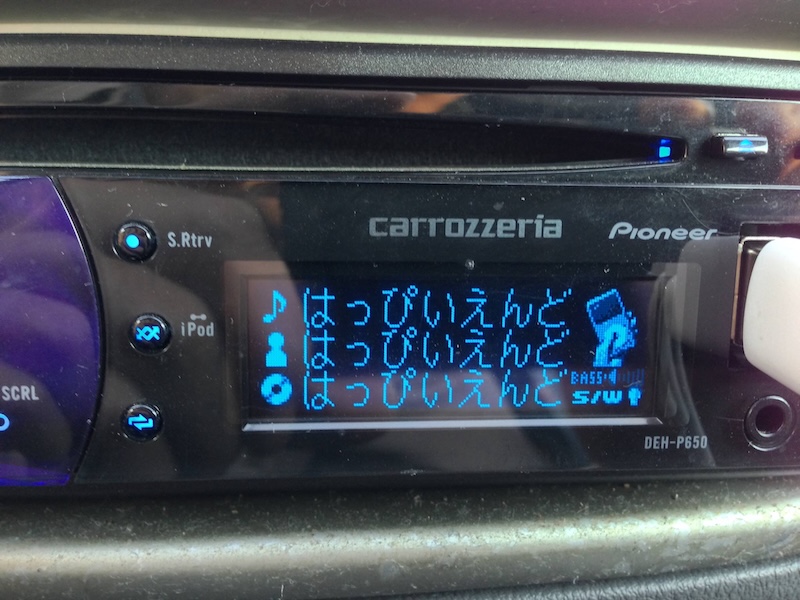
今から10年以上前に、クルマで移動中、たまたまカーオーディオのディスプレイがこうなりました。

“Happy End” by Happy End, on the album “Happy End”

“Happy End” by Happy End, on the album “Happy End”

アルバム「はっぴいえんど」収録の楽曲「はっぴいえんど」、演奏は はっぴぃえんど

曲名、アーティスト名、収録アルバム名の3者が完全一致 した珍しい例ですね。

それから、ことあるごとに、曲名、アーティスト名、収録アルバム名が完全一致する例を見つけてはメモしていました。これはそのまとめです。

Continue reading
2024/11/26

How Records Were/Are Manufactured (6)

第1回第2回第3回第4回第5回 に続き、戦後のレコード製造工程や原材料の歴史、特に 射出成形スチレン盤 について改めて調べてみた、そんな記録です。

Following on from the first, second, third, fourth and fifth parts, this is a record of a renewed look into the history of postwar record manufacturing processes and raw materials, particularly injection molding and styrene records.

Shelley Products 社によって1940年代末に市場に投入され、一時期は Columbia が開発・実用化・普及に向けて積極的に投資していたスチレンの射出成形法は、LP盤製造では結局は主流とはならず、米国で45回転盤用としてのみ浸透したことを学びました。

I learned that the styrene injection molding method, which was introduced to the market by Shelley Products in the late 1940s and for which Columbia at one time actively invested in its development, practical application, and popularization, never became mainstream in LP manufacturing, and was only used in the United States for 45 rpm records.

また、21世紀に入って、サステナビリティの観点から再び射出成形法が見直され、スチレンではなくリサイクルインフラが整ったPET盤が製造販売されていることを知りました。

I also learned that in the 21st century, the injection molding method was once again being reconsidered from the perspective of sustainability, and that PET boards, which have a well-established recycling infrastructure, are now being manufactured and sold instead of styrene.

最終回となる今回は、もともとレコード製造方法や原材料の歴史を調べるきっかけとなった、Mercury の廉価スチレン製LP盤 について、さまざまな角度から調査してみました。

In this final part, we are going to dig a deeper research on Mercury’s budget styrene LP records from various angles, which was what originally prompted me to look into record manufacturing methods and the history of raw materials.

改めて、今回の一連の調査のきっかけを与えてくださった @zmuku さんに感謝いたします。

Once again, I would like to thank @zmuku-san for giving me the opportunity to conduct this series of research .

プレス工場を特定できる決定的な情報はまだ得られていませんが、レーベルやジャケ裏に印刷されている3本線マークの由来と意味について、非常に妥当な仮説を立てることができた気がします。

Although we have yet to obtain conclusive information that identifies the pressing factory, we feel we have been able to formulate a very reasonable hypothesis about the origin and meaning of the three-line mark printed on the label and back of the jacket.

Continue reading
2024/09/03

HumminGuru NOVA アドバンス超音波レコードクリーナ

Kickstarter 経由で2021年10月に入手した、お手頃価格の超音波レコードクリーナ HumminGuru、毎日のように愛用してきました。

HumminGuru Ultrasonic Record Cleaner, which I obtained via Kickstarter in Oct. 2021, is a great product at relatively affordable price, and I have been cleaning records almost every day.

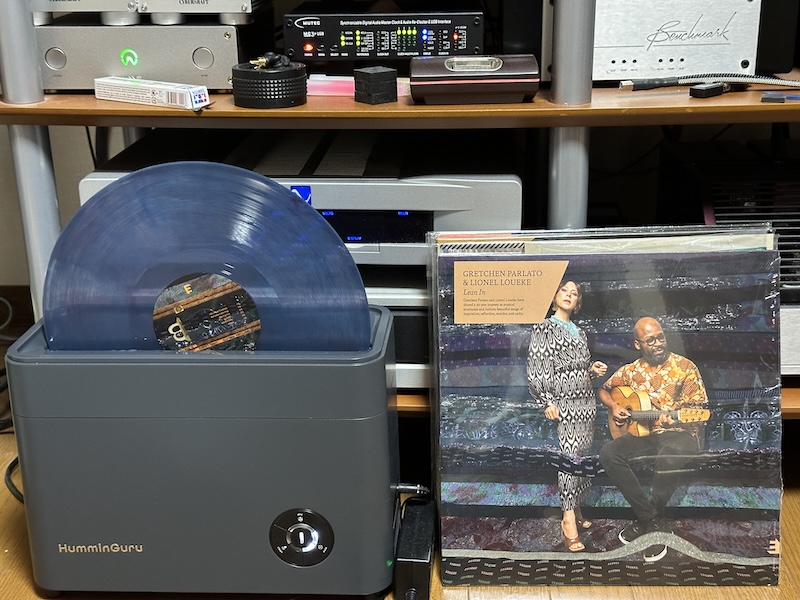
Cleaning “Lean In / Gretchen Parlato & Lionel Loueke” with HumminGuru

Cleaning “Lean In / Gretchen Parlato & Lionel Loueke” (Edition Records EDNLP1216, 2023) with HumminGuru

Continue reading
2024/08/30

“Monaural” on Compact Disc Digital Audio

Introduction / 余談からスタート

我が家のオーディオ環境では、2004年に TEAC VRDS-25X の中古を導入するまでは、カーオーディオと兼用していたポータブルCDプレーヤや、タダで譲り受けた LD/CD プレーヤなどで、CD を聴いていました(笑)

In my home audio environment, until I installed a used TEAC VRDS-25X in 2004, I listened to CDs with a portable CD player (which was also used with my car audio system), or with a LD/CD player I got for free 🙂

当時はアナログ再生がメインだったからですが、かといって「アナログマンセー」だったわけではありませんし(笑)、今でもディジタル再生も同じくらい好んでいます。

This was because analog was my main source for listening at the time, but that does not mean that I was an “analog supremacist”, and I still prefer digital playback as much as analog playback.

2012年初頭、(のちに Musical Surroundings MYDAC II として製品化された)DAC のプロトタイプ基板 を開発者の Michael Yee さんにいただいたことをきっかけにして、CD を直接再生することはなくなり、CD をリッピングしたのち PC から DAC 経由で再生するようになりました。ここから我が家での本格的なディジタル再生が始まりました。

In early 2012, Mr. Michael Yee, the developer of the audio components, kindly gave me a prototype DAC board (which later commercialized as Musical Surroundings MYDAC II). After that, I stopped playing CDs directly, and my primary digital audio playback method became “playing digital files (that were ripped from CDs) from PCs via DACs”. This was the beginning of full-fledged digital playback in my home.

以前から CD を購入するたびに、XLD (X Lossless Decoder)Exact Audio Copy を使い、ALAC (Apple Lossless) 形式のディジタルファイルとして SSD や NAS に保存しており、現在はこれを Audirvāna Origin + Music app (旧名 iTunes) から DAC に流し込んで再生しています。

Even since before 2012, I have always used such software as Exact Audio Copy and XLD (X Lossless Decoder) to rip the CDs as digital files in ALAC (Apple Lossless) format on my SSD or NAS. Recentely I always play these audio files using the combination of Audirvāna Origin and Music app (was: iTunes) via the DAC.

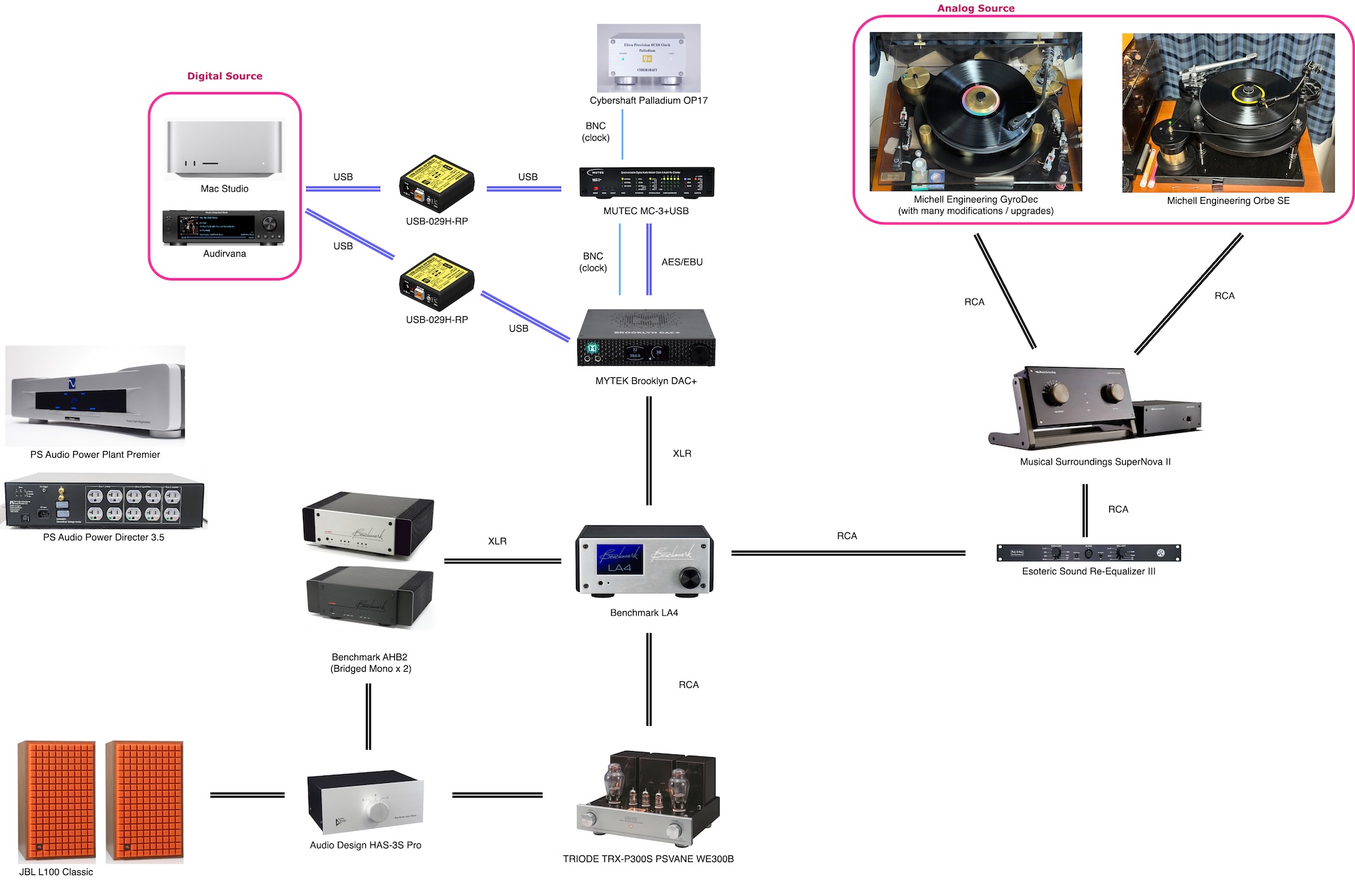
System Configuration as of August 25, 2024

2024年8月25日時点での我が家のシステム構成図


Michell Orbe 追加後、特に変更はありません

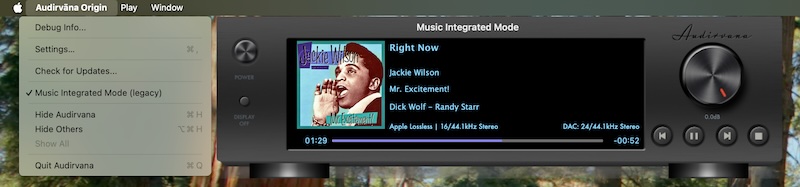
いまだに Audirvāna Origin を「Music Integrated Mode (legacy)」モードで使っている(Audirvana はあくまでバックエンドで、iTunes/Music をフロントエンドとして使用)のは、取り込み年月日、再生回数、最終再生年月日などのデータを、iTunes/Music から他のアプリに持って行けないからです(笑)

I still use Audirvāna Origin in “Music Integrate Mode (legacy)” mode (i.e. Audirvana for backend, iTunes/Music for frontend), simply because there is no way to bring statistical data (such as imported date, play count, last played date etc.) to other apps.

Audirvana Origin “Music Integrated Mode (legacy)”

上記余談はさておき、CD 上の音源を PC 上にもってくることで、ディジタルデータとしての客観的な数値やパラメータを目にすることが容易になります。

Returning to the main subject — by bringing the sound source on the CD to the PC, it becomes much easier to see the objective values and parameters as digital data.

今回のお題、「CD におけるモノーラル音源」も、そんな中で気づいたものでした。

The subject here, “monaural sound sources on CDs” was also something I noticed in this context.

2012年7月下旬、あるモノーラル音源のCDをリッピングしている時、トラックによってファイルサイズがかなり違うことが気になったのです。残念ながら、この時の CD がどれだったのか、いまだに思い出せずにいるのですが。

It was in late July 2012, while I was ripping a certain monaural CD (which I still can’t remember it was, though), I noticed that the file size varied considerably from track to track.

PLEASE NOTE / 注

以下、本稿を通じて、「左右チャンネルがバイナリ一致したモノーラルCD」と「そうではないモノーラルCD」との間での優劣について書いているわけではなく、両者の差が生じる要因に純粋に興味があることにご留意ください。

Throughout this article, I am NOT going to discuss “is the true 2-track mono CD (with binary identical channels) better audio-wise than the CD which is not?”, but am just interested in what made this difference.

Continue reading
2024/08/08

Things I learned on Phono EQ curves, Pt. 24

EQカーブの歴史、ディスク録音の歴史を(私が独りで勝手に)学ぶ本シリーズ。前回 Pt.23 では、1970年代民生用アンプに内蔵されたフォノイコの RIAA 偏差 に関する興味深い記事、および、米国で伝統的に使われていた LCR 録音イコライザの話などを紹介しました。

In the previous Part 23, I learned an interesting article on RIAA deviation of 1970’s consumer amplifiers, as well as LCR recording/reproducing equalziers that had been the legacy especially in the United States.

今回の Pt.24 では、音声信号が最終的にレコードの溝として記録されるまでに通過するシグナルチェーン、そこで使われる機器の歴史的変遷などについて、改めて復習していきます。

This time on Pt.24, I am going to revisit and learn the signal chain from the audio source to the groove cut into lacquer discs, as well as the history and evolution of these.

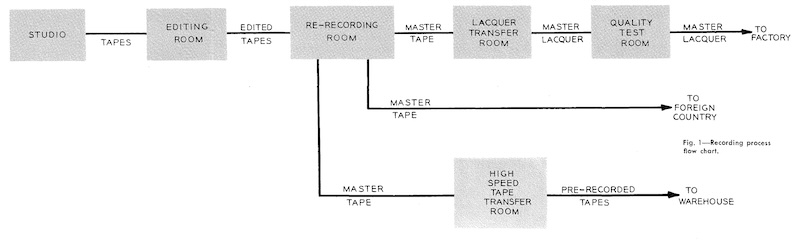
Recording process flow chart

source: RCA Engineer, Vol. 3, No. 2, Oct.-Nov. 1957, pp.8-9
1957年のRCA社内エンジニア向け紀要に掲載された、録音プロセスのフローチャート
“Recording process flow chart” from 1957 technocal bulletin for RCA’s engineers.

Continue reading
2024/01/17

Unplayed by Human Hands — DEC PDP-8

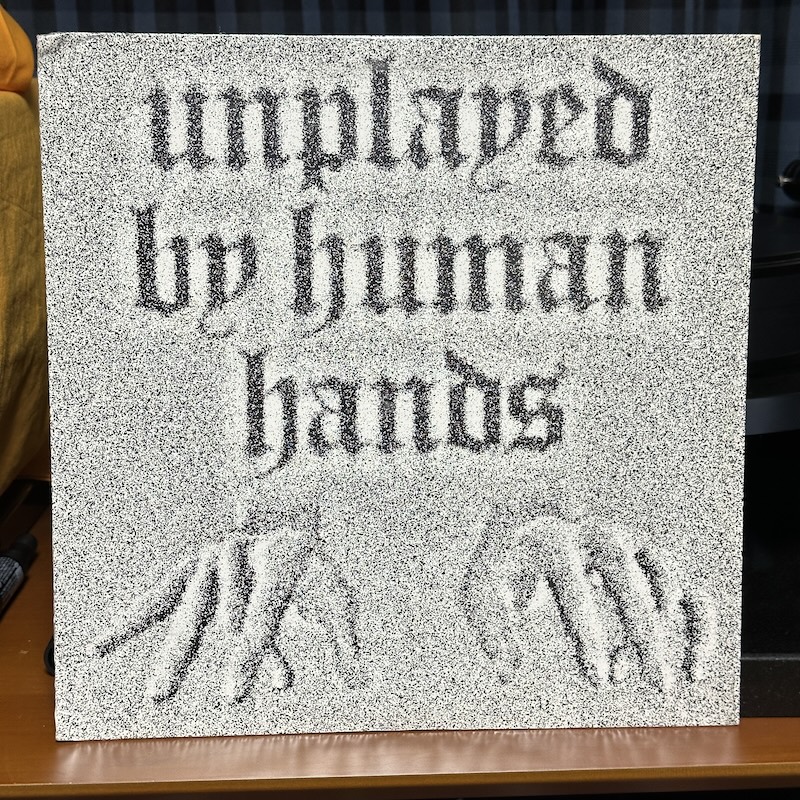
いつかは欲しいと思ってたLP、やっと手に入りました。

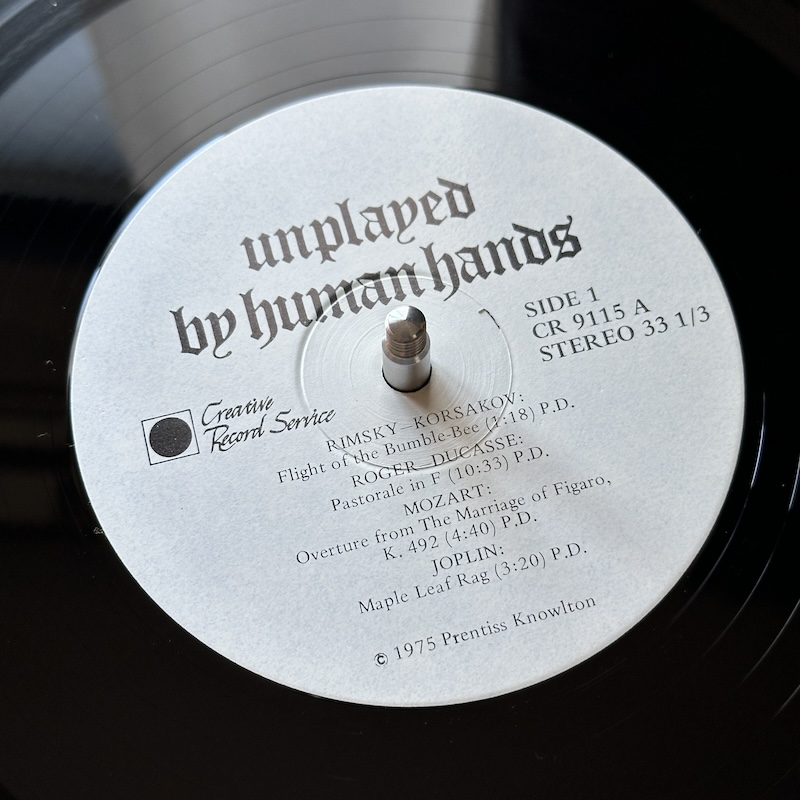
カリフォルニア州パサデナ All Saints Church で1975年に録音された本作、パイプオルガンを 1965年製 DEC PDP-8 (!) で自動演奏したものです。

Unplayed By Human Hands (Creative Record Service CR-9115, 1975)
Continue reading